Why You Should Assess Your Print Personalisation UX, Ahead of the Festive Season
With the festive season now upon us, Marcin Majda of Antigro Designer, discusses the importance of creating easy to use sales channels for customisable gifts
Guest Writer
December 12, 2025
With the festive season now in sight, consumers will no doubt be turning their thoughts towards one thing in particular – Christmas gifts.
Mintel research found that most consumers start buying gifts for Christmas in November with Statista reinforcing this, reporting that 51% of respondents plan to begin their Christmas shopping before December. This means it’s now a crucial time for print businesses to ensure they are ready to capitalise on this peak seasonal demand and offer a seamless and efficient experience for their customers.
Personalised Photo Gifts Remain a Popular Choice
Demand for personalised gifts is set to contribute significantly to this peak seasonal demand, with the UK personalised gifts market expected to grow at a CAGR of 11% from 2025 to 2029, fuelled by the emotional and thoughtful nature of these products. According to this research from Technavio, sales of personalised gifts currently account for around 20% of the total gift market share and the rise of popularity in these products has been attributed in part to improved order processing and user experience with the average order processing time decreasing by 25%. Additionally, the evolution of print personalisation technology and CRM integration has accelerated this growth further.
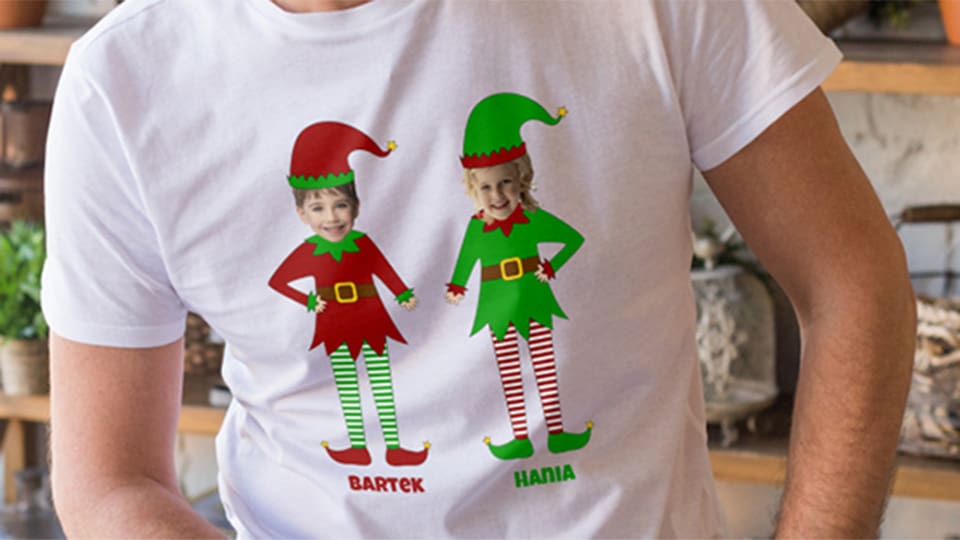
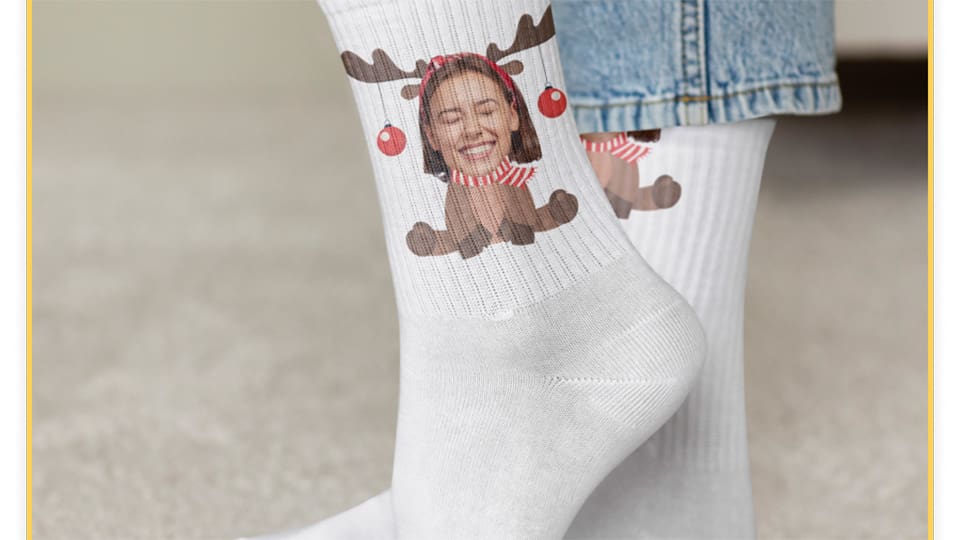
(Above & below) Personlised clothing for holidays is becoming increasingly popular
When it comes to gifting, photo products remain a particularly popular choice as they foster a sense of connection and a sentimental feel. In fact, Fortune Business Insights predicts the European photo printing and merchandise market to grow at a CAGR of 6.92%, reaching $4.92bn by 2032. Be it personalised photo puzzles, mugs, photo books, calendars, cushion covers, T-shirts, hoodies, or hats, there are ample opportunities for print businesses to capitalise on this demand. When you add personalisation to any gift, there is also the opportunity to boost revenue, with research by Roland DG finding that the average UK giftware shopper is prepared to spend 7% more for gifts that feature an element of personalisation.
The Importance of Mobile Optimisation
When preparing for this peak seasonal demand, it’s important to note that the way consumers are purchasing their festive gifts is changing. Shoppers are increasingly moving online to complete their Christmas shopping and key promotional dates like Black Friday and Cyber Monday are only accelerating this. For ‘thumb-first’ shoppers, purchasing and browsing on a mobile phone can be convenient and faster than browsing on a desktop.
Something to consider here is that cart abandonment rates for mobile shopping tend to be higher than when using desktops. In 2022, researchers in the US actually found that cart abandonment rates were around 84% for mobile phones. This is where well-designed UX is paramount, and a product customisation tool needs to be fully adapted for both mobile and desktop.
When you offer a mobile-optimised experience, you enable customers to design and order personalised gifts from anywhere and at any time. For example, features such as wide tabs, readable icons and easy navigation all provide a simple and clear interface for mobile. Additionally, a bottom toolbar that can be expanded or collapsed so it doesn’t cover the project ensures the design process is just as smooth on a smaller screen. The ability to select images directly from a mobile device and have them automatically placed into a project saves a huge amount of time too.
UX/UI Best Practice for Print Personalisation Tools
So, with consumers already beginning to think about their Christmas purchases, now is the time to ensure that your personalisation user experience meets their expectations. If the UX of a print personalisation offering isn’t simple, seamless and quick to use, it can lead to frustration with customers abandoning their orders and looking elsewhere. Print personalisation software needs to remove as much friction as possible from the design process to keep creating personalised gifts easy and fun for the customer.
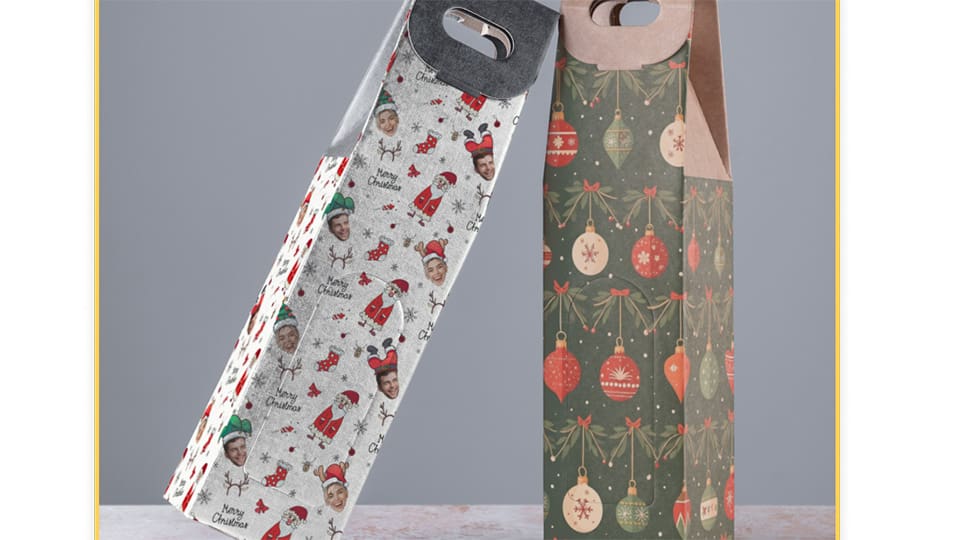
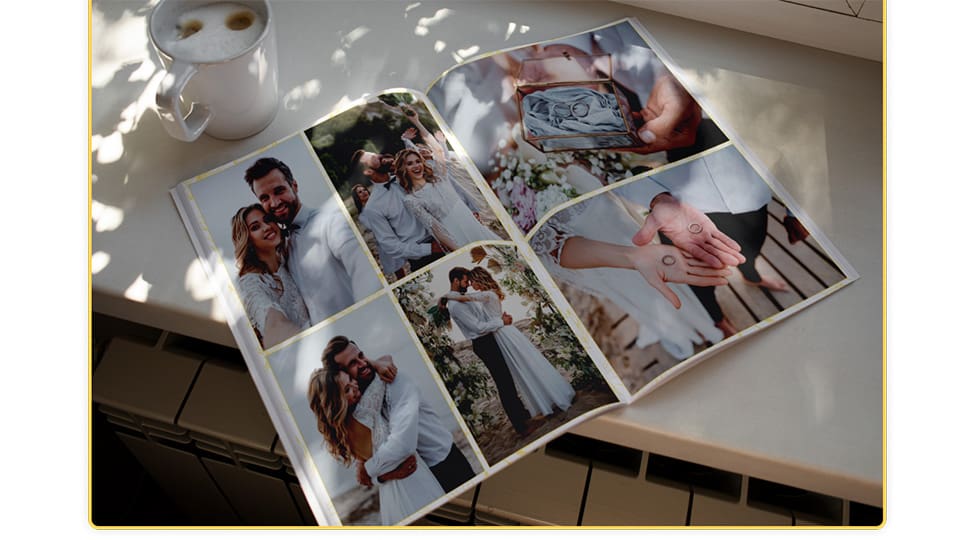
(Above & below) New software can help businesses offer more personalised products like photobooks and bags
Good UX/UI practices include fast uploading from both desktop and mobile devices, clear resolution warnings, smart cropping and positioning, as well as intuitive templates and automated layouts all designed to simplify complex designs for customers with little to no design expertise.
For products such as photo books or calendars with multiple elements like photos, text, dates, and graphics, these features can turn a potentially time-consuming and tricky design job into a seamless and enjoyable one. In fact, a clear majority of Antigro Designer users prefer the system to automatically suggest the best possible photo layout when working on multiple-page projects with a large number of images, like calendars or photo books. Although it’s just as important to ensure those who prefer full creative control can do so too.
Utilising Artificial Intelligence
Artificial Intelligence is increasingly playing a role here too with AI-driven features enhancing the experience further through features like smart background removal. For example, Antigro Designer’s AI-based cutouts feature for T-shirt personalisation, identifies and isolates design elements and transfers them seamlessly onto templates, removing any time-consuming and labour-intensive manual processes. Think personalised matching pyjamas featuring a beloved pet in a Christmas hat or festive Christmas jumpers with the faces of each family member on them.
When designing a personalised
product, especially a gift, the ability to preview a product ahead of completing an order and visualise it in its final form ensures confidence and avoids any risks of cart abandonment. Antigro Designer’s real-time preview feature enables customers to visualise whether a design works on a certain product and allows them to update and tweak it to ensure they’re happy with their final product before placing the order.
When preparing for this peak seasonal demand, it’s important to note that the way consumers are purchasing their festive gifts is changing
Given the growing demand for personalised gifts and increasing numbers of online purchases, there is a real opportunity for print businesses to add personalised gifts to their offering and capitalise on this demand. But the secret to driving sales is ensuring that users enjoy making them, just as much as they hope the recipients will enjoy receiving them.
Marketing manager and freelance marketing consultant, Rachael Hunt, talks about the impact a social media ban could have on print and the wider trend of disconnecting from digital technology to interact with tactile experiences for both practical and marketing purposes
Advercado was set up in 2020 by Joe Reid and Will Booth as a way for small businesses to find affordable advertising. Six years later the company is reaching out to printers to help local businesses utilise PSPs. In this article, Reid tells about the thinking behind this venture
A true flatbed printer can enable greater accuracy and positional placement of media. However, that's not to say that belt-fed hybrid solutions don't have their place. But what are the differences between the two technologies? SwissQprint gives its insight
(this was inserted into the PHP of a code block)
Watch our latest video of the week
Print Monthly gives you the latest video coverage of companies, people, and events from within the print industry.