Food wholesaler boosts output with IGS Cobalt SP800 printer
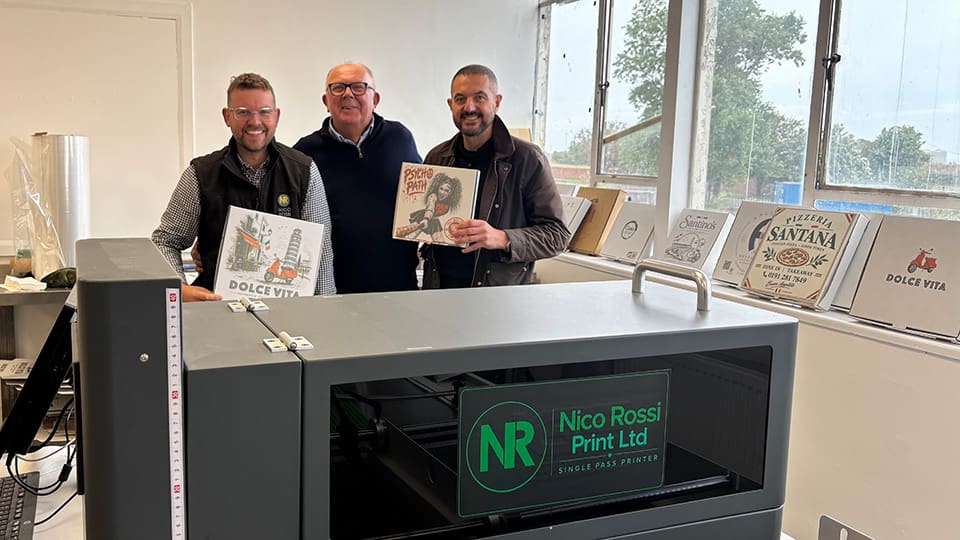
British food wholesaler, Nico Rossi, has purchased and installed an IGS Cobalt SP800 single pass printer at its headquarters in order to expand its in-house and short-run print output


A Smithers report found that secondary packaging is seeing a major boost driven by the rise of ecommerce and an increased focus on sustainability

The global market for secondary and protective packaging, the second layer of packaging that groups multiple units of already-packaged products together, is projected to reach $300bn (£223bn) by 2030, reportedly driven by the accelerating rise of ecommerce and an increased focus on sustainability.
The figures on secondary packaging come from a new report from market intelligence agency, Smithers, produced in association with Packaging Innovations & Empack.
According to the report, ecommerce is now the fastest-growing segment for secondary packaging, surpassing consumer durables, non-durables, and industrial packaging.
Smithers’ data shows that secondary packaging volumes for ecommerce in Europe will see a 45% rise by 2030, compared to just 10.5% growth across the overall market.
The news comes with less than a month before the launch of Packaging Innovations & Empack 2026, a UK trade show dedicated to the packaging industry which saw a record of over 7,400 unique visitors last year.
The exhibition recently announced ten new show features including a showcase from Material ConneXion about “the materials of tomorrow,” a ‘Museum of Failure’ which shows corporate missteps and mistakes throughout history as an educational tool, and a ‘Discovery Theatre’ presenting breakthrough technologies such as AI and smart packaging.
Packaging Innovations believes that the changes predicted in the Smithers report will cause UK packaging demand to increasingly be driven by “warehouses, couriers, and returns rather than supermarket shelves,” with implications for corrugated investment, pEPR fees, and recycling infrastructure.
Regulatory pressures are also shifting the industry towards using more sustainable solutions, according to the report. For example, a 2027 update to the EU’s Packaging and Packaging Waste Regulation (PPWR) will ban certain single-use plastics for multi-packs and set a 50% maximum empty-space limit for grouped and ecommerce packaging.
PPWR is also expected to reduce the growth in shrink wrap and traditional multi-pack plastics, instead accelerating adoption of cartonboard and paper fill. A statement following the release of the report says that “empty air inside boxes is now a direct regulatory and financial risk,” particularly for UK exporters and retailers selling into the EU.
Paper fill is forecast to grow at 3.9% CAGR in Western Europe to 2030, driven in part by automated dispensers in ecommerce fulfilment centres. Paper fill products including twisted paper, Kraft paper void fill, and flexi-wrap moulded pulp are increasingly replacing traditional bubble wrap, air pillows, and foam.
In the UK, paper is increasingly chosen to meet regulations and taxes including the Plastic Packaging Tax, Extended Producer Responsibility (EPR) penalties, and suitable kerbside recycling.
Josh Brooks, divisional director of packaging at Easyfairs, the organisers of Packaging Innovations & Empack, says: “The global packaging industry is placing increasing emphasis on improving the environmental sustainability of its products as consumer expectations and regulatory requirements continue to intensify.
“Companies are working to reduce material use, adopt recyclable or renewable resources, and lessen overall environmental impact. However, these efforts must be balanced with the essential need for packaging to protect products throughout the supply chain.”