Baddeley Brothers: Over 160 Years of Historic Print
Known for its premium stationery, envelopes, and packaging, we take the chance to find out more about this 167-year-old company by speaking to the directors of the business
Guest Writer
September 23, 2026
When was the business founded, by who, and how did it become the company become it is today?
Charles: The Baddeley family can trace the engraving line back to Phineas Baddeley in 1652 – he was a clockmaker. It is generally acknowledged that the “modern” company was formally founded in 1859 when my great uncle (six times), JJ Baddeley’s father, opened a bank account.
In 1851, Griffith Jarrett exhibited his popular embossing press at the Great Exhibition in Hyde Park, ordering the dies from JJ’s father who took on a larger house for his growing family, and more apprentices based on this seemingly endless new source of income. Yet Jarrett exploited the situation mercilessly, inducing JJ’s father to make dies for him alone, then driving the prices down and eventually turning JJ’s father into a mere journeyman who worked like a slave. He eventually found he had little left after he had paid his production costs in turn impoverishing the family.
My great uncle set up in Little Bell Alley in the City of London in 1861. Previously he had been working for his father in Hackney running engraving dies round to customers in the city and up to the West End. He’d seen firsthand the fragile relationship between supplier and customer.
JJ built the business so that by the end of the 19th century the company was in a six-storey factory in Moorgate, employing hundreds of people. Today we offer die-stamping, letterpress, foil blocking, digital foiling, hand and machine envelope making, gilt and colour edging, and duplexing.
How has the company grown since it was founded?
Charles: As you can imagine over such a long period of time the company shape shifted with the times. From a magnificent six floor factory in Moorgate employing hundreds of people, surviving the Great Depression, being firebombed in 1940, and welcoming staff back after the war. More recently we had to move out of Hackney due to high rent and rates due to the pandemic – we are now in our 23rd home in East London, South Woodford.
What is your company ethos and its values?
Charles: Driven by our history, it inspires us to produce the best, most distinctive printed stationery, luxury packaging, and bespoke envelopes. We use vibrant colours, applying exquisite details, and elegant finishes for customers in London, the UK, and across the globe that stand out and make a powerful first impression.
A family in business demonstrating graft, resilience, creativity, and fantastically skilful staff
We pride ourselves on handmade, bespoke, often manual, and inefficient manufacturing processes to make our products. Different options of printing techniques, machines, or hand finishing provide the flexibility of small quantities, unusual materials, and standout finishes. This offers customers distinct options that match their desire for individuality.
What does a typical day look like for the company?
Charles: I start with a seven-mile cycle, which sets me up for the day. After this I spend most of the time at my desk, looking after the administration. With my background in marketing and project management it means that I’ll engage with customers, particularly in the early part of the enquiry process, but I’ll also engage with strategic outreach initiatives such as Ravensbourne University and Hand Engravers Association.
Chris: My day is a mix of going through the jobs in the workshop, talking to customers, estimating, and sometimes helping run jobs. Because we offer so many different techniques and processes, nothing is simple. It is rare to have any less than three different elements to a job. This makes the interaction between workers crucial, ensuring that they’re getting what they need to do their job, while making sure that they can pass it on to the next person.
Blind embossing is a print finishing technique that creates a three-dimensional design on paper or cardstock without using any ink, foil, or colour
Paul: My Day is a mix of talking to clients, new and old, setting up specs for the estimating team to work on, checking up on work in the factory, and catching up with all the staff as I work remotely three days a week. On the days I’m not in the factory I try and get to see our clients to offer an enhanced customer experience.
What’s your favourite thing about the company?
Charles: Employing and seeing skilled people work, closely followed by watching the hypothetic nature of everything, and listening to a running envelope machine.
Paul: The factory space is an amazing mix of modern and older production, from die-stamping to CAD cutting, and letterpress printing to digital foiling. The staff are so much more than print minders, they are artists and engineers who are always coming up with new ideas and techniques to further enhance our service offering
What are you most proud of?
Charles: Staying true to our roots, whether working with local companies, organisations like Ravensbourne University, East End Trade Guild, Young Persons V&A in Bethnal Green, or even the Olympic Committee in 2012. But what I am most proud of is the book about Baddeley Brothers published ten years ago. It won three top industry awards, not because it was a dry company history but about a family in business demonstrating graft, resilience, creativity, and fantastically skilful staff. We were so fortunate to have a dream team of people working on it, whom I’ll be forever grateful. In hard times I go back to it and remind myself that no matter how hard it might be now, previous generations often had it harder.
To have been producing print for over 160 years, there’s very few companies that can claim that
Paul: I love being able to show customers around a production space so close to central London, manufacturing in London is increasingly difficult, and to be able to service London (and beyond) so well is something to be very proud of. To have been producing print for over 160 years, there’s very few companies that can claim that.
What are your plans for the future?
Charles: We are continually looking for ways to produce things – whether it be to realise a customer’s idea, improving practises, or upgrading computer systems. It’s hard to see how AI will impact a business like ours, but I’m sure it is something we need to get our heads around.
Statistics
16: The company currently employs 16 members of staff 23: Based in South Woodford, East London, the business is in its 23rd home 1859: The company as it's known today was formally founded in 1859 1,200sq m: Baddeley Brothers operates from a 1,200sq m premises
Ahead of its appearance at The Print Show 2026, Print Monthly takes a look at the history and current objectives of hardware and software provider, HP, in order to explore how the company sees its role in the print and signage industries, and how it can help its customers improve their businesses
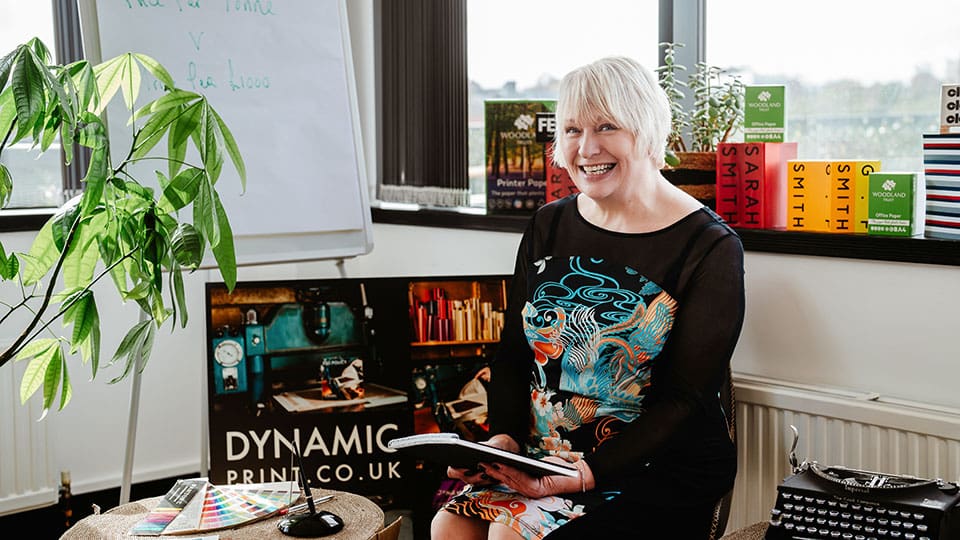
Dynamic Print offers several unique eco-friendly products, produced on vintage 1940s and 50s machines. We speak to Sarah Smith, managing director of Dynamic Print, to find out more about this unique and sustainable business
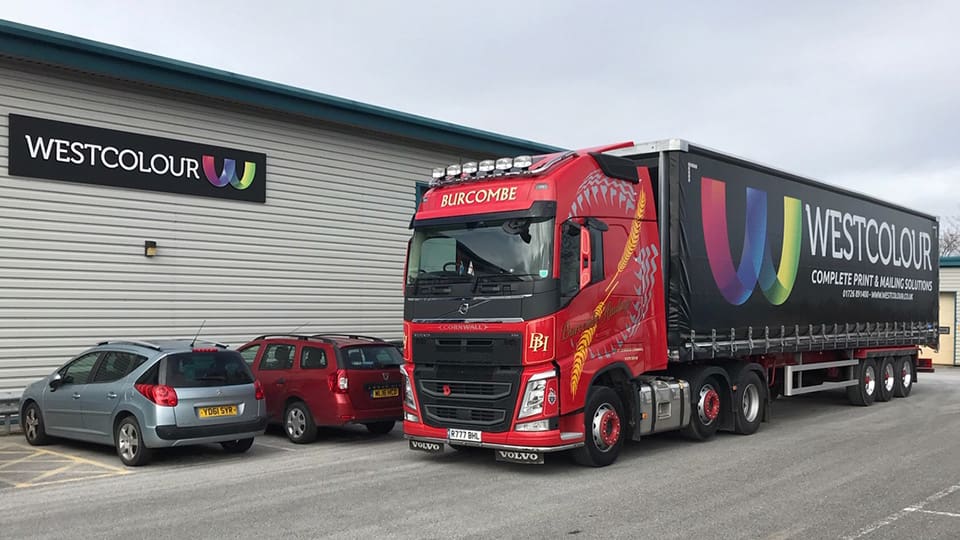
Following a raft of investments, and a renewed energy in the industry for print and mailing, we speak to Westcolour about how the company positions itself in the market and how it has evolved to be a provider of paper wrapped products
(this was inserted into the PHP of a code block)
Watch our latest video of the week
Print Monthly gives you the latest video coverage of companies, people, and events from within the print industry.