With the Data Protection and Digital Information (DPDI) Bill currently being finalised in the House of Lords, Stephen Lester, chief technology officer of Paragon, discusses how printers could use the legislation to their advantage
Guest Writer
May 8, 2024
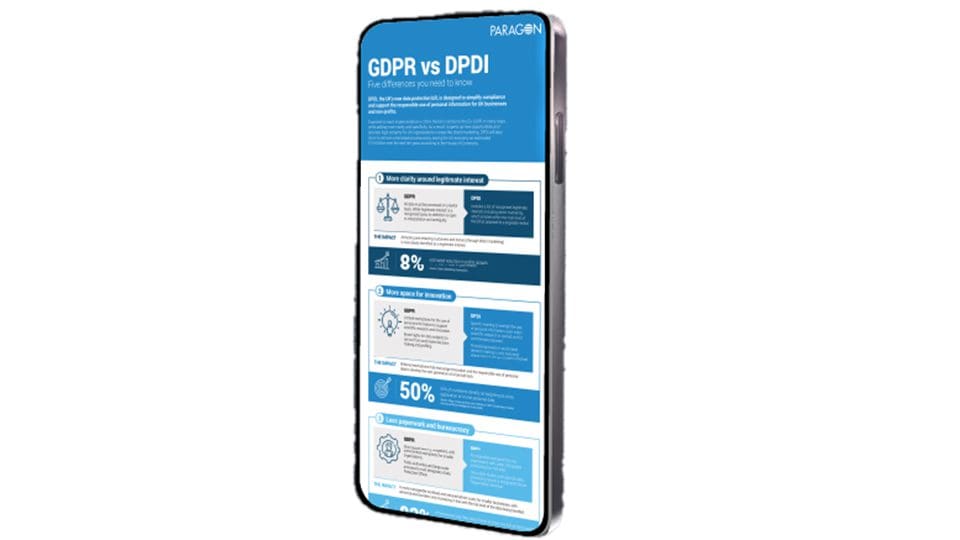
Paragon has created a 12-page pocket guide about DPDI for its customers
Nearly six years after GDPR was implemented, the norms of data protection are ingrained in operations across the print industry. Obtaining consent accurately and implementing Data Protection Impact Assessments (DPIAs) are now second nature for businesses.
With GDPR embedded within our organisational structures, the recent policy changes and the forthcoming Data Protection and Digital Information (DPDI) Bill revisions evoke both curiosity and apprehension. However, DPDI not only raises questions but also fosters discussions about new opportunities for UK organisations to leverage the legislation to their advantage.
DPDI is fresh UK legislation aimed at clarifying privacy and data protection post-Brexit. Beyond increasing clarity, it also seeks to remove restrictions that hinder legitimate data usage and foster economic growth. Currently being finalised in the House of Lords, DPDI is a progressive extension of GDPR. It ensures the safeguarding of consumer data while unveiling new avenues for growth within UK organisations by removing restrictions on the use of data for direct marketing that GDPR quashed overnight.
Challenges Faced by Direct Marketing Strategies
Before we dive into everything DPDI can offer organisations, it's important to recognise the challenges faced by direct marketing strategies so we can truly understand the impact DPDI will have. While direct methods have long been the cornerstone of marketing efforts, notably in the print industry, the emergence of digital content platforms has introduced both opportunities and challenges.
In this era of changing consumer behavior, there's a growing emphasis on personalised experiences and engagement. Today's consumers actively seek out content that resonates with their interests and values, demanding more from the brands they interact with.
Creating Opportunity for Direct Marketing
Direct marketing, especially direct mail and printed media, may face challenges in meeting these evolving expectations, but it still holds value in reaching broader audiences and conveying brand messaging, through a tangible medium that connects directly with the consumer and provides a physical link to the brand.
The proliferation of digital content platforms, including social media and streaming services, has broadened the avenues through which businesses can connect with their audiences. Yet, direct digital marketing strategies, including email campaigns, relied on GDPR’s definitions of ‘legitimate interest’ to ensure the activity was lawful.
Stephen Lester, chief technology officer at Paragon
The definition of ‘legitimate interest’ often proved difficult for organisations to interpret and marketers were unsure of what actions could lead to penalties. This ambiguity prompted some firms to be cautious and pause their direct marketing campaigns, which also curtailed their analytics and digital marketing efforts.
Despite this uncertainty, it's worth noting that direct marketing remained an option under GDPR, albeit with less legal clarity around legitimate interest. Many industries instead opted for cautious strategies that didn't require explicit opt-ins.
With the introduction of DPDI, organisations will now have much-needed clarity and legal certainty underpinning their marketing practices. DPDI therefore presents an opportune moment to reassess customer communication strategies and re-engage with a full spectrum of marketing tools, all while reinforcing consumer privacy.
DPDI presents an opportune moment to reassess customer communication strategies and re-engage with a full spectrum of marketing tools, all while reinforcing consumer privacy
Perhaps the most significant opportunity afforded by DPDI is the resurgence of direct mail in a direct marketing strategy as a clearly identified legitimate interest. Direct mail, a critical component of the marketing mix, particularly in the print industry, offers distinct advantages that can complement digital marketing efforts.
According to a JICMAIL Attention Study last year, direct mail boasts improved engagement rates and longer, uninterrupted attention spans compared to digital channels.
As organisations embrace DPDI and re-evaluate their marketing strategies, direct mail is poised to regain its position as a powerful tool for reaching and engaging audiences. Its tangible nature and physical presence make it highly effective in capturing attention and driving action. According to the Royal Mail, mail is remembered 35% more than social media and 49% more than email, highlighting its impact on audience recall.
The Bridge Between Digital and Print
DPDI not only reignites direct mail, but also enhances its effectiveness by allowing straightforward integration with digital channels. By incorporating QR codes and links, print materials serve as gateways to expansive digital experiences, enriching the overall customer journey while enabling precise tracking and measurement of campaign performance across all platforms.
In fact, according to JICMAIL data, 6% of mail sent in Q3 2023 prompted a purchase, highlighting the significant impact direct mail can have on driving consumer action. Direct mail serves as a vital bridge to digital engagement, offering a tangible entry point for audiences to interact with online content.
This is particularly valuable for reaching audiences who may be less inclined to engage with digital channels. By leveraging the power of print and digital together, businesses can create more comprehensive and impactful marketing campaigns that resonate with their target audiences.
How Can Organisations Prepare for DPDI?
DPDI will continue to change on its journey to Royal Assent and implementation. But there are a few key things you can do now to make sure you stay ahead of the changes:
Communicate with your teams: While DPDI shares similarities with GDPR, now is the time to refresh everyone's understanding of the requirements, any nuanced changes, and how to handle personal information appropriately.
Assess your direct mail capability: Since GDPR, your organisation's capacity for direct mail may have diminished. Invest in rebuilding the necessary skills and explore recent innovations in personalisation and targeting to enhance the effectiveness of your direct mail campaigns.
Consider the geographical distribution of your customer base: Tailoring processes for both UK and EU audiences, where GDPR still applies, may be worthwhile. Begin by gaining insights into the geographic distribution of your customers to inform your strategic decisions.
Conduct a thorough review of your current compliance practices: Evaluate your existing compliance policies, public-facing privacy statements, and internal procedures. DPDI may offer opportunities to streamline some administrative tasks, so it's essential to identify areas for improvement.
Communicate with your supply chain: Be proactive in initiating the DPDI dialogue with your ad tech, data brokers, and marketing vendors. Their responses to the change could unveil fresh opportunities.
Utilising DPDI Effectively in Marketing Campaigns
Although implementing new compliance standards can be daunting, the DPDI bill will provide increased clarity and, according to the Data & Marketing Association (DMA), deliver ‘additional pro-growth opportunities’. Perhaps the most impactful of these is the chance to reignite direct marketing, including direct mail as a clearly identified legitimate interest.
Under DPDI, print industry organisations can capitalise on the strengths of traditional marketing strategies while being certain of the data protection regulations they must adhere to.
Marketing manager and freelance marketing consultant, Rachael Hunt, talks about the impact a social media ban could have on print and the wider trend of disconnecting from digital technology to interact with tactile experiences for both practical and marketing purposes
Advercado was set up in 2020 by Joe Reid and Will Booth as a way for small businesses to find affordable advertising. Six years later the company is reaching out to printers to help local businesses utilise PSPs. In this article, Reid tells about the thinking behind this venture
A true flatbed printer can enable greater accuracy and positional placement of media. However, that's not to say that belt-fed hybrid solutions don't have their place. But what are the differences between the two technologies? SwissQprint gives its insight
(this was inserted into the PHP of a code block)
Watch our latest video of the week
Print Monthly gives you the latest video coverage of companies, people, and events from within the print industry.