Jonathan Pert explores a selection of the latest breakthroughs in wide-format printing, analysing what they can provide to PSPs
Jonathan Pert
July 16, 2025
In today’s fast-evolving print landscape, wide-format printing is seemingly experiencing a renaissance, driven by technological innovations and shifting customer demands.
This year’s FESPA Global Print Expo was awash with new releases in the wide-format space. To name just a few brands, Agfa used the speciality print exhibition to reveal its new Jeti Tauro H3300 XUHS and Onset Panthera FB3216 to the public, HP demonstrated its recently announced Latex R530 for the first time in EMEA, and Epson launched its 64-inch wide-format eco solvent signage printer, the SC-S8100.
From faster print speeds and automated workflows to expanded substrate compatibility and environmentally conscious inks, recent innovations are redefining what's possible in wide-format print. As manufacturers race to deliver smarter, more versatile solutions, print service providers (PSPs) are finding new opportunities to differentiate, diversify, and drive profitability.
This feature explores a small selection of the latest breakthroughs in wide-format technology, analysing what these innovations provide to the sector and what further innovations may be on the horizon.
A New Avenue
Japanese press manufacturer, Mimaki, has unveiled a raft of solutions in the last year, including presenting a number of new offerings at this year’s FESPA Global Print Expo.
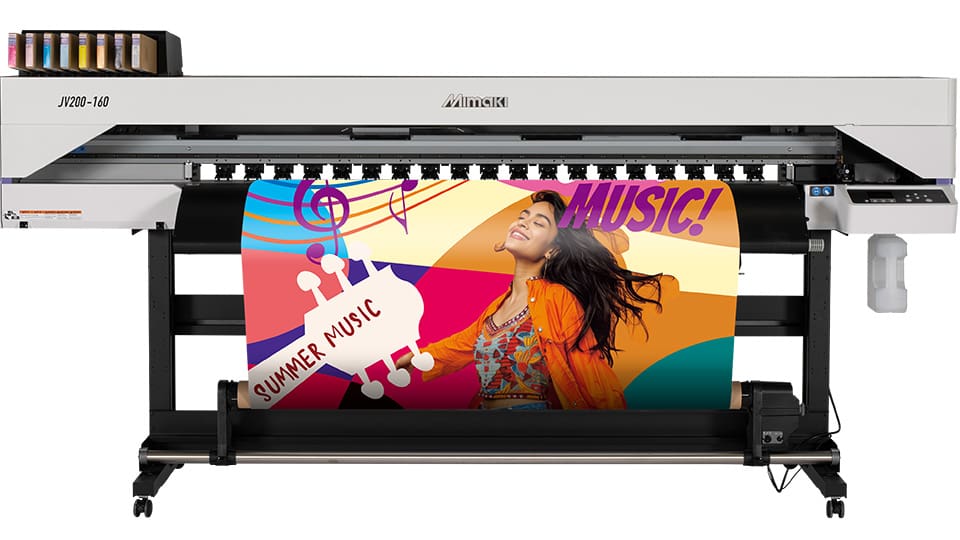
A standout among these many solutions was the JV200-160, a new roll-to-roll printer based on the previously released CJV200 series that aims to offer an entry-level option to the market without compromising on quality.
Andrew Edwards, partner sales manager of Sign & Graphics at Hybrid Services, Mimaki’s exclusive distributor for the UK and Ireland, says there’s more than meets the eye with this new machine. “While the Mimaki JV200-160 is categorised as an ‘entry-level’ solvent printer, that doesn’t really do it justice,” says Edwards.
“Yes, it’s accessible and easy to use, but it delivers far more than you’d expect at this level. It’s a great first investment for a new print business thanks to its simplicity, print quality, and speed, but those same qualities make it a smart addition for established companies looking to increase capacity without overstretching.”
The 1.6m eco-solvent inkjet printer is equipped with a single 330 Engine print head, allowing operators to produce prints more simply without the need for an exhaustive experience. However, this simplicity belies the speed of the press. The JV200-160 offers reported production speeds of up to 17sq m/hr, which the company labels as “the highest entry-level practical print speed.”
When announcing the JV200-160, Arjen Evertse, director of sales at Mimaki Europe, commented: “Our CJV200 series of integrated printer/cutters, introduced last October, have been extremely well received by the market. The JV200-160 joins this product series to deliver the same exemplary image quality and top-level productivity for the entry class – now in a print-only model that’s easy to operate and maintain.”
The Mimaki JV200-160 is based on the previously released CJV200 series
Alongside the printhead, the press utilises Mimaki’s BS4 ink set, supplied in 600ml cartridges. The press is also compatible with Mimaki’s new ink SS22 ink, which has been calculated to reduce odour by approximately 40% and is free from gamma-butyrolactone (GBL), the use of which has been increasingly regulated around the world.
The press uses the same piezoelectric printhead assembly as the manufacturer’s CJV330 series models, offering a range of resolutions from 600x600 to 1200x1200dpi, with reported drop sizes down to as little as 3pl.
Speaking about why the demand for the series remains strong, Edwards highlights an increasing need for signage and graphics professionals to keep costs down while maintaining a minimum quality standard. “From a commercial perspective, the value proposition is remarkable”, he asserts.
“The JV200-160 holds its own against other brands’ higher-priced eco-solvent and latex models, but with a significantly lower upfront investment. For a budget-conscious buyer, it delivers on all fronts.”
Edwards goes on to highlight the importance of choosing a solution from a proven manufacturer, with a strong technological track record to work from. As he puts it: “Importantly, the new printer is based on a proven platform. The JV200-160 uses the same core print engine as our flagship 330 Series. That technology is robust, reliable, and already working successfully in high-demand production environments.
“If you’re looking to step into wide-format solvent printing or simply want a hardworking addition to your existing setup, the JV200-160 delivers capability and confidence at a very competitive price point.”
The Key Fundamentals
You only need to glance at the wide-format sector to find a new release, a technological breakthrough, or an expansion by a major player into a new part of the market.
For John O’Brien, commercial director of Liyu England, while the world of wide-format is ever expanding, the core considerations for printers remain the same. “The fundamentals haven’t changed,” O’Brien asserts, adding: “Speed, build quality, print quality, reliability, support, and cost still sit at the top of the list.”
However, O’Brien posits that buyers in 2025 are increasingly looking at how well a machine can integrate into their existing setup and how it can futureproof their business, especially in the wake of rising costs of overheads such as energy and stock. “Uptime is critical, so build quality and robust UK-based support should be non-negotiable,” O’Brien says. “Buyers should also evaluate the total cost of ownership, not just the upfront investment, but also energy use, maintenance cycles, and ink efficiency.”
Liyu has recently launched several new models under the Liyu X Line range, including upgraded flatbeds and hybrid machines designed for high-volume environments. The new X Line solutions are designed to deliver higher speed and quality in comparison to previous models, with improved user interfaces and better remote monitoring options.
The latest releases come after the February launch of the X Line Hybrid, a 2.1m hybrid printer which offers 2400dpi resolution, 5pl drop size, and compatibility with a number of inks and a wide range of substrates.
Alongside its latest wide-format print solutions, a new digital cutting machine was also released as part of the X Line. The cutter comes with an automatic camera positioning system for complex patterns as well as a ready-built chassis which Liyu says makes it robust, reliable, and modular.
The X Line Hybrid offers print speeds of up to 65sq m/h
“Investing in the right finishing gear is just as important as the printer itself,” O’Brien comments. “We offer an X Line cutter that complements our printers with precision, speed, and automation.”
O’Brien contends that the wide-format market is expanding to include a larger range of manufacturers and choices. “We’ve seen a shift in expectations”, he says. “Speed and build quality are no longer exclusive to the big legacy brands.
“More manufacturers, including those who were once considered challengers, now offer genuinely high-performance machines. This has shaken up the market in a good way, as customers are getting more value and choice. Digital workflows and hybrid solutions have also made wide-format much more agile, allowing PSPs to diversify faster and handle shorter lead times more efficiently.”
O’Brien’s point about the expansion of the wide-format market is borne out in the seemingly ever-increasing number of kit releases in the sector. Alongside Liyu, there have been new solutions from companies including Mutoh, swissQprint, Mimaki, Fujifilm, HP, Epson, Durst, and InkTec in just the last six months.
But what innovations in wide-format are on the horizon? For O’Brien, sustainability is top of mind: “Expect to see more eco-friendly inks, energy-efficient curing systems, and recyclable substrates,” he predicts.
“Remote management is also improving fast; more machines now offer diagnostics and updates online. Robotics will play a growing role in media handling and finishing, and artificial intelligence (AI) could soon assist with file prep and predictive maintenance. It’s an exciting time for PSPs willing to adapt.”
A New Player
Part of the shake-up that has led to so much innovation in wide-format in recent years is due to increasing market competition from a growing range of countries, including India and China.
None understand the increasing prevalence of Chinese wide-format solutions more than Scott Clutton, managing director of China Print Supplies (CPS). As the name suggests, CPS is a distributor that sources the latest printing technologies and supplies directly from leading manufacturers in China, including SinoColor and Gongzheng.
For Clutton, the incorporation of new technological innovations is key to keeping on the cutting edge of the industry and maximising your output. As he states: “Print companies should evaluate several key aspects, including the incorporation of new technologies. Examples of these technologies include AI-driven smart positioning cameras, plasma surface treatment, and simultaneous double-sided printing.”
The wide-format sector has seen significant innovation and evolution in recent years. In large part, this is due to increasing competition from China
In Clutton’s opinion, the influence of China in the wide-format market is both significant and growing. “The wide-format sector has seen significant innovation and evolution in recent years,” he comments. “In large part, this is due to increasing competition from China, which is gaining a reputation for introducing the latest advancements before other markets. Our business is built on identifying these advancements and bringing them to the UK market to give customers unprecedented quality and value.”
CPS has recently introduced a new high-speed roll-to-roll printer to the UK market, the Gongzheng ThunderJet AQ1800UV. The 1.8m roll-to-roll UV solution has been developed for multi-layer printing on a wide range of substrates, with both white ink and varnish options. Its Epson i3200 printheads deliver print speeds of up to 58.5sqm/hr.
The ThunderJet AQ1800 allows for printing on a wide range of media including vinyl, backlit textile, and PVC film
The solution comes with a range of additional features designed to simplify the print process, including a water-cooling platen designed to enable printing on heat-sensitive substrates without wrinkling. It also offers a white ink recirculation system that operates during idle time to prevent pigment sedimentation. The ThunderJet joins CPS’ range of solutions including DTF, rotary, and flatbed options as well as a variety of consumables and finishing equipment, representing a varied arsenal for PSPs to choose from.
This includes the Sinocolor FB-2513S flatbed printer, which was recently purchased by Welsh speciality printer, Custom Print Solutions, as part of expansion plans that included purchasing a fourth factory in its hometown of Caerphilly.
The 8 x 4ft flatbed offers eight printheads as standard, with six heads for colour and two for white. The press can be upgraded to up to 11 colours, with a 2400dpi resolution, a 75 m2/h printing speed, and variable dot printing capabilities.
Simon Green, director of Custom Print Solutions, comments on the purchase: “It’s the first time we bought a machine from China Print Supplies, though I know Scott Clutton well. Scott went through all the details with the boys.
“My guys were excited that it was an eight head flatbed printer. We do a lot of research before we make any purchase, and they did some trials with us on some specialist materials, which the machine passed.”
Finishing Strong
Alongside its range of print solutions, CPS has partnered with Graphtec GB to resell a range of its finishing solutions including Graphtec plotters and WidInovations laminators. Clutton’s praise of Graphtec GB’s solutions is clear, with him saying: “We collaborate with Graphtec for plotters due to their reliability. This is a hugely important area of the market, and we are always looking for more finishing equipment to complement our printers.”
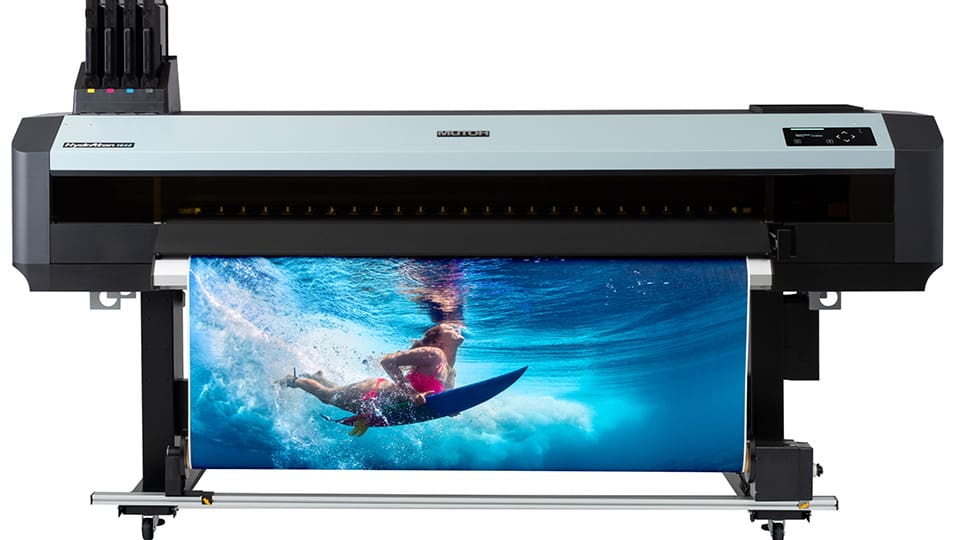
Graphtec GB is the UK’s official Graphtec, Mutoh, and WidInovations importer and distributor. Among the range of solutions on offer by Graphtec GB is the newly released Mutoh HydrAton 1642, a 64-inch roll-to-roll printer featuring the company's latest water-based UV technology. According to Tom Kneale, managing director of Graphtec GB: “The recently announced Mutoh HydrAton will be very popular for specific applications, such as food production environments or wallpaper applications in hospitals.”
The HydrAton 1642 uses a new ‘AQUAFUZE’ UV-curable ink technology
First showcased at drupa 2024, the HydrAton 1642 utilises a new ‘AQUAFUZE’ UV-curable ink technology. The solution, which was developed with Fujifilm, involves a hybrid ink system that combines the benefits of water-based and UV-curable inks. It aims to utilise Fujifilm’s proprietary dispersion technology to achieve low volatile organic compound (VOC), low-odour, and non-hazardous printing.
It has also been designed to adhere to a wider range of substrates including non-porous materials, without the need for primers or adhesion promoters. The ink film has been developed to offer high scratch resistance without requiring an overcoat, making it ideal for wallpapers, retail décor, indoor signage, and public space applications.
In Kneale’s opinion, this push for ink innovation is a clear trend in print that will likely see further advancements in the near future. “Various types of inks, such as UV, eco-solvent, water-based, flexible, and rigid inks, are now available, offering solutions for diverse applications. The sheer breadth of solutions that are now available is huge and cover many more applications than ever before,” he adds.
The sheer breadth of solutions that are now available is huge and cover many more applications than ever before
“In my opinion, we will continue to see advancements in ink technology for various substrates and an expansion of the colour gamut. Currently, we offer five or six different ink technologies suitable for a range of applications.”
Kneale also stresses the importance of choosing the right finishing solutions to pair alongside your printer, ones which can integrate seamlessly and reliably. He suggests that those using Mutoh solutions should consider pairing them with Graphtec cutters, saying: “Graphtec cutters are renowned as the leading brand in the UK, USA, and Europe, and they integrate seamlessly with Mutoh printers.
“The integration of Mutoh printers and Graphtec plotters with barcode systems has streamlined the process, making it more efficient and user-friendly than ever before.”
Factoid:The Iris Graphics Model 3047, introduced in 1989 and considered by many to be the first digital wide-format inkjet printer, sold for $126k (£223k) upon release
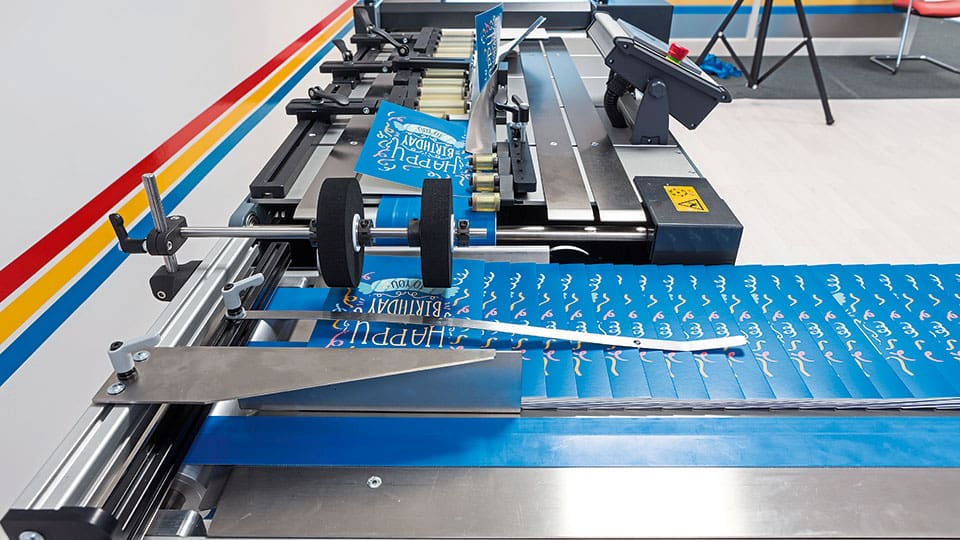
The Mutoh Graphtec barcode system facilitates continuous cutting of pre-printed media by reading barcodes to detect data changes. This can enable seamless processing of sequential print and cut jobs on roll media, even with different data sets, by detecting the ‘start mark’ of a new barcode.
PSPs need not be reminded of the importance of robust finishing solutions in providing high quality output. Finishing transforms your printed image into a high-quality, functional, and visually appealing product, and so the ability for your wide-format printer to pair seamlessly with these solutions should always be a key focus.
Kneale concludes: “The integration of Mutoh printers and Graphtec plotters with barcode systems has streamlined processes, making it more efficient and user-friendly than ever before.”
Room to Grow
As businesses continue to demand more agile, efficient, and high-quality print capabilities, wide-format solutions will need to step up with innovations that blend speed, precision, and sustainability.
As it stands, it seems that the technology is keeping in step with the sector, providing more possibilities by the day. With advancements in automation, smart connectivity, and sustainable solutions on the horizon, the next wave of wide-format solutions have the chance to not just meet the needs of today but also reshape what is possible tomorrow.
From advances in print quality and productivity to increasing demand for automation and sustainable solutions, the wide-format market continues to evolve. Rob Fletcher looks at the latest trends, challenges, and developments in this sector
Speaking to a range of print and signage professionals, we discover how a sustainable business model can drive growth, outlining actionable strategies to cut overhead costs, improve eco-efficiency, and boost your bottom line
As finishing continues to become a great way to add extra elements to your print and wow customers, we take a look at some of the creasers, folders, and collators on the market, and ask experts their advice on finding the right solutions
(this was inserted into the PHP of a code block)
Watch our latest video of the week
Print Monthly gives you the latest video coverage of companies, people, and events from within the print industry.