How AI Is Changing Design Workflows and What It Really Takes to Build a Print-Led Brand in 2026
In this guest article from The T-Shirt Bakery, we find out first hand how AI is being used to improve workflow and the value it adds to a business looking to grow in 2026
The print industry is no stranger to disruption. Desktop publishing changed who could design and how quickly ideas could move from concept to file. Digital print removed many of the cost and setup barriers that once defined production runs. Automation improved consistency, throughput, and repeatability across environments that had historically relied on manual skill and judgement.
Each of those shifts altered speed and access. None of them fundamentally changed how decisions were made.
Designers still designed. Pre-press still checked files. Printers still solved problems on the floor. Technology accelerated execution, but responsibility and judgment remained clearly human and sequential.
Artificial intelligence (AI) represents a different category of change.
AI does not simply automate existing steps. It alters where decisions occur within a workflow, when they surface, and how much interpretation is embedded in systems before a human intervenes. In print, where small decisions compound quickly and physical output exposes weak thinking immediately, that distinction matters.
This article is not about hype, fearmongering, or the idea that AI replaces designers. It doesn’t. What matters heading into 2026 is understanding where AI genuinely adds value, and where human judgement still defines success.
For print-led brands, the question is no longer whether AI will appear in their workflows. It already has. The real challenge is learning how to use it without surrendering the craft, restraint, and decision-making that make print credible in the first place.
From Linear Automation to Adaptive Design Workflows
For decades, print and design workflows have been largely linear. An idea is developed, a design is created, files are prepared, checks are carried out, and production begins. Each stage depends on the one before it being completed correctly. When something goes wrong, the process slows, loops backwards, or breaks entirely.
This structure has always been fragile. It relies on rules, hand-offs, and assumptions. A missed specification, an incorrect colour profile, or a resolution issue discovered late in the process can trigger rework, delays, and waste. Automation helped reduce some friction, but the underlying structure remained sequential.
AI changes that structure.
Instead of waiting for problems to surface at defined checkpoints, AI-assisted systems can evaluate files dynamically as they are created. Layouts can be optimised in real time based on output constraints. Pre-press checks can happen continuously rather than at the end of the process. Iteration becomes faster not because people work harder, but because fewer decisions are deferred.
Dynamic layout optimisation is a clear example. Rather than designers manually adjusting compositions for different formats, AI can suggest viable variations early, highlighting where layouts may break when scaled, cropped, or repurposed. This doesn’t remove creative responsibility, but it reduces the cost of exploration.
AI can generate visuals, but it cannot judge physical experience. Fabric hand-feel, garment weight, and how ink behaves over repeated wear and washing remain outside its reach
Automated pre-press checks operate similarly. Resolution, colour space, bleed, and sizing issues can be flagged immediately rather than discovered after files have moved downstream. This shifts error correction earlier in the process, where it is cheaper and less disruptive.
The result is a shorter path from idea to print, fewer late-stage surprises, and more room to experiment without risking production stability.
Significantly, this matters to brands, not just printers. Brands increasingly expect faster turnaround, smaller runs, and more frequent updates. Linear workflows struggle under that pressure. Adaptive workflows absorb it.
That said, it’s essential to be realistic. Most print environments today are hybrid. AI does not replace existing systems wholesale. It sits alongside them, supporting decisions rather than dictating outcomes. The brands that benefit most are not those chasing full automation, but those integrating AI thoughtfully into workflows that already respect print realities.
How AI Is Reshaping the Designer’s Role (Not Replacing It)
One of the most persistent misconceptions around AI in design is that it replaces creative roles. In practice, its impact is more subtle – and more useful.
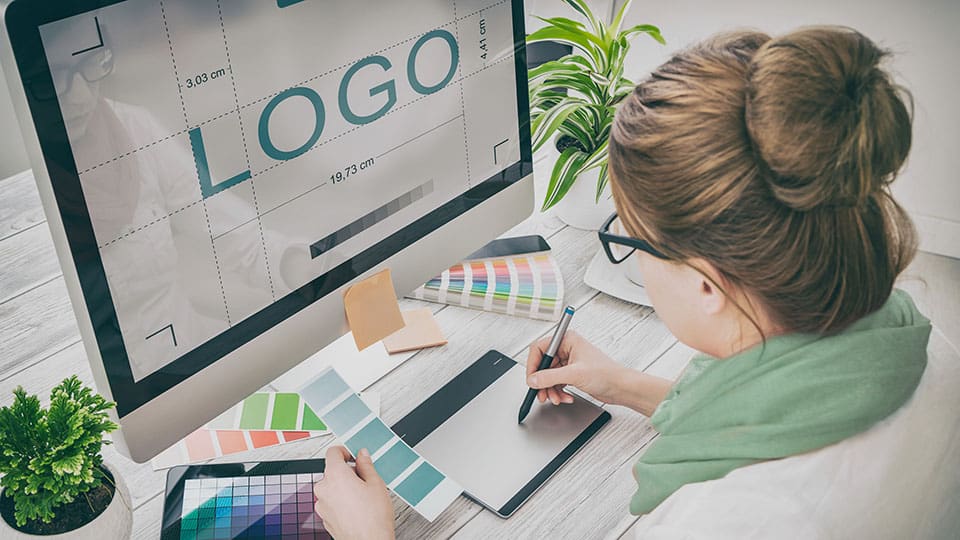
AI’s most immediate value for designers today is not in generating finished work, but in reducing the time spent fixing files and resolving technical constraints. Concept exploration, layout suggestions, and compliance checks can all be accelerated without diminishing creative ownership.
Designers can explore more directions early. They can test ideas without committing hours to refinement. They can receive immediate feedback on whether a concept will survive production constraints. This shifts effort away from correction and towards direction.
Technical compliance is where AI is already proving its worth. Resolution checks, colour warnings, and sizing constraints are handled faster and more consistently by machines than by humans under time pressure. That consistency matters. It reduces friction between design and production and builds trust across teams.
What designers gain is speed, confidence, and cognitive space, as opposed to losing control.
AI lacks an understanding of brand tone and visual restraint. It cannot judge when something should be quieter, more straightforward, or deliberately understated, nor can it account for cultural context, emotional resonance, or the long-term consequences of visual decisions. These remain human responsibilities.
As tools become more powerful, the designer’s role shifts upward. Less time spent correcting files. More time spent deciding what should exist at all. More emphasis on judgment, taste, and intent.
This is a critical distinction heading into 2026. AI accelerates decisions, but it does not define taste. Brands that mistake speed for direction risk producing more work, faster, without improving quality.
Where AI Stops – and Brand Craft Still Begins
Print is unforgiving. It quickly and permanently exposes weak thinking.
AI can generate visuals, but it cannot judge physical experience. Fabric hand-feel, garment weight, and how ink behaves over repeated wear and washing remain outside its reach.
These are not minor details. They are the difference between a product that feels considered and one that feels disposable.
A design that looks resolved on screen can fail once translated into a physical form. Fine details disappear. Colours shift across substrates. What felt expressive digitally becomes noisy or fragile in reality.
This is where AI-led sameness becomes a risk. When brands rely too heavily on generative systems, outputs converge. Designs become overly busy, trend-driven, or optimised for screens rather than touch. Print magnifies those weaknesses.
Strong print-led brands heading into 2026 are already moving in the opposite direction. They are producing fewer designs, not more. They are spending more time on materials, finishes, and construction. They are using AI selectively – as a tool to test and refine ideas, not to replace judgment.
Physical products reward restraint. They reward clarity. They reward decisions made with an understanding of how something will feel, wear, and age. These are not things AI can learn from prompts alone.
This is where human craft remains non-negotiable. The more powerful tools become, the more critical it is to know when not to use them.
AI Inside the Print Operation – Efficiency Without Losing Craft
When AI enters the print operation itself, the conversation changes. This is not the realm of speculative creativity or generative visuals, it is about efficiency, consistency, risk reduction, and critically, about supporting skilled decision-making rather than replacing it.
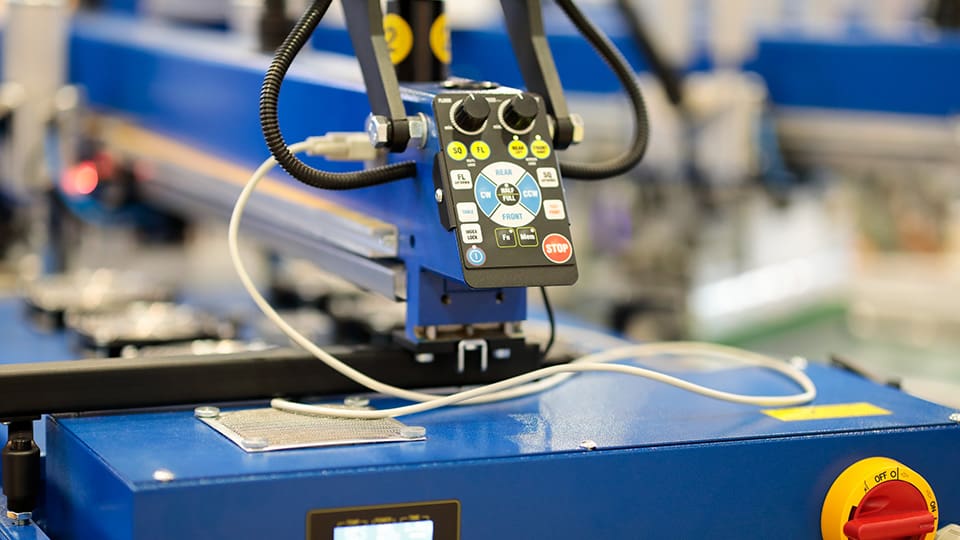
One of the most tangible areas where AI is already proving its value is predictive maintenance. Print equipment operates under demanding conditions: heat, pressure, repetition, and constant material variation. Traditionally, maintenance has been reactive, like when something breaks, or when it gets serviced whether it needs it or not. AI-assisted monitoring introduces a more nuanced approach. By analysing machine behaviour over time, it can flag subtle deviations that suggest wear, misalignment, or calibration drift before they cause visible defects or downtime.
This does not remove the role of the printer or engineer. On the contrary, it depends on their judgment. AI highlights probability, not certainty. The decision to intervene, adjust, or continue production remains a human one. What changes is timing. Problems are addressed earlier, when they are easier and cheaper to resolve.
Job scheduling is another area where AI is making quiet but meaningful improvements. Print operations juggle variables that are difficult to optimise manually: order priority, substrate availability, machine capability, drying times, staffing, and delivery deadlines. AI-driven scheduling tools can model these constraints simultaneously, suggesting production sequences that reduce bottlenecks and idle time.
For production managers, this doesn’t mean surrendering control. It means having better information at the point where decisions are already being made. Schedules become more resilient. Last-minute changes are absorbed more smoothly. Pressure is redistributed rather than concentrated at the final stages.
Error detection and waste reduction are the most directly felt benefits. AI-assisted systems can identify anomalies in output – registration drift, colour inconsistency, or surface defects – faster than the human eye alone, especially over long runs. Catching errors earlier reduces rework, material waste, and energy consumption. Sustainability benefits emerge not through branding, but through efficiency: fewer spoiled garments, fewer aborted runs, fewer unnecessary repeats.
This is where AI’s role in sustainability is most credible, not through claims, but through measurable reduction in waste and inefficiency.
Crucially, none of this replaces skilled printers. Print quality is still defined by judgment: knowing when a result is “technically acceptable” but creatively wrong, or when a slight imperfection matters because it undermines the brand. Automation can improve output. Craftsmanship defines quality.
The most effective print floors heading into 2026 will not be the most automated. They will be the most informed environments where AI supports better decisions without eroding the experience and intuition that underpin good print.
What It Takes to Build a Print-Led Brand Heading into 2026
As AI becomes more accessible, it stops being a differentiator. It becomes infrastructure.
This is an uncomfortable truth for many brands. New tools promise an advantage, but that advantage quickly erodes once they become widely available. By 2026, AI-assisted design, pre-press, and scheduling will be standard. The brands that stand out will not be the ones using the most software, but the ones making the clearest decisions.
Strategy beats software.
Successful print-led brands heading into 2026 are characterised by clarity of intent. They know what they are producing, why it exists, and the standards it must meet. Expectations around quality, consistency, and physical experience are defined early and defended throughout the process. AI can support these goals, but it cannot define them.
Strong brands invest in print partnerships, not just suppliers. They work with printers who understand their standards, constraints, and intent. AI can accelerate sampling and iteration, but it cannot replace the trust built through collaboration. Faster feedback loops matter only when feedback is meaningful.
Automation can improve output. Craftsmanship defines quality
Sampling cycles are becoming shorter, but not less important. AI allows more variations to be explored early, but the final decision still rests on physical evaluation. How does it feel? How does it wear? How does it align with the brand’s identity when removed from the screen and placed in the real world?
This is where human judgment becomes more valuable, not less. As tools become more powerful, the cost of poor judgment increases. Producing more designs faster is not an advantage if those designs dilute identity or compromise quality.
The competitive edge lies in restraint. Knowing when not to generate another option, knowing when a design is “good enough”, knowing and when it needs more thought. This all means knowing which decisions benefit from AI assistance and which must remain firmly human.
Print-led brands that succeed in 2026 will not chase novelty for its own sake. They will use AI to remove friction, not responsibility. They will treat technology as a multiplier of intent, not a substitute for it.
Conclusion – The Tools Are Changing, the Fundamentals Are Not
AI will continue reshaping design and print workflows, whether brands actively engage with it or not. Its presence will become normalised. Its advantages will become expected. The question will no longer be who is using AI, but how intentionally it is being used.
The brands that succeed will not be the most automated. They will be the most deliberate.
Heading into 2026, print-led brands win by combining machine speed with human taste, and efficiency with physical excellence. AI accelerates processes, reduces friction, and surfaces insights. Human judgment defines direction, quality, and meaning.
Print remains a physical medium in a digital-first world. That is its strength. It rewards clarity, restraint, and craft. No amount of automation can compensate for weak thinking, just as no amount of creativity can excuse poor execution.
The next phase of print will not be defined solely by tools. It will be determined by how well brands understand their role within the workflow, like when to delegate to machines, when to intervene, and when to trust experience over output.
AI is not a replacement. It is a multiplier. And the brands that understand that distinction will lead, while others simply produce more – faster – without becoming better.
For further context:
This article was written by The T-Shirt Bakery, a UK-based print partner working with brands and organisations navigating evolving design workflows, production realities, and the practical use of AI within print environments. Learn more at The T-Shirt Bakery.
Marketing manager and freelance marketing consultant, Rachael Hunt, talks about the impact a social media ban could have on print and the wider trend of disconnecting from digital technology to interact with tactile experiences for both practical and marketing purposes
Advercado was set up in 2020 by Joe Reid and Will Booth as a way for small businesses to find affordable advertising. Six years later the company is reaching out to printers to help local businesses utilise PSPs. In this article, Reid tells about the thinking behind this venture
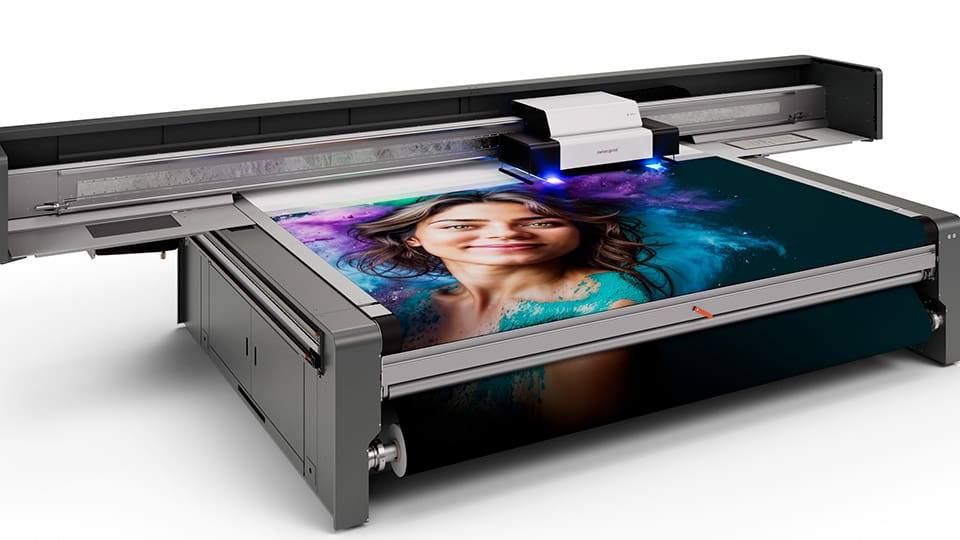
A true flatbed printer can enable greater accuracy and positional placement of media. However, that's not to say that belt-fed hybrid solutions don't have their place. But what are the differences between the two technologies? SwissQprint gives its insight
(this was inserted into the PHP of a code block)
Watch our latest video of the week
Print Monthly gives you the latest video coverage of companies, people, and events from within the print industry.