Food wholesaler boosts output with IGS Cobalt SP800 printer
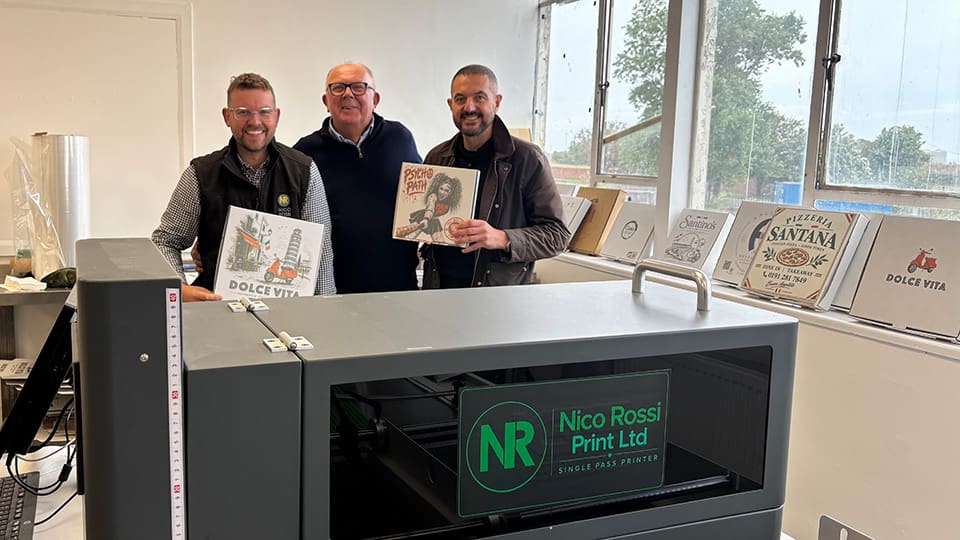
British food wholesaler, Nico Rossi, has purchased and installed an IGS Cobalt SP800 single pass printer at its headquarters in order to expand its in-house and short-run print output



Babybel is rolling out its new paper outer packaging throughout 2026, after an initial UK launch in December 2025

Babybel has begun introducing recyclable paper packaging across its range, with a switch to paper exterior packaging.
Following an initial UK launch in December 2025, the new paper wrappers are now being rolled out in the US, Canada, and Northern Europe in 2026. By 2027, 100% of Mini Babybel products across all 50 markets will use certified, recyclable paper packaging.
While Babybel previously used bio-based, home-compostable cellophane, its move to paper means the packaging will now be fully compatible with existing recycling systems. The familiar red wax coating around the cheese remains in use, in order to protect the cheese.
Print and paper advocacy group, Two Sides UK, has recently highlighted Babybel’s shift to paper packaging, claiming that the move “signals a growing commitment to packaging that better supports a circular economy.”
Speaking in a recent blog on the organisation’s website, Two Sides UK says: “Packaging plays an important role in shaping how consumers engage with sustainability. Materials that are clear, familiar, and easy to dispose of correctly are often the most effective.
“Paper is particularly strong in its ability to be recycled with ease, which is supported by its established infrastructure and a high level of public understanding.”
Bel Group, the parent company that owns the Babybel brand, says that eco-friendly packaging is at the heart of its innovation strategy. The company adds: “Although packaging accounts for only 5% of the group's carbon footprint, we’re committed to minimising their impact by embracing an eco-design approach throughout the product lifecycle.
“It’s all about striking the right balance between the numerous benefits of individual servings and sustainable packaging management.”
Two Sides highlights that Group Bel is not alone in exploring paper-based solutions. Other major brands are making similar moves, such as Walkers introducing paper multipack bags or Mars transitioning some of its chocolate bars to paper-based packaging.
The shift in the food industry towards sustainable materials also impacts what today’s print service providers (PSP) are expected to offer.
For example, many PSPs are now expected to work with sophisticated fibre-based substrates that match the performance of plastic. With the EU's 2026 ban on PFAS (formerly used for grease resistance), aqueous or plant-based dispersion coatings must also often be applied to keep paper recyclable while protecting the product inside.
To reach high recyclability grades, printers are also being asked to provide ‘mono-material’ structures: packages where the ink, coating, and substrate can all be processed in a single recycling stream.
Manufacturers including Sun Chemical, hubergroup, and Siegwerk offer water-based inks for packaging applications, with many others following suite in recent years. In the wide-format space, HP’s Latex inks have gained significant popularity for their recyclability, with the inks also being increasingly adopted in label and flexible packaging applications.