Food wholesaler boosts output with IGS Cobalt SP800 printer
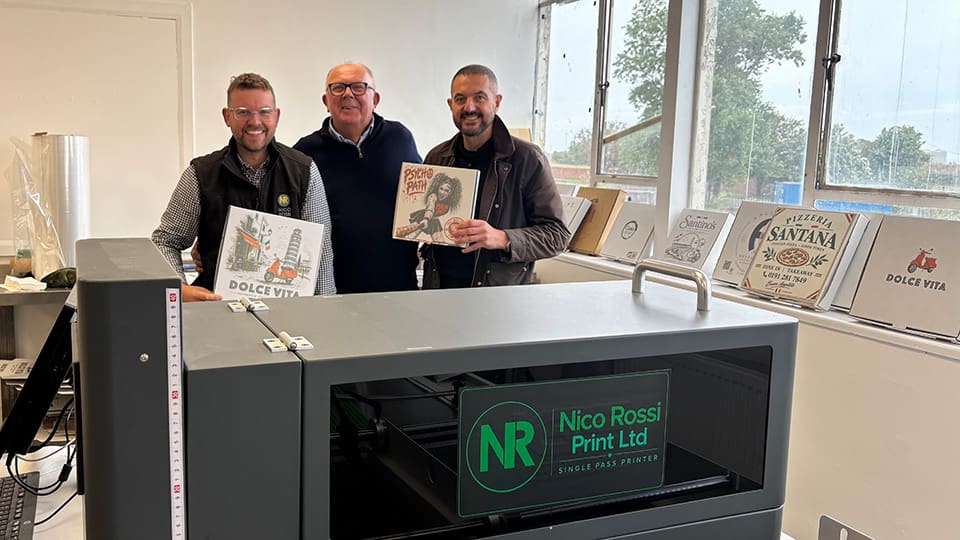
British food wholesaler, Nico Rossi, has purchased and installed an IGS Cobalt SP800 single pass printer at its headquarters in order to expand its in-house and short-run print output

Packaging company, DS Smith, has estimated the extent of Easter egg waste produced by British consumers, as well as the amount of the waste that is properly recycled

Britain is expected to have gone through 123 million Easter eggs this holiday season, according to new research from packaging and paper company, DS Smith.
The research, which surveyed 2,000 adults across the UK, found that the average adult will eat 165 chocolate Easter eggs over their lifetime, receiving three chocolate eggs on average each Easter, which contributes to an estimated 8,000 tonnes of packaging each year in the UK.
DS Smith’s survey focused on the perception and prevalence of recycling amongst Brits during the Easter period. Overall, more than a third (34%) of those surveyed said they were confused about what Easter egg packaging can be recycled.
The research showed concern amongst Brits about unnecessary packaging at Easter. According to the study, almost two thirds (65%) of Brits believe that Easter eggs are excessively packaged, with more than one in four (26%) annoyed by the waste accumulated.
While most of those surveyed (89%) say that they widely recycle the cardboard boxes that Easter eggs come in, over a third (36%) will throw the egg’s foil in a refuse bin instead of recycling it. Nearly one in five (17%) said that they won’t recycle the plastic box the egg comes in.
Of those who don’t normally recycle any of the packaging, more than a quarter (26%) say this is because the recycling instructions on the label are unclear, while over a third (36%) claim they can’t recycle a particular material in their area.
In the UK, most recycling systems are mixed, allowing materials like paper, plastic, and glass to be disposed of together. This can lead to higher contamination, particularly plastic mixing with paper and card.
Despite being the third largest producer of paper and card waste in Europe, the UK only ranked 25th out of 30 for recycling performance in analysis released in 2023.
As part of its push for improved recycling practices in the UK, DS Smith has previously highlighted the need for separate collections of paper and card, a uniform recycling system across the country, as well as better labelling and consumer education to help improve UK recycling rates.

Samantha Upham, senior sustainability manager at DS Smith, says: “Chocolate eggs are a lovely part of Easter, with 165 of these treats consumed over the average Brit's lifetime.
“While most of these eggs will be devoured on the day, the packaging they come in can have a much longer life cycle. Decades of progress have had a huge impact on the amount we recycle, with paper and card the most widely recycled materials in the UK. However, too much of it is still ending up in landfill and we need to challenge ourselves to do better.”
Based on the findings of the survey, DS Smith has released a list of suggestions for the general public to improve the recyclability of their waste during the Easter period.
The tips include checking the back of the packaging to see what materials are recyclable and separating them before disposal.
Research from DS Smith shows that consumers are least likely to recycle their Easter egg foil, despite the fact that in many cases it can be put in with the rest of recycling. They suggest scrunching the foil wrapper into a ball in the recycling bin, so that parts don’t get lost during sorting at the recycling centre.
The company also asserts that outer boxes and any inserts made of cardboard are almost always recyclable. DS Smith suggests flattening the packaging before placing them in a recycling bin to save space for other materials.
Finally, DS Smith have encouraged consumers to reuse Easter egg packaging materials for crafts, storage, or gift wrapping. It is suggested that clear plastic casings can be used to store keepsakes, and colourful foil can be utilised for decorations or art projects.
Upham adds: “Confectionery companies have come a long way to remove unnecessary packaging and make the remaining wrapping recyclable.
“Simply separating card, plastic, and foil after your Easter feast means materials have the best chance of being recycled rather than being sent to landfill. If you’re not certain what goes into which bin, check out your local recycling rules.”