Food wholesaler boosts output with IGS Cobalt SP800 printer
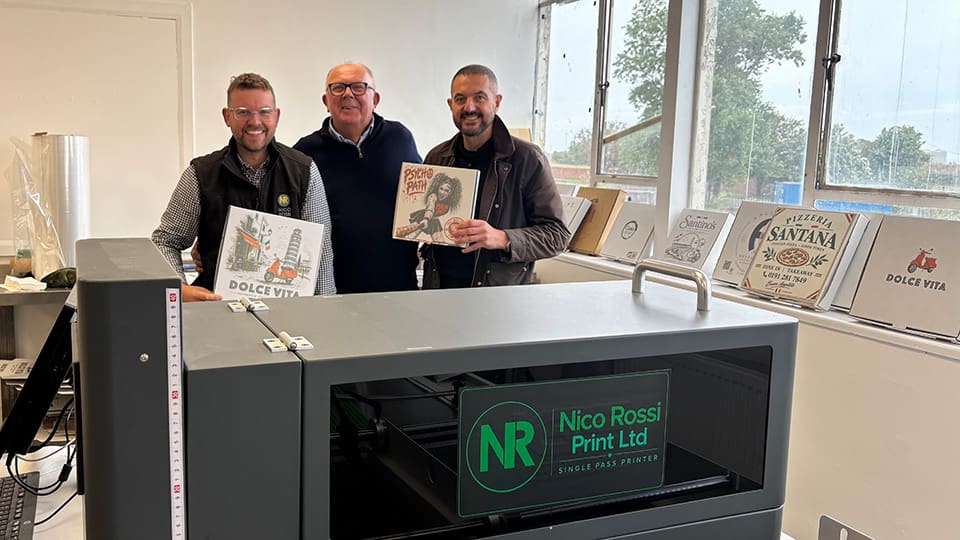
British food wholesaler, Nico Rossi, has purchased and installed an IGS Cobalt SP800 single pass printer at its headquarters in order to expand its in-house and short-run print output


Paperisation - using paper-based materials for packaging - is unlikely to be a passing fad, according to Easyfairs.

The ‘paperisation’ trend that has driven demand for paper-based packaging in recent years shows no sign of slowing and will only present more opportunities to printing companies, according to Easyfairs senior marketing manager James Montero MacColl.
Easyfairs is the organisation behind the popular London Packaging Week, with MacColl and the rest of the Easyfairs team seeing first-hand the increasing appetite for paper within the packaging sector.
While by no means a new concept, with paper-based packaging dating back thousands of years to the time of the ancient Chinese, its sustainable qualities - when compared with plastic packaging - means its popularity has spiked in recent years as print service providers (PSPs) react to demand for more planet friendly solutions.
As to whether this is some passing fad, MacColl disagrees, saying paperisation is very much here to stay within all areas of the packaging market.
“While there are many avenues luxury brands can explore to reduce their environmental impact – such as setting ethical sourcing and manufacturing policies – adopting paper-based packaging is one that’s likely to have the biggest impact on a consumer’s purchasing decision,” MacColl says.
“Packaging is a tangible demonstration of a brand’s values. Supplier codes of conduct and philanthropic initiatives are absolutely worthwhile, but they are abstract and distant ideas compared to packaging, which consumers can touch and engage with directly.”
There are also changing regulations to take into account. The most notable recent example of this, MacColl says, is the EU’s Packaging and Packaging Waste Regulation (PPWR), the terms of which were agreed in principle in March 2024.
“Those terms place heavy restrictions on single-use plastics, but not on paper-based equivalents,” he says, adding: “It also exempts paper-based materials from new minimum recycled content requirements, set to come into force in 2030.
“PPWR also sets targets for material and weight reduction – which could have major consequences for glass, a staple material in luxury packaging. Heritage brands – particularly spirit brands – have long enticed consumers with ornate bottles that are more display pieces than packaging solutions. Under PPWR, this type of packaging is much less viable, even taking into consideration the recyclability and reusability of glass.
“While this will naturally have significant ramifications for any business looking to sell into the European market, this pattern is one we see repeated around the world, with the UK, India, Canada, Brazil, and several US states passing sustainability legislation of varying scope. As these regulations continue to evolve around the world, it seems clear that future-proofing packaging with paper-based materials is a wise strategy.”
On top of this, MacColl says, is a new wave of innovative materials and design techniques developed with sustainability in mind. He explains water-based coatings have evolved significantly in recent years, with packaging designers able to employ a wealth of barrier coatings, gloss and matt varnishes, and tactile finishes without impacting the pack’s recyclability.
“The same evolution has been seen in foiling – the archetypical ‘luxury’ technique – that can now be applied to paper-based materials using vapour deposition technology to optimise recyclability,” he says.
“In short, paperisation is putting the focus on craftsmanship and innovation like never before. And innovation only drives more innovation – as paper continues to prove its worth in the luxury space, more investment will go into increasing its functionality and aesthetic design possibilities even further and for a wider range of applications.”