Canon unites its full product portfolio
Launched at its first Leadership Summit, Canon UK & Ireland has launched Canon United, a new campaign to bring together all of the company’s portfolio


The BPIF has published its latest Printing Outlook for the second financial quarter of the year

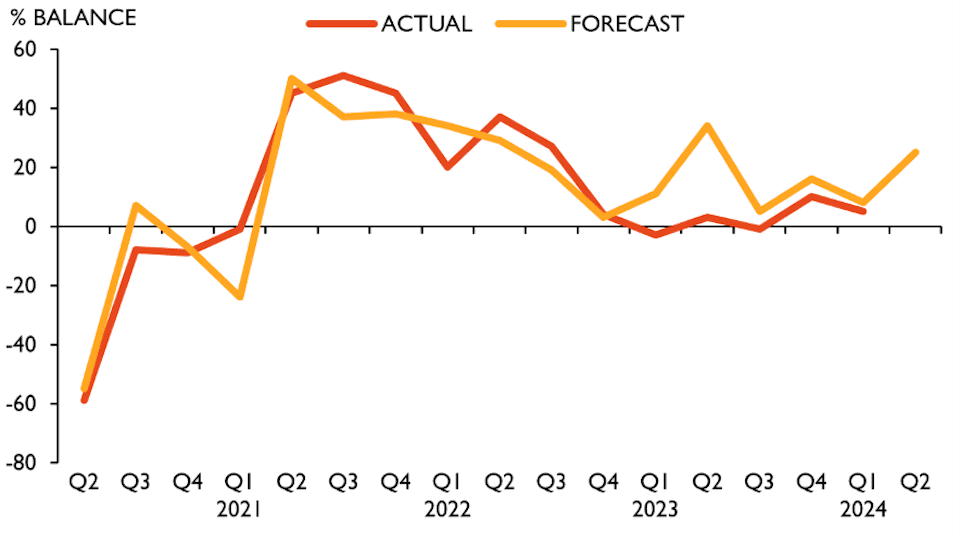
The British Printing Industries Federation (BPIF) has released its Printing Outlook report for Q2 of 2024.
The report shows that while growth of output and orders didn’t match the expectations from Q1, the industry has had two consecutive quarters of growth, more than the BPIF has reported since 2022.
The Printing Outlook survey has received “mixed signals” regarding trade as well as many opinions on numerous issues companies are currently facing.
Takeaways regarding the economy are that inflation is coming down, but not as quickly as expected meaning interest rates are staying high, much to the frustration of those repaying Government covid loans.
Respondents are also stating that business rates are still remaining critically high which is increasing administrative and compliance burdens.
The BPIF says the most voiced “annoyance” was the increase in the National Living Wage.
Expanding on this, Kyle Jardine, BPIF economist, says: “Companies do not wish to obstruct a fair wage being paid; in fact, many can benefit from having an open and transparent annual wage increase. However, the knock-on effect on maintaining wage differentials throughout the various skills employed can easily double budgeted pay rises.
“There can also be difficulties created in recruiting and skill progression within companies, as a result of significant increases in minimum wages catching up with more skilled occupations.”
Jardine adds: “Despite these issues being raised – companies in the printing and printed packaging industry are working hard to maintain cash flow and profit levels. Controlling costs, productivity gains through capital investment, and diversification have all been key strategies companies are pursuing to ensure their survival.”

Regarding the environment, 70% of respondents to the report said they were measuring their carbon emissions, up from the 56% reported in October and 38% in April last year.
Other key findings from the report are that cost control remains a priority for most businesses while for many, average price levels continued to decrease in Q1 with a small majority managing to hold prices steady.
The report also shows that a majority of printing companies were able to hold margins steady in Q1 but the area continues to face increased pressures with many starting to see a return of paper price increases.
Charles Jarrold, BPIF chief executive, concludes: “As we eagerly approach drupa, the Printing Outlook suggests that the industry is generally more positive, which sets the scene for a really excellent expo for attendees and exhibitors, particularly as the new Q2 report shows that printing companies are interested in capital investment – especially if it can help boost productivity.”
If you’d like to share news or opinions with us feel free to email at news@printmonthly.co.uk or join in with the conversation on Twitter and LinkedIn.