Baddeley Brothers: Over 160 Years of Historic Print
Known for its premium stationery, envelopes, and packaging, we take the chance to find out more about this 167-year-old company by speaking to the directors of the business


In recognition of HEIDELBERG’s historic anniversary, David Osgar takes a look back at the company’s past, its recent celebrations, and its plans for the future

Over the past few months, press manufacturer, HEIDELBERG, has been celebrating its 175th anniversary with its teams and partners around the world – celebrating their stories, the company’s achievements, and setting out a roadmap for the future. The celebration has also coincided with HEIDELBERG’s newly opened Print Media Center (PMC), dubbed the “Home of Print”, which is located in Wiesloch-Walldorf, Germany.
The PMC features various end-to-end production systems, and according to HEIDELBERG, tracks the company’s “growth strategy for its core business” and presents “future-proof and specific solutions” that will appeal to relevant target groups.
The centre includes the entire HEIDELBERG portfolio incorporated into a single digital ecosystem which comprises of software, equipment, robotics, post-press solutions, consumables, training, and consulting. The location covers an area of 9,000sq m with no fewer than 120 HEIDELBERG specialists on hand to share expertise and support. Each year the site typically hosts 1,000 personalised presentations and is also home to open house events and guided tours.
Coinciding with the anniversary and event, HEIDELBERG has announced a number of releases and solutions including the Cartonmaster CX 145 in format class 6 for the very large-format (VLF) market.
With regional celebrations, a collaboration with Glastonbury festival, and a host of new installations, HEIDELBERG has clearly had a busy year. When asked about being part of celebrations, Ryan Miles, managing director of HEIDELBERG UK says: “It’s an incredible feeling to be part of a great organisation with such a strong heritage.”
Miles adds: “It’s been a special time to reflect and connect with our traditions and values, and to appreciate our customers and colleagues. We held an amazing event at HDM [Heidelberger Druckmaschinen headquarters] to celebrate our anniversary with many long-standing loyal customers, as well as customers who are new to the HEIDELBERG family. They formed part of a group of more than 500 similar customers from all over the world who attended the event.
“The motivation and positivity from the event was special, as was the unveiling of the new Home Of Print. This was followed by a local event at Stockley Park where we honoured both our 175- and 50-year anniversaries with our local colleagues, present and some past, who were able to join us.”
With an impressive 175-year history under its belt, let’s now take a look at what led to this press manufacturer celebrating this significant milestone.
Founded on March 11th, 1850, Andreas Hamm and his three partners established the Hemmer, Hamm & Co. bell foundry and machine factory in Frankenthal. HEIDELBERG sees this as the birth of the company, as Hemmer, Hamm & Co also manufactured printing presses. Hamm produced machinery with Andreas Albert before the latter left the partnership in 1856. Before returning to rapid presses, Hamm devoted himself to bell casting, including the creation of the Kaiserglocke for Cologne Cathedral.
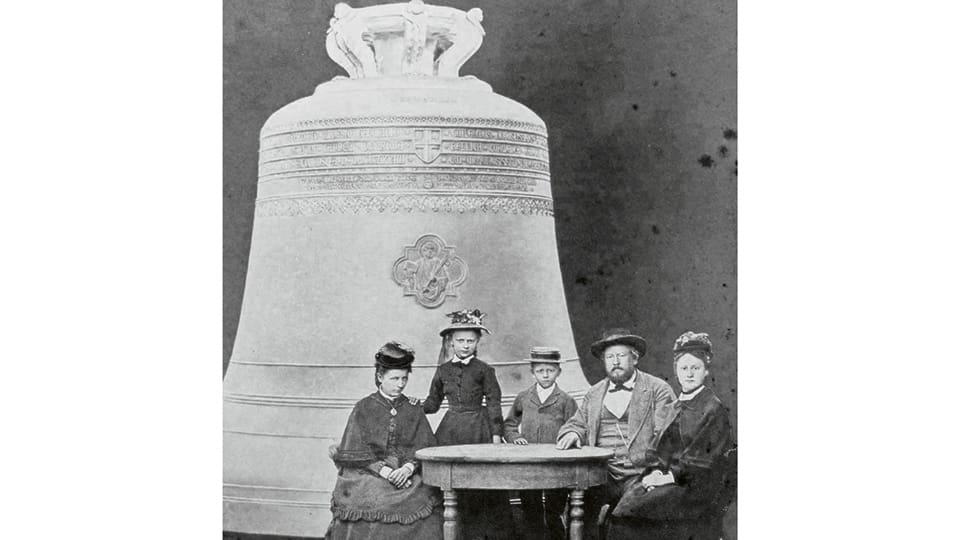
In 1894, Wilhelm Müller took over what was then known as “Schnellpressenfabrik” from the Hamm family and moved production to Heidelberg, a well-known university city on the Neckar River.
Following the move, Schnellpressenfabrik Heidelberg overcome several economic challenges in the early 1900s and drove innovation with the versatile Heureka rotary press. In 1921, the company’s first windmill press goes into production leading to the Tiegel press, which is manufactured on an assembly line from 1926. The machine quickly went on to become a best- and long-seller thanks to its precision, performance, and reliability. By 1985, the company had manufactured over 160,000 Tiegel presses.
In 1926, Hubert H.A Sternberg was appointed to the company board, remaining there until 1972. Sternberg is remembered for modernising production and marketing operations, as well as organising the first German export exhibition in the USA following the Second World War.
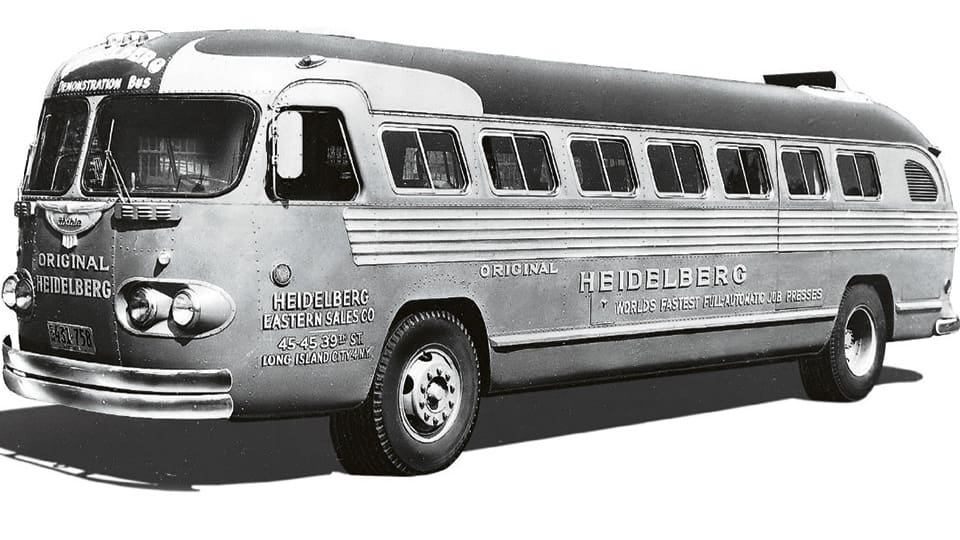
One of Sternberg’s early marketing ideas was to demonstrate presses to potential customers by taking them to their premises. The presses would be assembled on trucks or installed on buses to later be sent around the world to different markets accompanied by a range of engineers.
Factoid: In July 1957, Schnellpressenfabrik Heidelberg opened its new factory in Wiesloch. The first phase of construction included two production halls, an administrative building, and an office wing, with construction of three more halls continuing up until 1968
During the 1930s and ‘40s the company had to navigate the changing marketplace following the liquidation of publishing houses and the prohibition of new printing plants. During the war the company shifted to manufacturing lathes and different units for the German war effort.
Fast forward to 1950 and the company celebrated its 100th anniversary with a ceremony held in its cylinder production hall, attracting over 200 guests. A year later, Sternberg, now chief executive officer of Schnellpressenfabrik Heidelberg, co-found drupa, now one of the world’s largest printing trade shows. The first edition of the show featured a new version of the Tiegel which could print 5,00 sheets per hour.
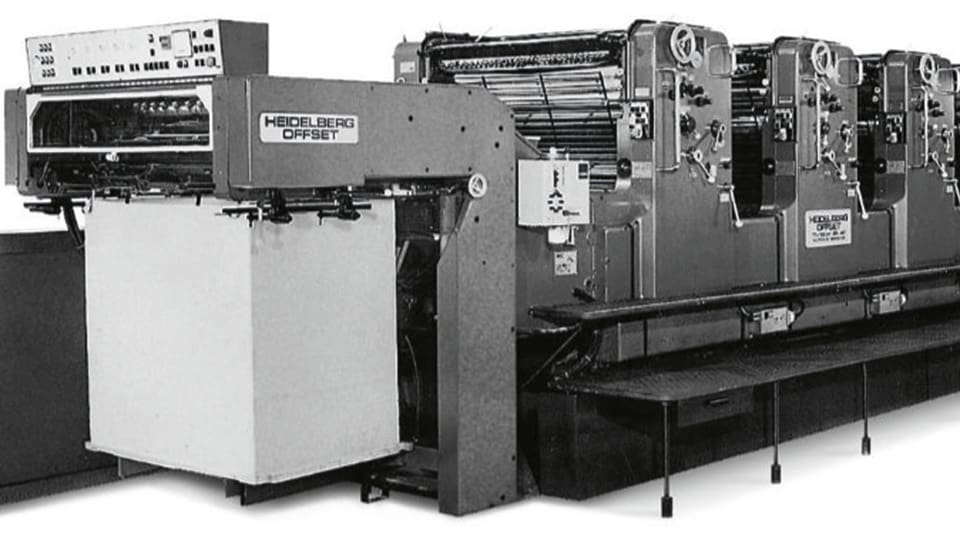
In 1967 the company was renamed Heidelberger Druckmaschinen following on from its introduction of offset printing machines (the Heidelberg KOR). In 1974 the Speedmaster series was introduced, which cemented the company as a producer of offset presses. The Speedmaster was capable of printing 11,000 sheets per hour and released a multicolour offset version in 1975.
When talking about how much has changed since the company was founded, Miles comments: “So much has changed in terms of technology developments, IoT, AI, industrialisation, and market conditions. However, so much has remained the same in terms of our customer first mindset, our service commitment and infrastructure, our best-in-class machinery, and our people.”
Speaking about how HEIDELBERG’s legacy is reflected today, Miles adds: “It is vital that we understand and appreciate the core values and principles that have allowed us to achieve sustainable success over such a long period when so much has changed in our industry. That is reflected in my previous comment about what has remained the same throughout. Therefore, these legacies are present in our daily culture and habits and are part of the legacy that each colleague must live towards.”
In 1974, Heidelberger Druckmaschinen expanded its global presence with Heidelberg Graphic Equipment, a dedicated subsidiary made to serve the UK and Irish markets. HEIDELBERG UK celebrated its 50th anniversary in 2024, with celebrations also spilling into 2025 to coincide with HEIDELBERG’s 175-year anniversary.
In 1999 HEIDELBERG acquired a 30% stake in Gallus, a Swiss printing press manufacturer, which was seen as one of the leaders in label printing technology. The company was fully taken over in 2014 and Ferdinand Rüesch, the former owner of Gallus, became an anchor shareholder at HEIDELBERG.
Since the early 2000s, HEIDELBERG has navigated tricky waters including the financial impacts of the September 11th attacks, the 2008 financial crisis, and the transition to online marketing and digital print technology.
On the back of this hardship HEIDELBERG began a lot of the collaborations and technologies it uses today. In 2000 the company launched its Prinect workflow software and in 2004 connected a press to the internet for the first time.
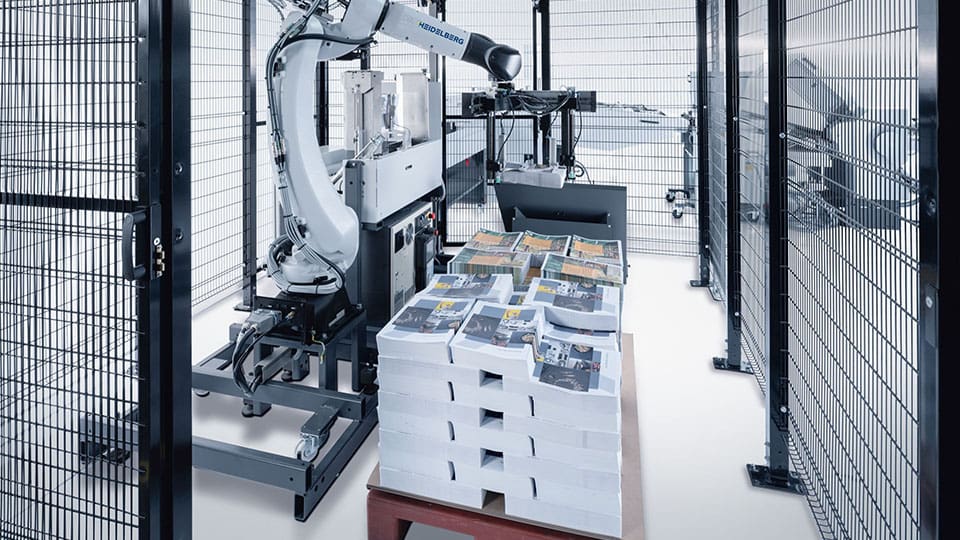
2005 saw the business expand into China which was followed over the next twenty years by several innovations and new market introductions, including entering the electromobility market, the robotics space, and a bigger presence in the packaging industry with the release of the Boardmaster carton printing press in 2023.
Last year the company returned to drupa and announced a host of technologies and advancements, including the Jetfire 50 digital press, which has been developed in collaboration with Canon in order to offer industrial productivity in the area of digital printing.
Speaking about the anniversary, Jürgen Otto, chief executive officer of HEIDELBERG, says: “From early on, we have set technological benchmarks. The Original Heidelberg Platen Press from 1921 still prints today and can even be equipped with modern NFC technology. It’s proof that our machines are built to last and remain part of a continuous evolution.
We go where our customers are. That mindset remains central, at our Home of Print and with our partners around the globe
“The legendary demo bus from the 1950s is another expression of our approach: customer focus is not a slogan, it’s lived practice. We go where our customers are. That mindset remains central, at our Home of Print and with our partners around the globe.”
Speaking about the company’s future, Miles concludes: “The company has vast expertise, knowhow and IP that can be used to unlock potential growth areas, and we expect to see this aide our growth in new areas but also to enable us to remain the leading provider to the print industry. We are clear that print is our core business and will remain so, and therefore our commitment to the print industry is a cornerstone that will always be in our future.”