After winning the Young Leader Award at last year’s IPIA Recognising Excellence awards, Rebekah Hughes from Latcham gives her thoughts on opportunities available in print, and how to approach the print versus digital marketing argument
Guest Writer
April 13, 2026
In my first year in the print industry, I’ve somehow ended up writing articles, taking part in podcasts, attending brilliant networking events, speaking in Parliament, and winning the IPIA 2026 Young Leader Award. Yet I still feel like I’m only just getting started.
My friends tease me for being “the only person who actually looks forward to Monday,” which usually gets a few eye rolls, but they’re not wrong. I genuinely enjoy what I do. I’ve fallen in love with print: the people, the history, the problem solving, the creativity, and the constant change.
With print in my family for generations and a background in digital marketing, I’ve landed in a space that feels like the perfect mix of both worlds.
Print’s Evolution: Far From “Print vs Digital”
Honestly, it’s an exciting time to have joined the industry. Print is evolving faster than people realise. From sustainable materials to automation, programmatic mail, and smarter workflows, the whole sector is shifting. Print is now faster, greener, and more strategic than it was even a few years ago, which is why the old “print vs digital” debate feels outdated.
One example of this evolution is personalised print, and importantly, it’s not new. The print industry has been delivering highly personalised, data driven communications for many years. At Latcham, we can tailor mailings down to the individual: images, names, offers, and even entire content blocks, all driven directly from customer data.
Rebekah Hughes graduating from her Marketing Communications degree
For a long time, many marketers assumed personalisation was a digital only strength, but digital print has offered true one-to-one personalisation for decades. It delivers the same level of precision as digital channels but with the added impact of being tangible, memorable, and often far more effective at capturing attention.
The challenge is that many modern marketers simply aren’t taught this. Their understanding of print is often based on traditional litho methods, so they don’t realise how advanced, flexible, and data-led today’s digital print solutions really are. Once they see what personalised print can already do, and has been doing for years, it completely changes how they think about using print within their campaigns.
Why This Matters to Me
The industry also feels personal. My great grandmother worked in print in the 1950s, then my grandfather, then my dad, and now me.
But academically I went the other way. On my Marketing Communications degree, print barely came up, and by final year everything had shifted fully to digital. During my placement as a digital marketing assistant, I didn’t touch print once, despite feeling drawn to it.
My great grandmother worked in print in the 1950s, then my grandfather, then my dad, and now me
That’s part of the wider challenge: many people in marketing aren’t taught how print fits in or how to measure it – and that’s a missed opportunity. Print is still one of the most trusted communication channels, while digital brings the speed and reach. Neither replaces the other.
The Real Power: Combining Print and Digital
The real magic happens when both print and digital work together. Print grabs attention, people see it, hold it, and remember it, while digital offers instant interaction. Combined, they create a smooth customer journey: print leads someone to a personalised landing page; a QR code triggers an online action; digital reminders follow up a physical touchpoint. Data moves between channels, letting marketers refine messages, trigger automated follow ups, and measure engagement properly.
It’s not about replacing one with the other, it’s about building a joined up experience where both do what they do best.
What I’ve Seen at Latcham
At Latcham, I’ve seen just how much appetite there is for this kind of approach. We’re building digital services to sit alongside our established print work, making sure we keep up with what customers need. We listen, we adapt, and when budgets or strategies shift, we don’t panic – we look for opportunities instead.
For example, we can now offer the membership sector a fully omnichannel communication service, using channels such as SMS, email, push notifications, and of course print. This allows us to create truly tailored communication strategies for each individual membership organisation, as well as each of their members. Since being able to confidently offer this, we’ve seen a significant increase in membership organisations interested in our services.
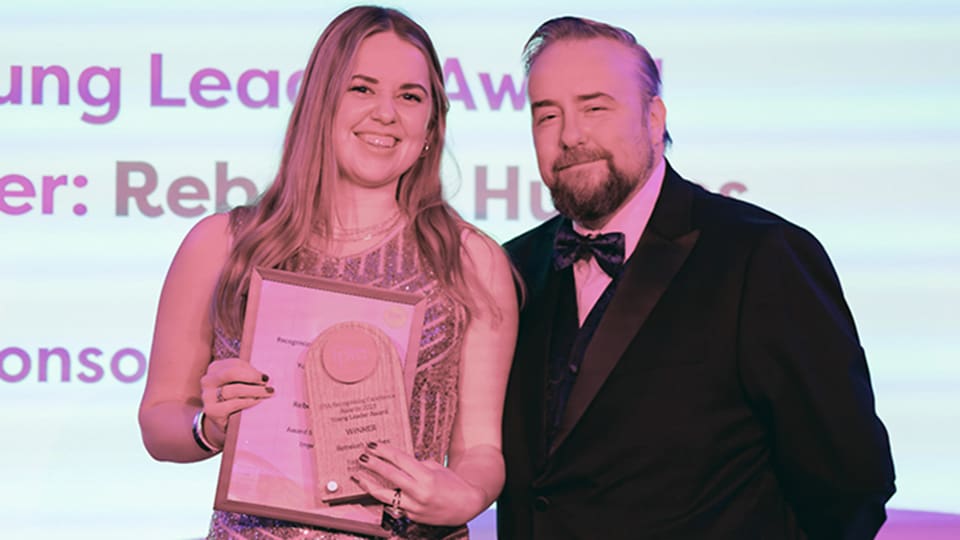
[L to R] Rebekah Hughes with Peter Horwood from Imprint MIS, who presented her with her IPIA award
I’ve also seen this mindset reflected across the sector. Businesses may be taking different routes, but the determination to keep evolving is consistent. The amount of innovation I’ve seen in just one year has been genuinely impressive.
The Community That Makes Print Special
But what has stood out most, and what many young people say as well, is just how supportive the print community is. The industry is very self-aware: it knows it has an age gap and that fresh talent is essential. But instead of becoming protective or closed off, people go out of their way to share what they know.
I’ve lost count of the number of experienced professionals who have taken time to explain something, offer guidance, or open a door that they didn’t need to. That generosity played a big role in me receiving the Young Leader Award. One moment that sticks with me happened at an event where a managing director spent half an hour talking me through their strategy simply because I was curious. No agenda, no expectation, just a genuine willingness to help someone newer to the industry. The more time I spend in print, the more I realise how common that openness is.
This kind of culture isn’t just “nice to have” it’s one of the reasons the print industry continues to evolve. When people share knowledge freely, younger professionals progress faster, new ideas spread more quickly, and the industry becomes more resilient to change.
When people share knowledge freely, younger professionals progress faster, new ideas spread more quickly, and the industry becomes more resilient to change
One thing I have therefor learnt, is don’t be afraid to ask questions. People in print can be incredibly generous, but they can only help you if they know what you’re curious about. If you are new to the industry, start conversations, and seek out mentors. Many leaders are keen to support rising talent. Get involved in events and associations. The more you show up, the more the community shows up for you.
In a time when many sectors talk about collaboration but struggle to live it, print does it. People share insights even if their businesses compete. They introduce you to others without expecting anything in return. They want the next generation to succeed because they care about the future of the sector.
Investing in the Future:
Having learnt so much from people in the industry is why I’m so passionate about helping bring young talent into print and giving back to the industry that has given me so much. My work with YPIP (Young People in Print), founded by Elizabeth Bowerman, focuses on getting print back into university conversations.
That includes courses like my own Marketing Communications degree, where print was barely mentioned. When they see that print is integrated with data, automation, digital service design, and sustainability, it genuinely opens their eyes. Not necessarily because they’ll all end up working in print, but because even having the knowledge helps them make better, more informed decisions in future roles.
Even if someone ends up in marketing, communications, procurement, UX, or strategy, understanding the potential of print makes a massive difference to how they approach campaigns and channels later. It means print isn’t dismissed, overlooked, or misunderstood; it’s used more intelligently.
Print isn’t dying. Print is evolving, and I’m proud to be part of the generation helping shape what comes next.
In this Fresh Perspective, we hear from Joe Moon, marketing and social media executive at CFH Docmail, about his introduction to the print industry and his perception when entering it
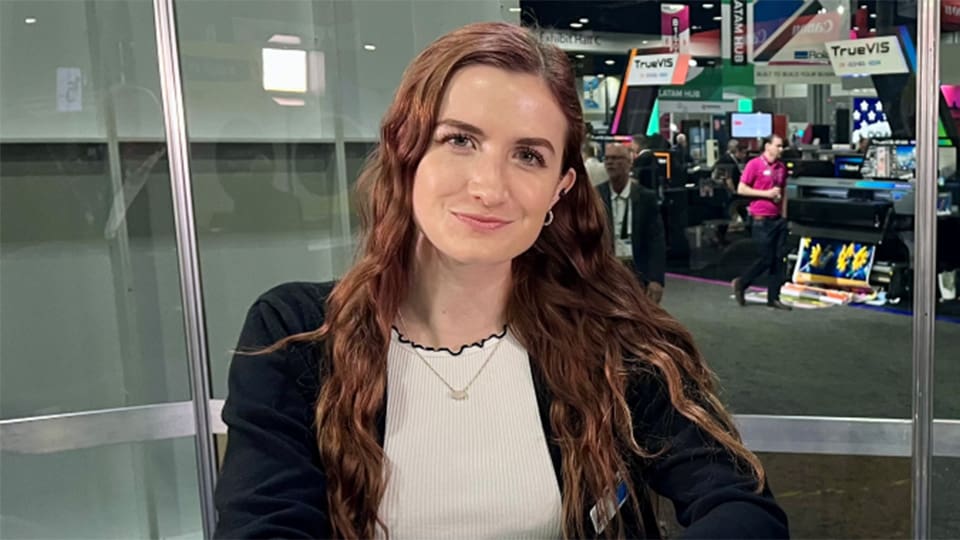
For this edition of Fresh Perspectives, we hear from someone on the other side of the pond – Carly O’Neill, communications coordinator at PRINTING United Alliance, who speaks about her experience in the print industry, following a successful PRINTING United Expo in 2025
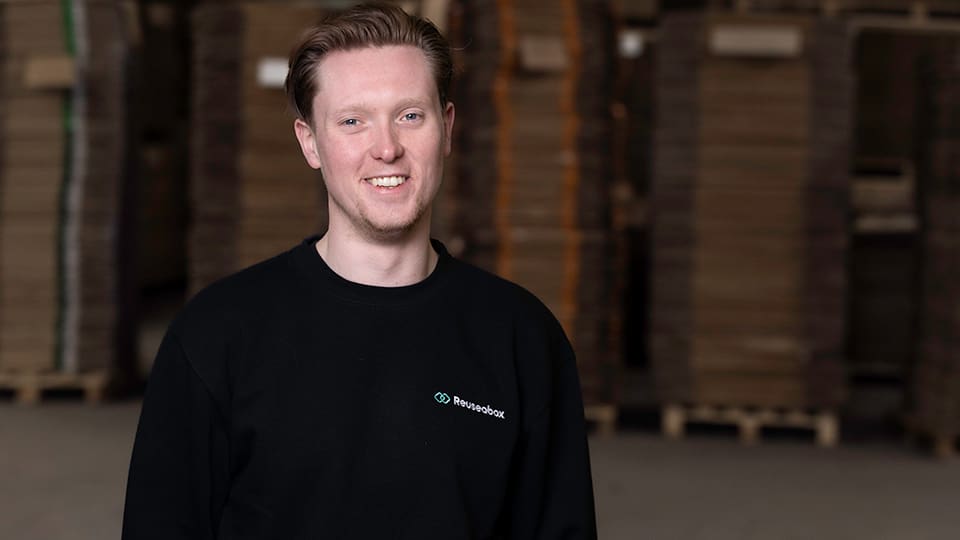
In this edition of Fresh Perspectives, we hear from Jack Good, founder of Reuseabox, and recent speaker at The Print Show, who talked about the importance of creating a circular economy in print and all industries around the world
(this was inserted into the PHP of a code block)
Watch our latest video of the week
Print Monthly gives you the latest video coverage of companies, people, and events from within the print industry.