Following the launch of AI Adoption in Manufacturing: A Practical Toolkit from Made Smarter, we speak to Kevin Smith, lead technology specialist at Made Smarter North West, about how print and packaging companies can benefit from the new practical toolkit
Guest Writer
July 29, 2026
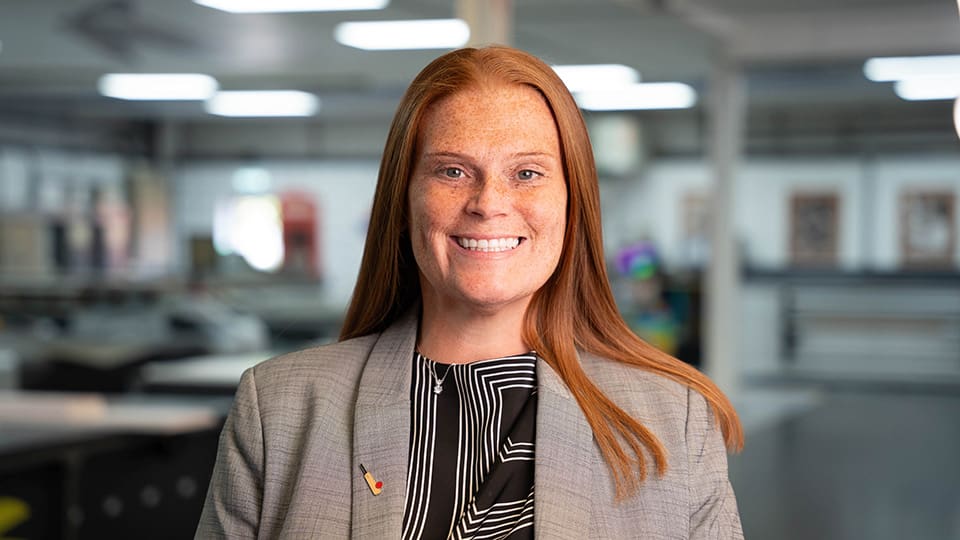
Kevin Smith, lead technology specialist at Made Smarter North West
Could you introduce the Made Smarter programme and its purpose?
Made Smarter is the Government-funded national programme helping SME manufacturers adopt digital technologies. Operating across all English regions, the initiative supports businesses through digital transformation workshops, technology advice, digital roadmapping, leadership, and workforce development programmes, digital internships, and funded technology projects.
The aim is to help manufacturers improve productivity, resilience, and competitiveness by adopting digital tools in structured and sustainable ways.
Why would you say AI is now such an important tool for manufacturers and product suppliers?
AI is not new to manufacturing. For decades, manufacturers have used rules-based control systems, optimisation algorithms, machine vision, statistical pattern recognition, and anomaly detection, even if they were not labelled as AI.
What has changed is how visible and accessible AI has become. Today, more tools are easier to try, more affordable and quicker to apply to everyday problems. For manufacturers, including print manufacturers and suppliers, the real opportunity lies in using AI to support better decisions, reduce wasted effort, and improve how existing processes perform, rather than chasing the latest technology trend.
How can the new toolkit from Made Smarter be used by printers and its associated sectors?
The toolkit gives a structured framework for businesses to start their AI exploration in a manageable way.
At its heart is the ‘Scan, Pilot, Scale’ approach. ‘Scan’ helps businesses cut through the noise, understand what AI really is, and identify opportunities grounded in business value and operational readiness. ‘Pilot’ provides a safe, structured way to test AI in real settings using clear success criteria, human oversight, and appropriate governance. ‘Scale’ focuses on integrating proven AI solutions into everyday operations, so benefits are sustained and repeatable.
For printers, that could mean exploring AI around estimating, scheduling, proofing, customer communication, workflow automation, quality reporting, or production planning, starting with tasks, problems, and outcomes, rather than technology for its own sake.
Crucially, the toolkit promotes a task-first approach. Businesses start by identifying friction points, bottlenecks, or repetitive processes, and then explore where AI could support improvement.
Many businesses still haven’t adopted AI, why do you believe this is the case?
For many manufacturers, AI still feels distant, complex, or risky. Printing environments are often highly operational, time-sensitive, and quality-driven, so businesses are understandably cautious about introducing technologies that could disrupt production or customer delivery.
There is also a great deal of noise around AI. Many businesses are unsure where it would genuinely help, what systems or data they need first, or how to test it safely.
There is also a great deal of noise around AI. Many businesses are unsure where it would genuinely help, what systems or data they need first, or how to test it safely
That is why practical adoption matters more than technical novelty. Most manufacturers do not need to completely transform their business overnight. The most successful firms tend to start with manageable use cases, build confidence gradually, and scale what works.
What has the feedback to the scheme been so far?
The response to the toolkit has been very positive because manufacturers are looking for practical, impartial guidance, rather than hype.
One of the strongest messages from businesses is that they value the task-first approach. Rather than being told to adopt AI for the sake of it, they are encouraged to focus on specific operational challenges and measurable outcomes. Businesses want to test safely, prove value, and build confidence before scaling solutions further into their operations.
Why should printers invest more in AI and look at alternate ways to operate and produce their products?
The print sector, like wider manufacturing, is operating in an increasingly competitive environment shaped by rising costs, tighter margins, labour pressures, and growing customer expectations around speed, quality, flexibility, and responsiveness.
AI can help businesses become more efficient and resilient by supporting better operational visibility, reducing repetitive manual tasks, and improving consistency across workflows.
For many print businesses, the opportunity is not necessarily about replacing people or existing systems. In many cases, AI works best when it supports skilled operators and production teams rather than replacing them. It is about identifying areas where AI can reduce low-value effort and help teams focus on higher-value work such as problem solving, customer service, and continuous improvement.
What does this new programme and toolkit say about the future of AI alongside print and manufacturing in the UK?
The toolkit reflects a growing recognition that AI is becoming a core part of the UK’s industrial future, alongside digitalisation and net zero. At a national level, the Advanced Manufacturing Sector Plan positions AI as a priority for strengthening productivity, competitiveness, and resilience across manufacturing, while the Government’s AI Opportunities Action Plan recognises AI as a capability that can help businesses of all sizes improve performance and unlock new value.
That national focus matters because it signals long-term commitment to skills, infrastructure, and support, rather than AI being viewed as a short-term technology trend.
The significance of this is also reflected in the involvement of Chris Dungey, the government’s AI champion for advanced manufacturing, who co-authored the toolkit. His involvement reinforces the importance of helping manufacturers move beyond hype and towards practical adoption grounded in operational reality.
Anymore advice on accessing the toolkit and resources?
The best starting point is simply to begin the conversation. Many manufacturers assume they need specialist expertise, large budgets, or advanced systems before exploring AI, but in reality many useful starting points are low cost, low risk, and focused on everyday operational challenges.
The response to the toolkit has been very positive because manufacturers are looking for practical, impartial guidance, rather than hype
The Made Smarter AI Adoption Toolkit has been designed to help businesses understand where AI could realistically add value and how to approach adoption safely. Alongside the toolkit, manufacturers can also access wider support around digital roadmapping, leadership, workforce development, and technology adoption.
Anything else to add?
One of the most important points is that AI adoption should not be viewed as separate from wider digital transformation. Businesses that achieve the greatest long-term value are usually those that focus first on processes, workflows, data, and operational readiness.
AI works best when it supports expertise rather than replacing it. In print and manufacturing environments especially, operational knowledge, quality control, and human oversight remain essential.
Find Out More
To access the toolkit or get more support from Made Smarter, visit: https://www.madesmarter.uk/resources
Following her award win at the Welsh National Wedding Awards, we speak to Grace Hussey, owner of Print On Me, a print and stationery company based in Caldicot, Monmouthshire, which come together with the help of her father, Peter Flynn, owner of International Graphics Supplies (IGS)
We speak to Samantha Overton, managing director of Zebra Print Group, about the volatility of the modern print market and navigating supply chain disruption