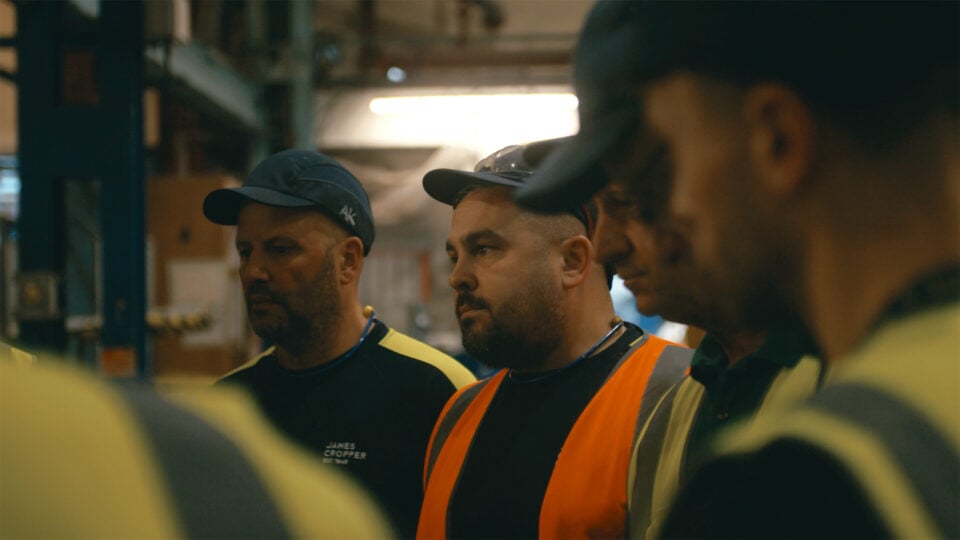
James Cropper releases new Paper Portal
James Cropper has launched the Paper Portal, a physical paper sampling and specification experience designed to offer a single discovery point for its materials range



Paper and board producers across the world are implementing new price increases, in line with a series of announcements from international companies in recent months

A series of documents sent to customers of UK and European paper and board merchants have confirmed imminent paper price increases, with the hikes attributed to freight, energy, and raw material costs all increasing simultaneously.
A number of communications have been sent to the customers of paper producers within recent months, informing them of upcoming price rises for materials including mechanical and woodfree paper, as well as kraft board and cartonboard.
Paper producers have highlighted issues including electricity and natural gas price rises, as well as a general rise in the cost of paper pulp. Both have risen dramatically since the start of 2026 and have been forecasted to remain significantly higher than normal seasonal levels.
Many companies also point to an especially competitive global market in recent months, resulting in tighter margins and further impact on profitability.
Ruth Cook, managing director of packaging manufacturer, GWP Group, spoke about the impact of price increases for the packaging industry in January in an official company article, citing raw material costs as a major factor.
In the article, Cook said: “Packaging price increases have become commonplace over the last few years, driven by the growth of the ecommerce sector, raw material shortages, and rising energy prices. These have all driven up most packaging prices, with packaging regulations also contributing to some cost increases.
“A particularly turbulent couple of years for the broader UK economy (and businesses worldwide) have provided the backdrop to these cost increases and now, with annual inflation at around 3.2%, any packaging price rises are perhaps unsurprising.”
The price increases are in line with a recent unified pricing strategy from major paper producers in other global regions, with the first announcements coming primarily from North American producers.
PCA was the ‘first mover’, announcing a $70 (£52.75) per tonne increase for containerboard on January 23rd. International Paper matched this increase just days later on January 29th, with companies including Cascades and Smurfit Westrock quickly following with their own matching announcements.
Over in Europe, in February Sappi Europe publicly announced a series of price increases across its paper and packaging portfolio of between €50 - €70 (£43.6 - £61.1) per tonne, for products including its woodfree coated sheets and coated mechanical portfolios.
Antti Makkonen, sales director (Graphic Papers) at Sappi, says: "Across the paper industry, manufacturers have been operating under sustained pressure. A prolonged period of market pricing pressure, combined with structurally elevated cost levels across energy, transport, labour, chemicals and fibre, has created a cost–price imbalance.
"In this context, price adjustments are necessary to restore economic balance and support long-term operational sustainability. For the industry, this reflects efforts to restore a sustainable balance between input costs and pricing, supporting continued investment and reliable supply. Sappi Europe remains focused on ensuring consistent product availability and delivering exceptional service to its customers."
Italian materials manufacturer, Burgo Group, also announced similar plans to hike prices for its range of woodfree papers, with woodfree coated and uncoated reels and sheets increasing by a minimum of €50 (£43.6) per tonne for deliveries, effective from April 1st.
This was in the wake of further consolidation and optimisation strategies by manufacturers in recent months.
In December of 2025, Sappi and fellow material specialist, UPM, announced a new joint venture designed to “rationalise” supply in what UPM calls an industry “burdened by declining demand”, as well as structural overcapacity and high energy costs.
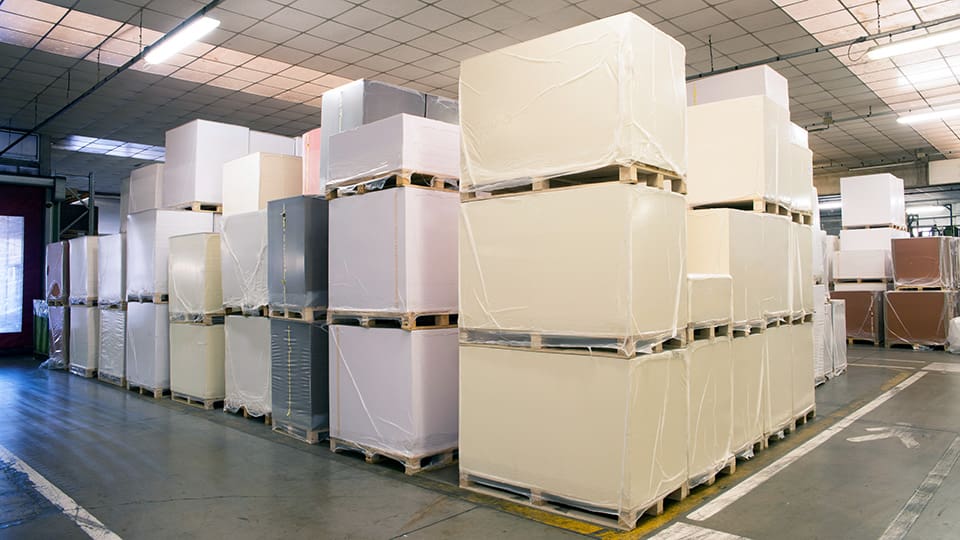
These new global price increases are set to filter through to other UK merchants in the coming weeks, with many customers already being informed of the imminent increases.
Because the UK currently produces only a fraction of its domestic paper demand, it is heavily reliant on imports, leaving it uniquely exposed to global price volatility.
In the BPIF’s Q3 2025 Outlook it was estimated that paper, board, and other substrates remain the largest single cost component for print businesses, accounting for roughly 35% of total business expenditure.
Speaking about the price increases in more detail, Rod Benwell, commercial director at Elliott Baxter & Co (EBB), says: “I think the starting point would be looking at the financial position of paper mill manufacturers.
“Most of them are reporting very poor results and this is why we're seeing closures and obviously inflationary costs, with pressure not just coming from the cost of raw materials like pulp and chemicals but also general staff costs, logistics costs, and so on. It's the whole supply chain that has been impacted.”
Speaking about how paper and board producers may be able to alleviate the issues they are facing, Benwell adds: “I think consolidation is the major solution which is already starting to happen.
“We've obviously seen the announcement from UPM and Sappi about a joint venture. It is no surprise that this is coming about because the under-utilisation of the mills is putting pressure on their cost base. I think for the whole supply chain, there is a need for consolidation.”