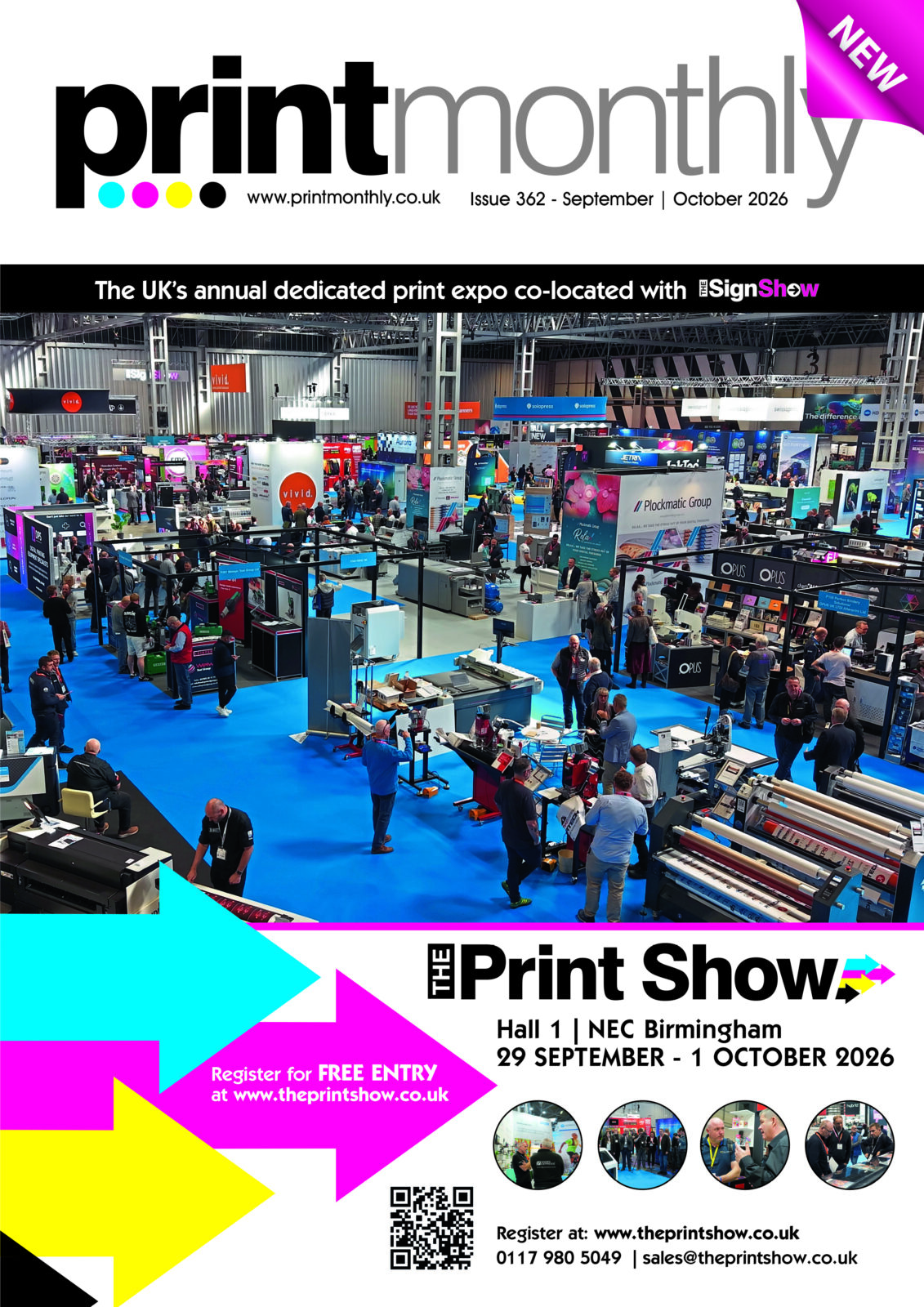
Still an integral part of production for many print service providers, Rob Fletcher takes a looks at some of the latest developments
with technology in the bookletmakers market
Rob Fletcher
April 8, 2026
Among the most staple part of a print service provider’s (PSP) offering, the humble booklet remains one of the most sought-after services in the print industry. Despite the huge influx of digital media, many brands and marketers still turn to booklets as a way to connect with consumers and drive new business.
While continuing demand is positive for those in this sector, it is crucial for them to keep on top of the latest trends and shifting demand to ensure that they have the right machinery in place to cope with these changes. Growth in short-run and on-demand work are among the key developments to consider when switching up equipment.
With this in mind, Print Monthly speaks with several manufacturers about these changing and evolving demands, casting an eye over some of the latest solutions available to PSPs and the steps they can take to ensure their bookletmaking setup is successful in the long-term.
Productive Capacity
Craig Harry, head of sales at Duplo UK, is first up to offer advice. He agrees that booklet production remains one of the most dependable revenue streams in UK print, but the way printers make money from it has changed. He explains that runs are shorter, turnaround expectations are tighter, and customers expect higher quality as standard.
“That shift is exactly why investment in the right bookletmaking technology has never been more important,” Harry says, continuing: “Across commercial print, education, in-plant, publishing, and marketing, Duplo continues to see strong demand for professionally finished booklets. Training manuals, prospectuses, event programmes, reports, magazines, stitched catalogues, and premium marketing pieces are all thriving applications.
“What’s changed is that buyers now want flexibility, versioning, personalisation and speed. That puts pressure on production teams to deliver more jobs, with more variation, in less time, and often with fewer skilled operators. The real growth area is therefore not just booklet volume, but productive capacity.”
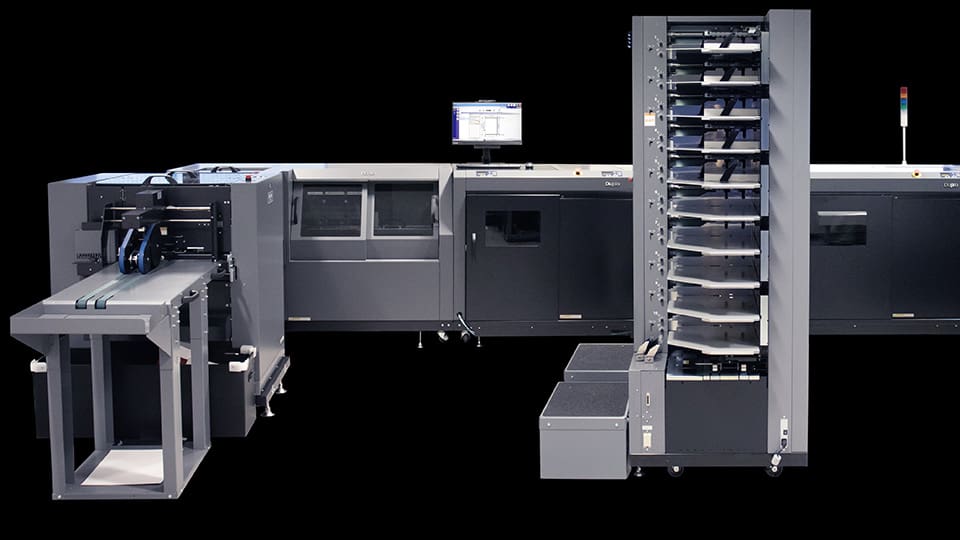
The iSaddle SENSHI is designed for producing high volumes of short-run and mixed-work jobs
According to Harry, PSPs that can handle multiple short runs efficiently, switch jobs quickly and maintain consistent quality are the ones winning work. On this note, he says those PSPs that are struggling with production should consider investment in a new machine to support their business in the long run.
When evaluating a bookletmaker, Harry says automation should be top of the checklist. He explains manual setup, complex changeovers, and machines that rely heavily on operator experience quickly become bottlenecks. As such, PSPs should be looking for systems that minimise makeready, automate adjustments, and offer repeatability regardless of who is running the machine.
“Build quality, feeding reliability, modular scalability, and the ability to cope with a wide variety of stocks are also critical, especially in digital environments where coated stocks and static can cause ongoing headaches,” he explains.
Engineer Efficiency Into Finishing
Harry goes on to say that this was the exact thinking behind Duplo’s latest high-production solution in the iSaddle SENSHI. He explains the latest innovation has been designed for those businesses producing high volumes of short-run and mixed-work jobs, where productivity is determined not by top speed alone, but by how little time is lost between jobs.
“It combines the speed and durability of traditional saddle stitching with the convenience and automation of flat-sheet finishing,” he says, continuing: “Fully automated setup through a PC-based controller allows operators to recall jobs, change formats, and adjust scoring, stitching, folding, and trimming in under a minute. That makes it ideal for environments where dozens of jobs may pass through the system every shift.
“Its modular architecture also reflects how real print businesses operate. Multiple lines, multiple towers, block feeding, and load-on-the-run capability allow continuous production while the next job is being prepared. That dramatically reduces downtime and wasted stock. Features such as intelligent feeding, auto-reject of incomplete books, and simultaneous block change aren’t gimmicks. They are practical tools designed to keep production flowing and margins protected.
Bookletmaking is absolutely still big business, but profitability now belongs to those who engineer efficiency into their finishing
SENSHI can produce flat, well-aligned booklets up to 120 pages, with consistent folding and accurate trimming, which Harry says makes it suitable for higher-value applications such as corporate brochures, educational publications, and professional reports.
Also from Duplo is the existing DBM-700, which Harry describes as a “proven solution” for printers that need high productivity across both digital and litho workflows. Its modular design means it can be configured around real-world requirements, from near-line digital finishing to high-volume multi-press environments.
An optional square spine module on the machine has also proved popular with customers, offering them the ability to deliver stitched books with a perfect-bound appearance. This, Harry says, opens up higher-margin applications without adding complexity to the workflow.
“The common thread across all successful booklet operations we work with is simple: they invest in automation, they reduce reliance on manual skill, and they focus on consistency,” Harry says, adding: “Bookletmaking is absolutely still big business, but profitability now belongs to those who engineer efficiency into their finishing, rather than trying to push more volume through outdated workflows.”
Intelligent Automation
Ed Hudson, UK general manager at Plockmatic Group, which counts Morgana and Intec among its core brands, says that despite the diversification of digital print applications, bookletmaking remains a core and profitable part of the market.
“Well-finished documents still deliver a tangible, premium impact, which digital communications can’t replicate,” he says, continuing: “Whether it’s marketing collateral, product manuals or educational materials, printers continue to see strong demand for high-quality, short-run booklets. In fact, as run lengths shorten and job variety grows, bookletmaking is becoming even more critical, because it’s increasingly the point where printers can differentiate on value, speed, and quality.”
Growth, Hudson says, is being driven by on-demand digital production and the expanding range of applications being printed on cut-sheet digital presses. He explains that corporate print rooms, commercial PSPs, and in-plant operations all want faster turnarounds and lower waste, while Plockmatic is also seeing strong interest from packaging, photobooks, and personalised print segments, areas where high-quality presentation and fast response are essential.
Ed Hudson, UK general manager at Plockmatic Group, says bookletmaking remains a core and profitable part of the market
On top of this, Hudson says Hybrid workflows are another exciting development, with jobs that start digitally and finish inline or nearline with minimal handling, adding that flexibility is now the common denominator across all these growth areas.
With this, Hudson goes on to set out what PSPs should look for in a quality bookletmaker if they are to take advantage of the latest trends and demands. He says the focus should be on three primary factors: automation, versatility, and reliability.
“A modern bookletmaker needs to handle diverse job types without complex setup or operator intervention,” Hudson says, adding: “Intelligent automation is key; systems should adjust automatically to sheet size, thickness, and pagination. Versatility is also crucial – the ability to produce everything from small leaflets to thick, squarefold booklets with precise trimming, all at consistent quality.
“Finally, reliability matters more than ever in short-run work. Equipment that integrates smoothly with digital presses, switches between tasks at the touch of a button, and delivers predictable results is what keeps workflows moving efficiently.”
Factoid: Saddle-stitched booklets use mechanical binding only and do not require any glue. Pages are secured by formed wire staple, known as stitches, driven through the folded spine
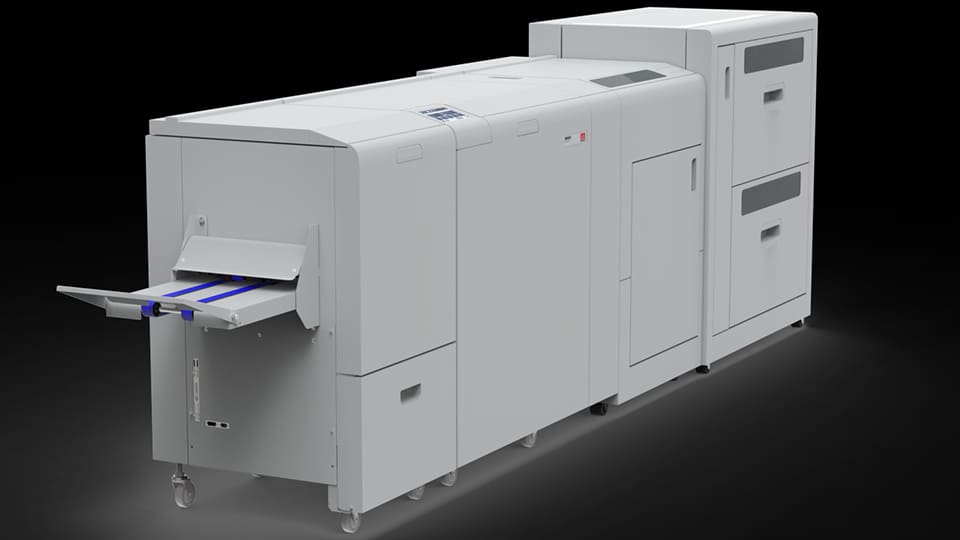
Plockmatic’s latest platform in this segment comes in the form of the Morgana BM4000 bookletmaker, which Hudson says brings the aforementioned principles together in one intelligent, modular system. Designed for high productivity in digital and litho environments alike, it produces booklets up to 140 pages and adapts instantly between jobs. The BM4000 offers automated setup, squarefold spine forming, and precision trimming, all controlled through a touchscreen interface.
“The BM4000 also reflects the direction our industry is heading: smarter connectivity, shorter turnaround times, and higher-value output,” Hudson says, adding: “From a single operator’s perspective, it’s about control and confidence. From a business standpoint, it’s about throughput and profitability. Whether running inline with digital presses, or as a nearline system, it enables printers to deliver exceptional results with minimal waste and downtime.”
Speeding Up
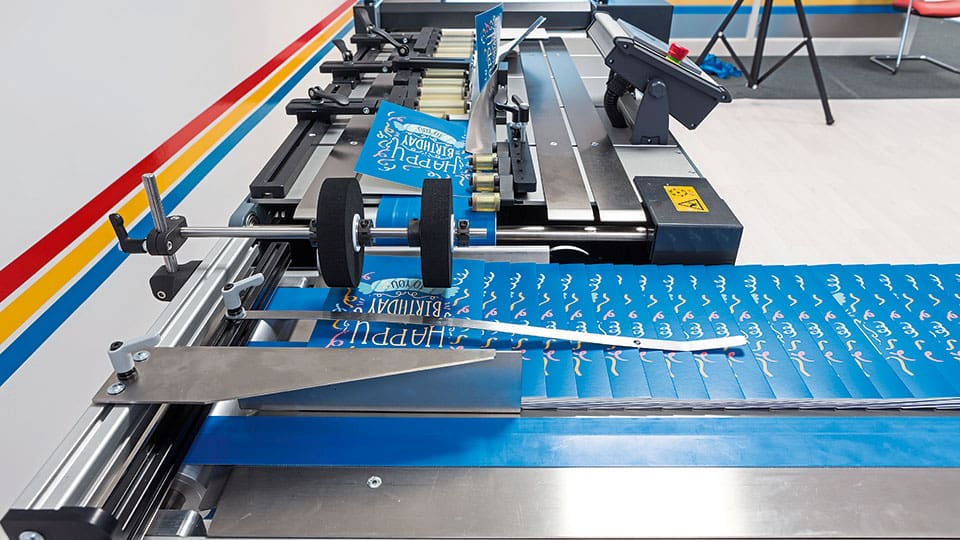
Rounding up the discussion is Col-Tec, another manufacturer and provider for machinery in the bookletmaking sector. The company recently addressed the notion of high-speed booklet assembly and the benefits this offers not only to the PSP but to their own customers, which are often marketers seeking swift, quality prints.
“Relying on outdated booklet assembly methods can waste time, money, and resources,” Col-Tec says, adding: “High-speed booklet assembly for branding is the solution, especially for businesses that need to deliver premium-quality print products at scale. This technology makes sure every print is the same, looks professional, and meets top standards. Yet, best of all, it does so without compromising on production speed.
“High-speed booklet assembly is the fast, automated way of collating and binding printed sheets into booklets. This process matters for businesses that need to print a lot, like brochures, catalogues, or event programmes. It ensures the quality stays consistent for every print run.”
Col-Tec goes on to say that the importance of this technology in premium prints cannot be overstated, setting out how both efficiency and precision are critical in today’s competitive market. The manufacturer says automatic knock-up belts and missing stitch detection help businesses improve their production speed, while these systems also ensure high print quality and are designed to enhance speed, reduce errors, and improve precision.
“As such, this makes high-speed booklet assembly an essential part of print workflows that demand high standards,” Col-Tec says, concluding: “For companies focusing on branding, it is vital to produce materials that reflect their professional image. High-speed booklet assembly is perfect for corporate brochures, marketing booklets, and event materials. It ensures that each printed piece fits your brand identity and meets your print quality standards.”
Clearly, there is still plenty to be excited about in the bookletmaking sector. While it may be one of the more traditional and classic forms of print, there is plenty of demand from many sectors for this type of work. However, from what has been discussed here, it is crucial for PSPs not to rest on their laurels and rely on outdated machinery that may not be able to keep up with changing demands. Consider upgrading your setup with new machinery that will help you capture profitable work and expand your business in the process.
From advances in print quality and productivity to increasing demand for automation and sustainable solutions, the wide-format market continues to evolve. Rob Fletcher looks at the latest trends, challenges, and developments in this sector
Speaking to a range of print and signage professionals, we discover how a sustainable business model can drive growth, outlining actionable strategies to cut overhead costs, improve eco-efficiency, and boost your bottom line
As finishing continues to become a great way to add extra elements to your print and wow customers, we take a look at some of the creasers, folders, and collators on the market, and ask experts their advice on finding the right solutions
(this was inserted into the PHP of a code block)
Watch our latest video of the week
Print Monthly gives you the latest video coverage of companies, people, and events from within the print industry.