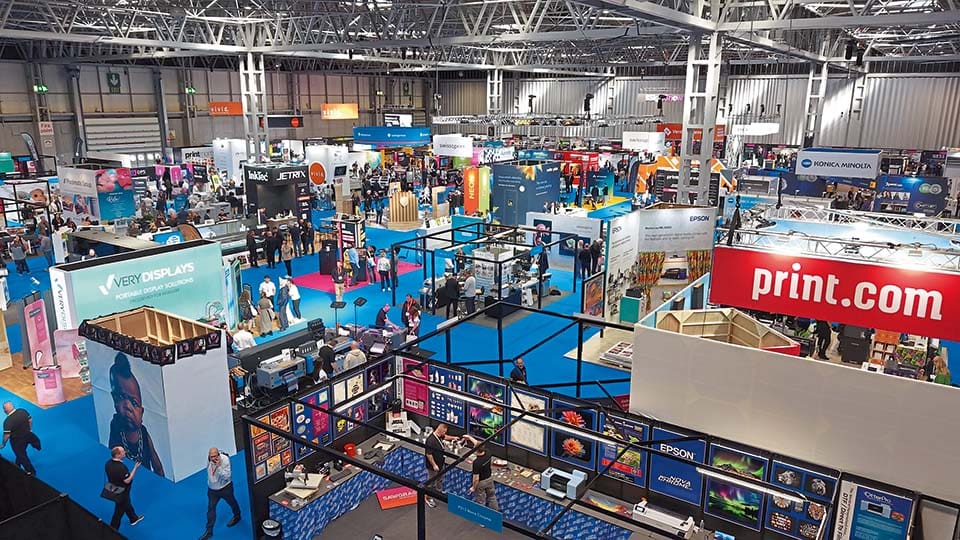
Jonathan Pert speaks to a variety of suppliers and specialists across the inkjet landscape to understand the future trends of the technology
Jonathan Pert
April 8, 2026
There is no denying that inkjet technology has moved far beyond its initial niche home-office focus of the early 2000s. In the last decade, it has begun to transcend its role in wide-format graphics to penetrate the final ‘holdout’ sectors of textiles, publishing, and commercial packaging – driven by demand for short-run flexibility and on-demand production.
With that in mind, the modern inkjet market is arguably defined by its versatility and variety of possible options. For the modern print facility, the challenge is no longer finding a platform that simply ‘does the job’ – but selecting the bespoke solution that fits your unique production niche.
The latest innovations in inkjet reflect the diverse needs of an industry that now demands both microscopic precision and industrial-scale volume across all print outputs.
In this feature, we dive into the machine lineups of four UK inkjet specialists, looking across the entire landscape – including small- and wide-format solutions for print, packaging, and signage applications, with the aim of helping you navigate a sea of possible options and find the technological match for your business ambitions.
Systems Thinking
Given that inkjet is far from a monolithic technology, with different systems excelling at different tasks, some would argue that a vendor-neutral approach from specialists or suppliers can ensure that hardware is selected based on the user's specific needs.
One company taking such an approach is Digital Printing Systems (DPS) UK, which offers a wide range of cut-sheet and continuous feed inkjet solutions from the likes of Canon, Fujifilm, Kodak, Ricoh, and Kyocera.
DPS’ mission statement is to remain a “fiercely independent” print specialist that provides advice based on “diligently monitor industry trends and technological advancements from all the major manufacturers.”
As Will Doherty, managing director at DPS, asserts: “DPS are vendor neutral, so we don’t push any one particular brand or product. Our role is to fully understand what our clients are looking to achieve and provide impartial guidance on the best-fit solutions to help them to meet their objectives.”
DPS’ product range covers all aspects of digital print technology including small- and wide-format, cut sheet, and continuous, with the company also offering ancillary products and services including process automation software, print finishing solutions, and consultancy services for what Doherty describes as “special ops projects.”
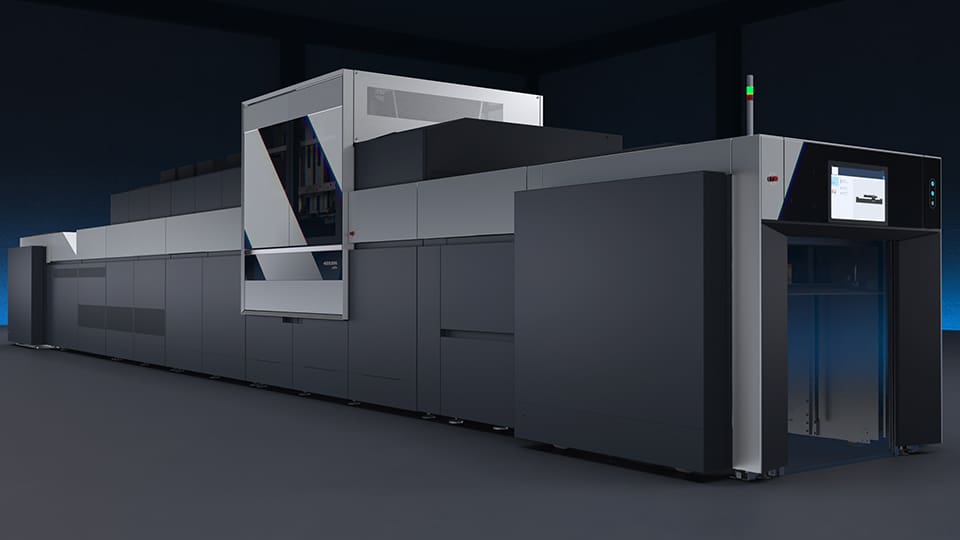
Will Doherty of DPS highlights innovations including the Canon iX1700 and HEIDELBERG Jetfire 75
Doherty provides a detailed breakdown on his perception of the current inkjet landscape. According to his analysis, the Canon VarioPrint iX3200 is still considered the dominant force in the SRA3/B3 inkjet market, known for its high speed, volume, and 1200dpi quality, though its cost requires substantial print volume. He comments: “In the small-format cut-sheet printing space, this machine is undoubtedly the daddy.”
Doherty compares the Canon to the HEIDELBERG Jetfire 50, which “in essence is the same system with the HEIDELBERG Prinect front-end.” In the same way, the Canon iV7 can be seen as the base engine for the B2-format Jetfire 75. While the Jetfire is a new entrant, he expects HEIDELBERG’s place in the market to grow significantly despite limited high-end inkjet experience. Both companies have recently introduced new models in the space, namely the B3-format Canon iX1700 and the B2 HEIDELBERG Jetfire 75.
Doherty sees Kyocera as a competitor in the lower-volume inkjet space, with the TASKalfa Pro 15000c noted as “one of the most underutilised products on the market” despite its cost-effective system being ideal for transactional print. Doherty anticipates Kyocera’s forthcoming Pro55000c to be transformative in the space due to its high print resolution and ability to print on coated and uncoated stocks as standard – he calls this “a game changer for inkjet.”
Despite these innovations, Doherty asserts the real ‘inkjet revolution’ that the industry has been promised is still yet to happen. As he puts it: “Is inkjet improving? Yes, absolutely. Will inkjet replace toner and/or lithography? Not in my working life (about 20 years).”
According to Doherty, while inkjet printing technology has a growing place alongside toner and litho, it is still not a ‘catch-all’ technology. He explains: “It’s important for companies looking to invest in inkjet to know exactly what to expect from their investment. That’s where DPS comes in – we have a very specific process that we follow to truly understand the requirements of our clients.”
DPS’s core aim, in Doherty’s words, is to make the “management and operation of the equipment supplied as easy and pain-free as possible.” He continues: “We have a number of unique initiatives that we use to ensure this happens. I’m not going to share all my secrets or everyone will be following suit, but I’m happy to discuss our approach with anyone who feels we could help them.”
In terms of his vision of the future of inkjet, Doherty believes that significant innovations are anticipated in the SRA3/B3 format space, highlighting the flexibility of the format for a variety of commercial print work.
I’m not convinced there’s much more to do in the B2 inkjet space, although I’m sure some will disagree with me
He sees less chance of major advancements in B2 inkjet in the short-term, adding: “I’m not convinced there’s much more to do in the B2 inkjet space, although I’m sure some will disagree with me.” On this point, Doherty cites the potentially high investment cost and poor value-retention of B2 digital presses which in his opinion can make the systems a risky financial choice.
He also notes that Fujifilm’s recent withdrawal from the B2 inkjet market in Europe, indicating a potential industry shift towards SRA3 offerings, with other manufacturers expected to follow suit. As he puts it: “Believe me when I tell you that Fujifilm know exactly what they are doing. Globally, Fujifilm are probably the strongest manufacturer operating within the commercial print sector – they know digital printing inside-out and they didn’t make this decision lightly. I fully expect to see a new SRA3 offering from Fujifilm at some point in the future.”
Max Volume
Another company with a broad perspective on inkjet is PrintMAX, a UK-wide supplier of Roland, Mimaki, and Summa wide-format printers and cutters. According to PrintMAX managing director, Michael Bolton, the company has seen a clear shift in what customers are asking for. He explains: “Many want to increase productivity, but without stepping into the costs or complexities that typically come with industrial systems.”
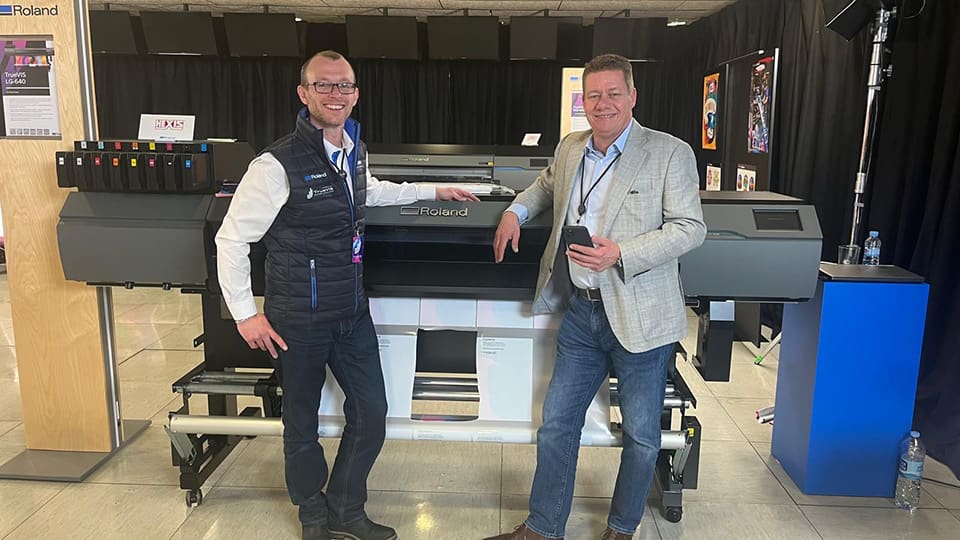
Bolton sees the launch of the Roland TrueVIS XP and XG platforms as being a clear reflection of that shift. He says: “The XG-640 in particular sits in a space that makes sense for established sign and graphics businesses. It offers the speed and durability needed to scale output, but without forcing customers to completely rethink their workflow or operating model.”
He also notes the Mimaki CJV330-160 and CJV200 series as providing continued appeal to customers who value flexibility, stating that they work “particularly well for businesses producing a wide mix of signage, display, and short-run graphics,” where factors such as reliability, colour accuracy, and application range matter just as much as outright speed. PrintMAX works with Hybrid Services, Mimaki’s exclusive distributor for the UK and Ireland, to provide the Japanese manufacturer’s range of solutions.
PrintMAX was crowned Roland DG’s most successful UK authorised dealer for 2025
According to Bolton: “Over the past few years, innovation in inkjet has been less about dramatic overhaul and more about steady, practical improvements. Technologies like roll-to-roll UV printing have become far more accessible, changing how many print businesses operate on a day-to-day basis.”
Bolton asserts that faster turnaround times, greater flexibility, and more predictable production are now achievable without the level of cost or complexity that used to be a barrier. He also notes that print quality, colour consistency, and operational efficiency have all continued to improve. “That combination has raised expectations across the sector,” he says. “Our line-up reflects this by focusing on machines that help customers grow output and capability in a realistic, manageable way, rather than simply chasing incremental gains in speed.”
Bolton suggests that, rather than focusing on headline performance, print businesses need to be clear about the applications they are producing, the volumes they are running, and how a new machine will fit into their existing workflow.
He adds: “Support after installation is also critical. Manufacturer testing, firmware development, and long-term parts availability all play a role, but so does the level of after-sales support once the machine is in production. At printMAX, we see that support as a continuation of the purchasing decision, not something that starts and ends at installation.”
According to Bolton, PrintMAX’s support begins with understanding how a customer actually intends to use a printer day-to-day, with the supply of the machine only being part of the picture. As he puts it: “Ongoing technical support, training, and honest advice are central to keeping customers productive and confident in their investment. By taking a consultative approach rather than a purely transactional one, we’re able to support customers as their needs evolve – whether that’s expanding applications, increasing throughput, or adapting to changes in their market.”
The next phase is likely to focus on making high-performance inkjet more practical, dependable, and accessible
Looking to the future, Bolton believes that, while the market can expect continued improvements in areas such as print speed, automation, and output consistency, it is less likely to see “major disruptive shifts.” He concludes: “The next phase is likely to focus on making high-performance inkjet more practical, dependable, and accessible across a wider range of production environments.”
Up to the Task
The Kyocera TASKalfa Pro 15000c previously noted by Will Doherty as “one of the most underutilised products on the market” is one of the solutions supplied by our next contributor, Jet Technology Group (Jet Tech). For Andrew Crane, sales director at Jet Tech, the sustainability of modern inkjet printers like the TASKalfa constitute a key benefit for customers. As he describes: “The TASKalfa produces low emissions and uses planet-friendly inks onto substrates that align with many customers sustainability goals.”
Crane suggests that in-line finishing solutions including Plockmatic bookletmakers, which cater specifically to the TASKalfa can bring “even higher levels automation to the production process.” Solutions such as the Plockmatic BF-450e are specifically designed to work with the Pro 15000c, where outputs can include workflows in high-volume technical documentation.
Crane concurs with the other experts that in the last few years he has seen advances in speed, quality, and automation for inkjet. He also adds that “the introduction of cut-sheet solutions has widened the application range and sweet spot for inkjet.” As he explains: “No longer are the benefits of inkjet specific to large transactional or direct mail print service providers (PSPs) running high volumes on complex and costly continuous-feed lines.”
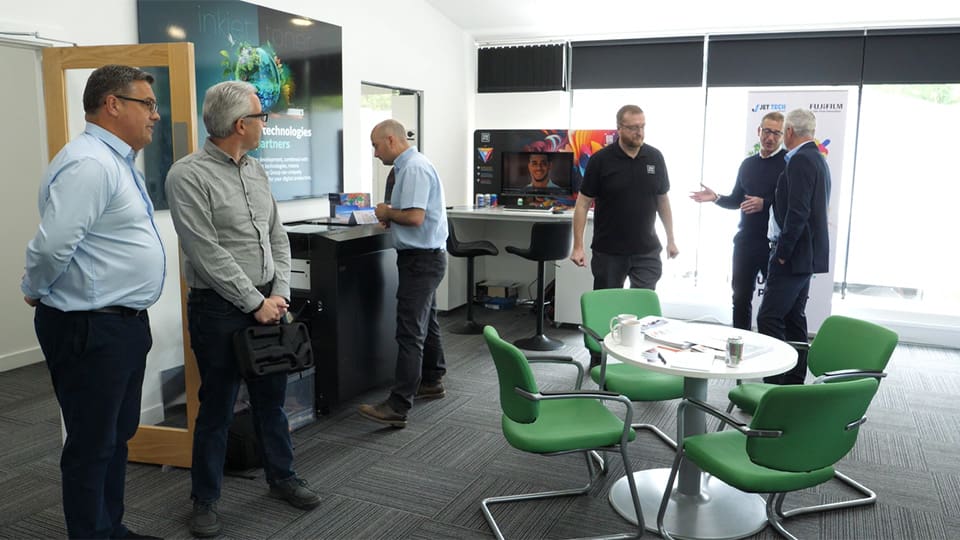
Jet Tech hosts a range of events at its demonstration centre in Warrington, UK
Crane sees the advancement of lower investment cut-sheet models as having democratised inkjet and made it more accessible, allowing more PSPs to take advantage of the lower cost-per-page and productivity that cut sheet inkjet brings. He continues: “More and more commercial printers faced with shorter runs, quicker turnaround times, and price pressures are looking at inkjet to not only help migrate some of their traditional work, but to also expand their offering into new markets, including data-driven work.
“They now understand that inkjet is very much complimentary to their offset and digital toner operational capabilities.”
For print companies considering the inkjet market in 2026, Crane stresses that the range of inkjet offerings is growing, with no one-size-fits-all solution. He believes that it is important to consider volume and throughput, noting that: “Continuous feed solutions will produce more volume at higher speeds, but at a higher investment cost than cut sheet and with more complexity and less flexibility than cut sheet.” He also stresses the ever-important presence of print quality, the core of which he says is still “determined by printhead and ink technology,” as well as substrate breadth and flexibility, which he stresses is particularly important “within a commercial environment.”
Jet Tech’s support of customers on their ‘inkjet journey’ starts with an application audit to identify what work is appropriate for the technology. This typically involves testing of customer applications, while allowing the customer to quantify the balance between image quality and cost-per-page. As Crane describes: “Our consultative approach continues post-sale, helping customers with onboarding new jobs and ensuring they maximise their investment.”
Factoid:Data Bridge Market Research predicts that the global inkjet printer market will rise to $81.82bn (£60.39bn) by 2030
"Manufacturers will continue to push the boundaries. New developments in both printhead and ink technology will continue to see higher image quality levels on a wider range of stocks, as well as reducing ink costs allowing more applications and volume to transition to inkjet."
Crane affirms that new inkjet innovations are on the way and that “manufacturers will continue to push the boundaries.” With Jet Tech holding regular open days at its Warrington showroom where it showcases its print and finishing solutions, you may well see some of those innovations there.
Quality Suppliers
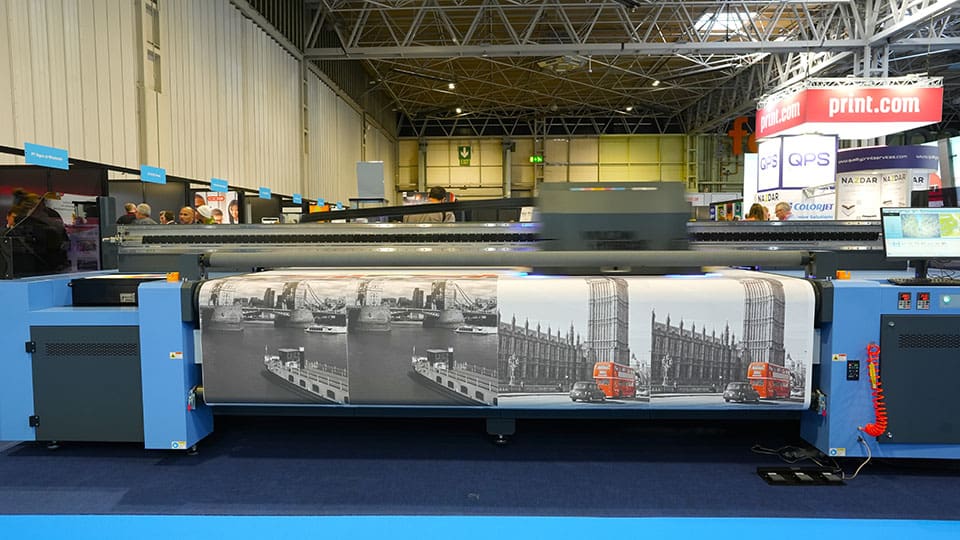
Rounding out our inkjet experts is Quality Print Supplies (QPS) which offers a variety of wide-format inkjet solutions to the UK market. QPS are the official UK distributor for The ColorJet Group, supplying a range of its UV inkjet printers including flatbed, hybrid, and roll-to-roll variants. This includes the full ColorJet Verve and Vulcan Hybrid ranges – the largest of which being the 5100mm-wide Vulcan 5003. QPS are also long-standing authorised dealers for Roland DG UK, offering the full range of its wide-format inkjet printers.
Alongside the machines, inkjet inks are also an important part of QPS’s offering, with the company being the main UK distributor and stockholder for Nazdar Ink Technologies. QPS also stocks and supplies DuPont Artistri Textile ink solutions for a wide range of textile printing platforms.
With such a variety of products, QPS has gained insight into the adaptations of the market. Chris Bailey, director at QPS, says: “We have seen the increasing use of linear drive on a wider range of printing technology, including all ColorJet units, which increases performance and reliability.”
QPS offers the full ColorJet Verve and Vulcan Hybrid ranges
Bailey also describes how printhead manufacturers have continued to innovate, with the latest developments being incorporated into new units to boost quality, speed, and consistency.
On the ink side, Bailey points out that “Nazdar continues to develop new digital ink products with added benefits, particularly UV curing ink.” Describing what he sees as the key components of the inks, he says: “They offer market-leading adhesion to difficult substrates, increased abrasion, and water resistance. All Nazdar UV digital ink products are also GREENGUARD Gold certified.”
Bailey notes that the purchase of new solutions, particularly a grand-format flatbed or hybrid printer, is a significant investment for any print company, regardless of size. As he describes: “Track record and support are therefore vitally important. With an increasing influx of lower cost equipment being imported, the longevity of the equipment and the support networks also needs to be considered.”
On that end, QPS offers nationwide technical support on a wide range of its printers, with its engineers backed up by a comprehensive spare parts inventory and the company providing a range of tailored service contracts. As the company puts it on its website, the core goal is to provide “technical support and peace of mind.”
Jetting Ahead
Among all these viewpoints, a recurring theme is that while inkjet technology will continue to advance and many new innovations are just over the horizon, the sector's evolution is moving beyond a binary measure of size, quality, and speed. For many PSPs, the question has evolved from whether inkjet can match the quality of traditional methods to how it can best be integrated into a diversified workflow.
Ultimately, the future of the market does not belong to a single technology, but to those who can leverage inkjet’s versatility to meet the demand for shorter runs, faster turnarounds, and more relevant content. As the lines between market segments continue to blur, inkjet stands as the potential catalyst for a more responsive and adaptable industry.
With The Print Show upon us once again, anticipation has been building for the UK’s leading industry event. From product launches and live demos to expert advice and networking opportunities, here’s what to expect at the NEC this September
We examine two rapidly scaling online business models, both growing within the print sector, exploring what they mean for the future landscape of commercial print
With garment print still proving a popular growth market, Rob Fletcher takes a closer look at some of the latest technology on offer in this sector, analysing how these machines can help your business access new opportunities
(this was inserted into the PHP of a code block)
Watch our latest video of the week
Print Monthly gives you the latest video coverage of companies, people, and events from within the print industry.