Kyocera: Why the battle ground in print is now light production
The print industry has long focused on two ends of the spectrum: high-spec digital presses at one extreme, and office MFPs at the other. But the real growth, and arguably the real innovation, is happening in between
Guest Writer
June 17, 2026
Shared print rooms, central reprographics departments (CRDs), and high-volume office environments are being asked to deliver more than ever before: faster turnaround, higher quality, tighter cost control and seamless integration with digital workflows. Yet these environments rarely have the space, budget or operational model to support full production presses.
This is the reality behind the rise of ‘light production’, but why does it matter?
Kyocera’s TASKalfa MZ10500i and MZ9500ci Series is a clear response to this shift, addressing a new segment that demands production-style performance, without production-level complexity.
Designed for the environments that actually drive volume
What matters now is whether devices can sustain real-world workloads that are unpredictable, multi-user, and deadline-driven.
This precisely where shared print rooms and CRDs sit. They are responsible for everything from internal reports and course materials to customer-facing brochures and marketing collateral. What they need is not theoretical peak performance, but dependable throughput across long runs and mixed job types.
The TASKalfa MZ10500i and MZ9500ci Series is designed with this in mind. Four mono and three colour MFPs ranging from 75ppm to 105ppm, with support for SRA3 and media weights up to 300gsm, and a range of professional finishing options, enabling organisations to consolidate output into a single, high-performance device with a small footprint.
Crucially, Kyocera positions these new devices as ‘light, versatile production’, more capable than a traditional office device, but without the operational overhead of a production press.
Steve Doust, Sales Director, Kyocera Document Solutions UK, comments:
“In shared print rooms and CRDs, throughput is important, but predictability matters even more. Jobs arrive in bursts, teams are lean, and operators are looking for maximum performance with minimum intervention.”
“And this is where our light production series comes in. They are built for continuity: an industry-first dual toner container system allows toner replacement without halting print runs, high paper capacity, front-access maintenance, and a new water-cooled technology system that dissipates heat from the developing unit to support more continuous output and consistent image quality.”
Uptime, not speed, is the real benchmark
The defining challenge in these environments is not speed alone, it is continuity.
A device that delivers high output in short bursts but requires frequent intervention will quickly undermine productivity. This is where Kyocera’s approach becomes more strategic than incremental.
The series introduces an industry-first dual toner container system, allowing toner replacement without interrupting print runs, alongside high paper capacity and front-access maintenance.
Steve Doust, Sales Director, Kyocera Document Solutions UK
Alongside this, a water-cooled system reduces heat build-up during long jobs, supporting more consistent, continuous operation, which is important in CRDs and print rooms running extended workloads.
Together, these are not isolated features, but a coherent response to one of the biggest barriers to efficiency in light production: avoidable downtime.
Why consistency now defines quality
Another shift taking place in high-volume environments is how quality is measured.
Resolution remains important, but in practice, consistency across long runs is what determines both efficiency and output credibility. For CRDs and shared environments producing hundreds or thousands of pages per job, instability leads directly to reprints, delays and additional cost.
Kyocera addresses this through advanced toner formulation and ceramic-based image processing technology, supported by built-in ICC profiles and automatic calibration to maintain colour accuracy over time.
The result is controlled, repeatable output—from the first page to the last—supporting applications where visual consistency is critical.
Steve Doust, Sales Director, Kyocera Document Solutions UK, adds:
“In other words, the value is not simply speed; it is sustained speed under real-world conditions. This point matters because light production lives or dies on interruptions. A device may look impressive on a datasheet, but if colour drifts, toner swaps pause jobs, or heat build-up reduces consistency over longer runs, productivity is quickly eroded.”
Scanning becomes a production priority
Print may still dominate the conversation, but scanning is increasingly shaping workflow efficiency.
In CRDs and large office environments, document capture is the first step in digitisation and often the point where delays occur. Slow or inaccurate scanning creates downstream issues that impact the entire workflow.
The TASKalfa Series treats scanning as a core capability rather than an add-on. With AI-enabled, straight-path scanning at up to 300 images per minute, support for large batch files and intelligent error detection, it is designed to handle high-volume capture reliably.
This is particularly relevant in sectors such as education, legal and public services, where large volumes of paper-based information still need to be processed quickly and accurately.
A segment coming into focus
The TASKalfa MZ10500i and MZ9500ci Series ultimately highlights a broader industry shift. Light production is not a compromise category. It is fast becoming a defined segment with its own operational requirements and expectations.
Organisations are looking for devices that can bridge the gap between office convenience and production capability, without forcing trade-offs between cost, complexity and performance.
By focusing on sustained throughput, consistent output and integrated scanning, Kyocera is making a clear case that this middle ground is not just viable, it is where many organisations now operate.
And in a print market increasingly defined by efficiency and adaptability, that may be where the most meaningful progress is being made.
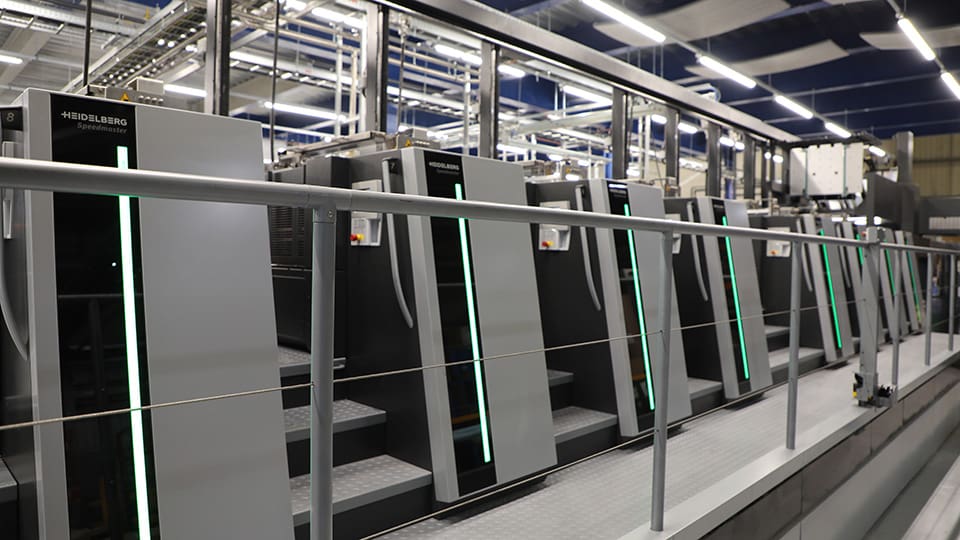
Route 1 Print has purchased two HEIDELBERG Speedmaster XL106-8Ps with Plate to Unit and Push to Stop technology, in order to support growing demand and strengthen its production capabilities
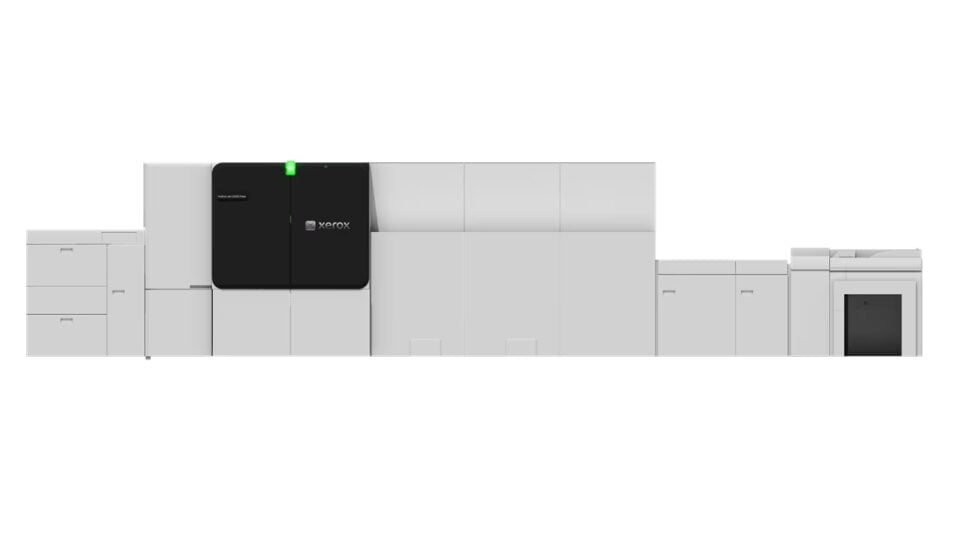
Xerox has unveiled an array of new solutions at PRINTING United Expo, including three new press platforms in its Proficio series and enhancements to its existing Proficio PX300 and PX500 presses
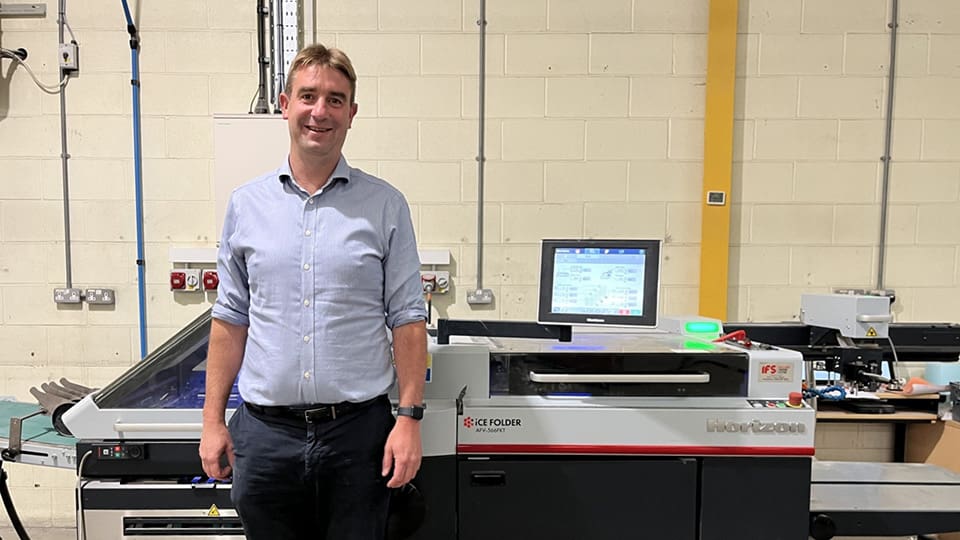
Micropress has continued its recent kit investments with the purchase of a new Horizon AFV-566FKT iCE folder, as part of goals to enhance its leaflet production capabilities
(this was inserted into the PHP of a code block)
Watch our latest video of the week
Print Monthly gives you the latest video coverage of companies, people, and events from within the print industry.