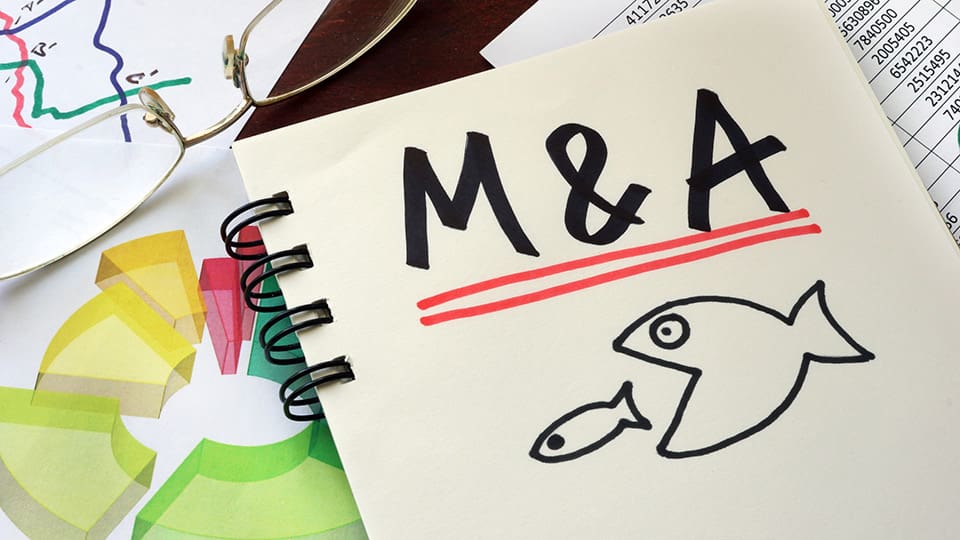
As mergers, acquisitions, and buy-outs continue to be prevalent in the print industry, David Osgar takes a special look at the advice of professionals in the print and financial industries when it comes to buying a print business
David Osgar
July 25, 2025
There are many out there that would advise against buying a business right now considering the financial strains that the UK and the global economies are facing. Despite this, it’s often during adversity businesses can thrive, and that entrepreneurs can emerge.
This was seen during the pandemic as many businesses had to pivot and look at new revenue streams in order to stay afloat. While many companies did go into liquidation because of the effects of Covid-19, many would argue that Covid only accelerated the failure of businesses that had struggled to stay modern or keep their customer base updated.
The changing nature of print, visual communications, and marketing have altered how many traditional print businesses now operate, which means new business owners need to keep up with modern trends and products.
In this article we ask the advice of professionals in the industry regarding buying a business and look at what considerations individuals should have ahead of changing management structures.
To Buy or Not to Buy
Within the past year many business owners have announced the success of buying a print business, either through a management buyout (MBO) or acquisition. Recently Nothern Irish digital printing platform, Northside Graphics, announced the acquisition of Belfast printing shop, Media Design and Print.
Recently in Hereford, Magenta Technology, a Hereford-based print equipment supplier, was bought by Ray Willows and his wife Clare, who had both worked for the company for 15 years. The purchase was made possible thanks to the Community Investment Enterprise Fund (CIEF) which was delivered by BCRS Business Loans. Speaking of the purchase, Ray Willows said: “Having worked for Magenta Technology for 15 years, when the opportunity came up to buy the business from the previous owner, I could see the potential and wanted to secure the finance to make it possible.”
While there are many factors that are making business decisions more difficult, the industry’s aging workforce, and the changing nature of print means that many unique opportunities are being presented to individuals and businesses.
A common activity in several industries is for larger companies to buy smaller businesses in order to provide vital funding and brand recognition
Marcus Clifford, business coach, mentor, and consultant for the print industry, says that, in a nutshell, an acquisition is characterised by high risk, but points to the activity in sectors like packaging, wide-format, labels, and corrugated as opportunity areas. Clifford says: “In these areas of the marketplace, private equity investors have been active, whereas general mergers and acquisitions in commercial print are still mostly driven by strategic buyers, retirements, or closures.”
Clifford says that M&A activity is only part of the toolkit for generating “real growth” and that approaching it strategically can deliver new processes, experiences, features, customers, and offerings. “In tough markets, where growing the top line is hard and holding margin is harder, it’s tempting to see a deal as a shortcut to growth,” says Clifford, who adds: “Too often, it’s a detour.”
Clifford says: “Across the print and visual communications sector, we’ve seen many M&A stories unravel under the weight of unrealistic expectations, with the temptation of a injection of sales, and creating a more robust business model.”
After spending a lot of time over the past few years discussing mergers, acquisitions, target companies, and creating different synergies, Clifford emphasises he is a great advocate for these growth options, yet he has seen far too many examples of these endeavours as “life raft grabs”.
If it’s an acquisition, it’s a process and don’t miss out any part of it. Involve your team in this, gain their different perspectives, share notes at the end of each day, and ensure questions you have all asked are verified against what others have seen and heard
“A good starting point I often think is: what is the problem to be solved and what is the opportunity that can be capitalised upon?” asks Clifford. “How honest are you being and are you ensuring you are surrounded by critical friends. If it’s an acquisition, it’s a process and don’t miss out any part of it. Involve your team in this, gain their different perspectives, share notes at the end of each day, and ensure questions you have all asked are verified against what others have seen and heard.”
One area Clifford warns against is the pitfall of businesses seeing a M&A or consolidation as the ultimate answer, as often those involved will only be left with imbalance and disappointment. Clifford explains: “What people mostly want is a favourable ‘tuck in’ or bolt on, where the acquired business is closed and merged into the buyer’s operations. A quick win and additional turnover. They do happen and it’s always worth having a discussion with your geographical neighbours, catch up over a coffee, and discuss options, but so many waste time and incur costs going nowhere due to unrealistic expectations by one or multiple parties.”
Getting the Right Advice
One way to navigate buying a business is use the assistance of finance specialists and providers. A specialist in flexible and competitive funding solutions for the print and packaging sectors, Compass Business Finance, has helped several clients with M&As, MBOs, and management buy ins (MBIs).
Speaking about this, Mark Nelson, director of Compass, says: “Although M&A activity peaked in 2021 there’s still strong interest in acquisitions, but with a more cautious and considered approach. Businesses are looking for opportunities that help them strengthen their position or diversify their offering.
“We’re also seeing more internal teams stepping up to lead MBOs. These teams already know the business and its people well, which makes for a smoother transition and gives owners a clear path to retirement.”
Mark Nelson, director of Compass Business Finance
When it comes to advice for buying, acquiring, or merging a print business, Nelson recommends starting early to be proactive. “Don’t wait for the perfect opportunity to land in your lap – get out there, start conversations, and seek advice,” says Nelson, who also emphasises the importance of finding a good cultural fit for your business. “Also, try to understand where the seller is coming from. Many print businesses are ‘lifestyle businesses,’ built with care over many years but without a clear succession plan. That can be a great opportunity for someone ready to take the reins and invest in the future,” adds Nelson.
Questions that Compass recommend asking when looking to invest in a business include: Is the business keeping up with technology? Does it have a strong customer base and supply chain? Is there a capable team in place to help you grow? And how will you finance future plans – not just the purchase, but also the investments you’ll have to make afterward?
Another business which has offered its advice on M&As is Begbies Traynor Group, a business recovery and financial advisor which specialises in advice for the print industry through one of its directors, Graeme Lipman.
Lipman acknowledges that running a business has been incredibly difficult in the past few years following stresses such as Brexit, Covid-19, and the cost-of-living crisis, especially as many Bounce Back Loans and CBILS liabilities are now “weighing heavy” on balance sheets.
Lipman says: “In an industry which relies on other companies staying in business, widespread financial and economic instability can have a disastrous knock-on effect on the print industry.
In an industry which relies on other companies staying in business, widespread financial and economic instability can have a disastrous knock-on effect on the print industry
Couple this with staying relevant in an increasingly digital age, the need to adapt or risk being left behind has been weighing on the shoulders of those within the industry for many years.”
Despite the difficulties being felt by businesses, Lipman says a merge or buyout can be an extremely welcome prospect, especially as it can mean overcoming other oncoming obstacles.
Graeme Lipman, print specialist and director at Begbies Traynor Group
Lipman explains: “For those larger more traditional print houses which have failed to pivot their operations to better suit changing consumer preferences, the acquisition of a smaller start-up who has built its business on serving clients in the digital age, can be the quickest and most cost-effective way of expanding operations and securing a share of the marketplace they are currently unable to appeal to.”
When it comes to Lipman’s advice, he prioritises seeking sector-specific advice from an industry expert who can understand the problems you or your business may be facing. Lipman adds: “You should ensure you are working with the correct financial professionals, with the right accountants or your internal financial director or external advisory body – this is key. Being transparent and being very aware of where the business is currently and where the future lies.
Factoid:According to data from Institute for Mergers, Acquisitions, & Alliances (IMAA), M&A activity peaked in 2021 and since settled back to levels consistent with data back in 2018
“Analysing budgets is also important as you need to make sure they fall in line and that any adjustments can and will be made to take on the changes. Constant reviewing with the right meaningful information is also vital as it offers business and finance shifts. It can be a smooth process, but in acquisitions everything always comes down to the detail.”
As evident by the comments supplied in this article, buying a business is not a simple process. Several factors need to be considered, and buying a business isn’t always the answer to all solutions. Taking too long to act can also be detrimental, and certain opportunities may only come around every so often. By following the advice of professionals such as those in this article, you can be rest assured you’d be in a better position to grow your business.
Known for its premium stationery, envelopes, and packaging, we take the chance to find out more about this 167-year-old company by speaking to the directors of the business
Marketing manager and freelance marketing consultant, Rachael Hunt, talks about the impact a social media ban could have on print and the wider trend of disconnecting from digital technology to interact with tactile experiences for both practical and marketing purposes
(this was inserted into the PHP of a code block)
Watch our latest video of the week
Print Monthly gives you the latest video coverage of companies, people, and events from within the print industry.