The Two Models Shaping the Future of Print Fulfilment
We examine two rapidly scaling online business models, both growing within the print sector, exploring what they mean for the future landscape of commercial print
Jonathan Pert
July 29, 2026
When analysing the impact of digitisation on print, it can be easy to focus either on the rapid changes to print hardware seen in recent years, or the evolving role of the software that underpins it. But it could be argued that the biggest driver of change has been the increasingly online lives of the people who purchase print. Fuelled by the post-pandemic ecommerce boom and a corporate pivot toward zero-inventory and on-demand customisation, everyone from independent digital creators to corporate enterprises now expects high-quality printing at the click of a button.
The landscape of online print webstores is currently being shaped by two different business models, each scaling rapidly but serving opposite ends of the trade. On one side are all-in-one circular fulfilment ecosystems like Teemill – platforms that take care of the entire lifecycle, supplying the digital storefront, the apparel, and the physical manufacturing in a single package. On the other side are B2B software providers like Flex4 OPS, which builds high-utility web-to-print storefronts that allows existing commercial print shops to automate their workflows and handle bulk corporate contracts online.
In this article, we speak to both companies to understand how they are redefining the modern print landscape, what tools they offer to today’s entrepreneurs, and how their contrasting technologies can shape the future of print production.
The Flexible Approach
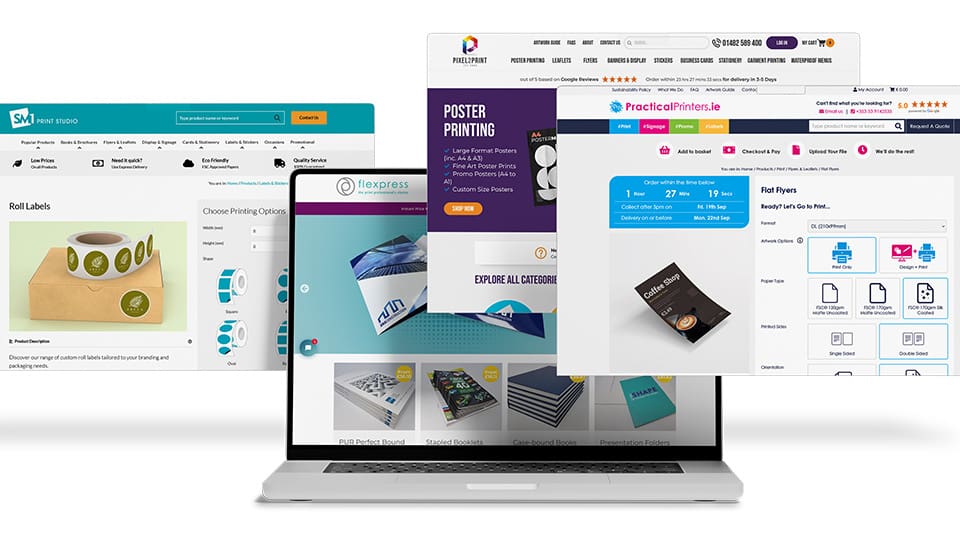
Flex4 OPS is a UK-developed, modular web-to-print ecommerce solution which enables existing print service providers to launch customised public and private-branded webstores. All of Flex4’s webstore packages include a range of add-on modules, with additional features and API integrations that can streamline workflows and reduce admin costs processing online orders.
In addition, the company offers digital marketing services which are aimed at increasing search engine visibility and driving more traffic to a webstore, increasing the number of possible online orders and enquiries received.
Speaking about what the modern print customer is looking for in a webstore, Francis Whiteley, managing director at Flex4, says: “At the core of most print customer requirements is the ability to specify and buy print products online quickly and easily, with real-time pricing driven by easy to maintain pricing rules, straight from their internal MIS and/or from trade supplier APIs.
“Easy re-ordering is also a real benefit to the customer and the PSP, saving time for all parties, ensuring efficiency and consistency, and building loyalty.”
Whitely believes that many printers are looking at how they can improve their quoting processes and increase automation, especially when many customers are still enquiring by phone and email. He believes that while there is a trend towards a higher volume of lower-value orders, “each order requires the same admin time to process it.” Therefore, as he describes: “Solutions that provide quick quotes for these enquiries and allow customers to place any orders for quotes online are a key requirement.”
Flex4 OPS helps existing printers to launch their own customised webstores
Flex4 OPS is specifically designed to support the needs of the print industry, including support for order variation. The company’s pricing engine allows store admins to build more of what Whiteley describes as “real-world print product permutations” into a single product, in comparison to off-the-shelf ecommerce stores. This makes price comparison for different sizes, materials, finishes, quantities, and turnaround options easier for end-users, as they can all be offered in a single product.
One of the biggest changes Flex4 has seen in recent years is an increased demand for automation and integration, particularly with inflation rises leading to frequently changing supplier prices. Whiteley explains: “Historically, many customers were simply looking for an online ordering platform, but today they want a solution that can maintain pricing rules, connect with their MIS, and link to trade suppliers for real-time pricing and order status updates.
“This has led us to continually expand our range of third-party API integrations and payment gateway options to meet client requirements.”
Listening closely to customers has been a central part of Flex4’s development roadmap, with many of its most popular features originating from conversations with printers looking to solve real-world business challenges.
A continued push for personalisation and online ordering has rapidly evolved how print is sold to the customer
The company has also seen growing demand for solutions that help printers reduce the amount of manual admin involved in processing orders. Whiteley comments: “Feedback from customers has driven the development of features such as automated artwork checks, online proofing workflows, a faster quoting journey, and enhanced re-ordering functionality.”
Alongside its streamlined order processing tools, Flex4 OPS offers the ability to deliver fully customised online webstores, allowing its customers to implement a personalised customer experience that better represents their own print brand online.
The combination of this personalised branding with Flex4’s simplified ordering journey, easy re-ordering, and account-based pricing can have a significant impact on customer retention. As Whiteley says: “Once a customer has placed orders, uploaded or created artwork, saved product specifications, and established their preferred ordering process, returning to place future orders becomes quick and convenient.”
It’s about improving efficiency, reducing admin, and creating better customer experiences to increase customer retention
Whiteley believes that the industry has made significant progress in its understanding of ecommerce in the last decade, with most printers now recognising that having an online presence is essential. However, he feels that there is still a tendency for businesses to view a website as a brochure, rather than as a sales and operational tool.
Summing up his feelings on how printers can maximise the benefit of online webstores, Whiteley concludes: “The printers seeing the greatest success are those that understand that implementing a webstore as part of their digital strategy is not just about generating online orders – it’s about improving efficiency, reducing admin, and creating better customer experiences to increase customer retention.”
The Circular Offering
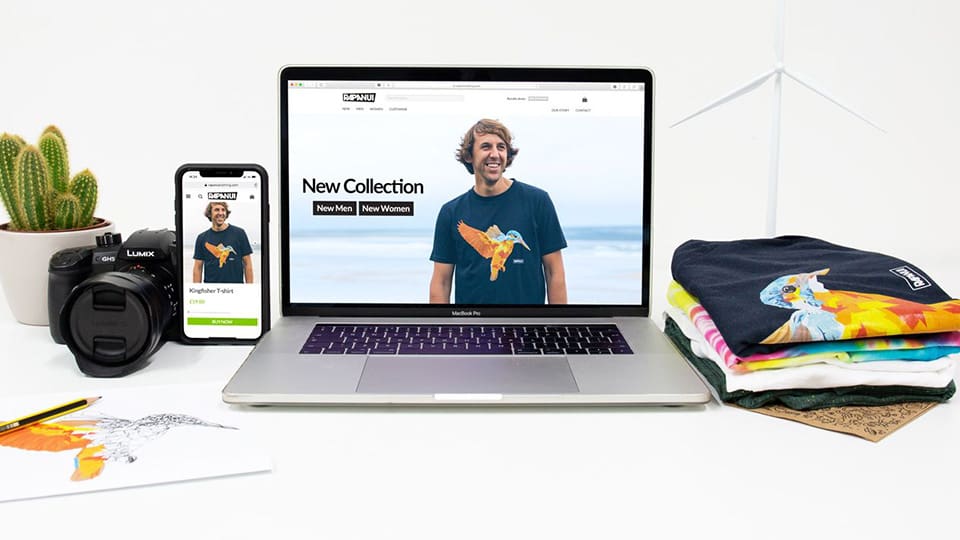
Teemill’s all-in-one ecommerce offering, by contrast, focuses on providing brands, creators, and charities with a unified platform to manage custom prints of clothing and merchandise, while avoiding waste or over production. The platform includes a website builder that generates custom product pages, with stock updates from the company’s factories syncing automatically. A built-in email marketing tool, Teemail, can also send email newsletters to their customers and offer a discount on their first purchase with a series of automated flows.
A focus on sustainability is core to the creation of the company. Products sold on the Teemill platform are made from organic and recycled materials, printed using renewable energy, and designed to be remade when they’re worn out, as part of a circular economy. The company also manufactures its own line of blanks called ReSupply, with the aim of allowing for full traceability. Teemill operates alongside its sister apparel brand, Rapanui, under a unified parent tech company structure, with Rapanui first launched in 2010 as a sustainable consumer clothing brand. Realising that one small brand could not achieve their goal of fixing global fast fashion alone, they packaged their factory robotics, website software, and print-on-demand infrastructure into an open-access platform – this platform became Teemill.
Describing the goal of the Teemill brand, content marketing manager, Sara Debreceni, says: “Our open-access platform allows for startups to do what we did in ten years, in ten minutes. Giving away this tech for free allows anyone, anywhere, to start selling their own products, made by default using sustainable practices, without the need to invest massive sums of money up front.”
Our open access platform allows for startups to do what we did in ten years, in ten minutes
This core focus on sustainability also runs throughout the wider ecosystem set up by Teemill. For example, combining the stock required to run thousands of brands into a singular fulfilment system naturally benefits from economies of scale. Debreceni comments: “This, in turn, makes sustainable products more affordable for the consumer and means we can recover more material and remake it. Waste is massively reduced because we only make what people need when they need it and none of the brands using Teemill end up with excess stock.
“When tools like Teemill centralise production and are made widely available through the internet, sustainable solutions can be scaled up quickly.”
The Teemill platform, which is free to sign up to, also offers tools for SEO and email marketing and plugins to other popular sites such as Google, Etsy, and TikTok, all with the aim of making it easy to sell print-on-demand (POD) products online with no start-up costs.
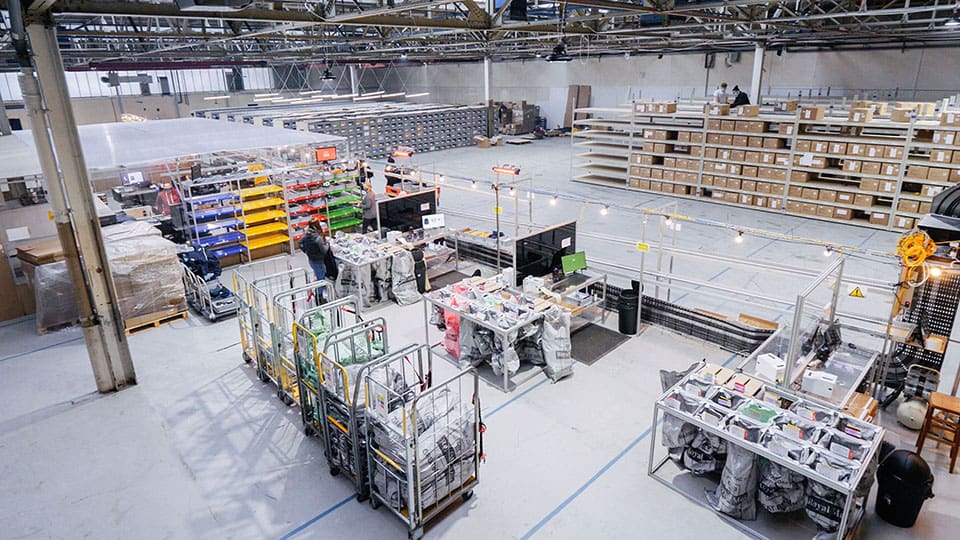
Teemill utilises its existing print infrastructure to manage orders and fulfilment
While Teemill has a similar focus to Flex4 on using customer feedback to develop its platform further, it also benefits from lessons learned by its sister brands. As Debreceni says: “Starting by building the Rapanui brand was a great way for us to learn how brands grow and what tools they need. To this day, our own brands help inform the development of the platform. We observe where our brand teams run into roadblocks or the processes that slow them down, like optimising products for SEO. Then, our engineers create solutions that speed up those processes and remove friction.”
This alignment with its sister brand also allows new features to be tested in a B2C environment through A/B testing, with tools being refined in that space before rolling them out to the wider platform. As Debreceni says: “In this way, we know they’ll have a big impact for all stores and uplift the entire platform.”
Factoid: According to a 2025 study by Gelato, 70% of printers believe that personalisation and customisation are driving customer preferences
While the Teemill model may differ from Flex4 OPS, it solves many of the same issues, namely, to provide users with a streamlined, customised experience that simplifies the process from concept to finished print. Describing what the modern print customer is looking for, Debreceni says: “Customers want a frictionless shopping experience. Menus, landing pages, and collections should make it easy to find what they’re looking for. At the same time, the merchandising and design on the site must be consistent with the rest of the brand, to draw them into the brand’s world. If customers are new to a shop, they will be hunting for trust signals. This includes hints that the site is legitimate, such as quick loading time and a straightforward checkout.”
Table for Two
Ultimately, the growth of both Teemill and Flex4 OPS demonstrates that the online print market is not a monolith, but a diversifying ecosystem. The sector is currently balancing two distinct philosophies. On one path are the integrated platforms that bypass traditional manufacturing entirely by combining technology, eco-materials, and automated production under one roof. On the other path are the dedicated web-to-print software providers equipping established, asset-heavy commercial printers with the digital tools needed to protect and grow their market share.
Rather than creating a ‘fight for dominance’, the future of the industry likely has room for both approaches. While automated fulfilment platforms excel at lowering the barrier to entry for creators and new brands, traditional commercial printers using advanced web-to-print software retain an edge in handling complex, high-volume corporate contracts and diverse substrate printing. Whether a business chooses to build a brand through a completely outsourced infrastructure or through digitising an existing factory floor, success in this next era of print will belong to those who best leverage these online workflows to meet the evolving demands of the modern buyer.
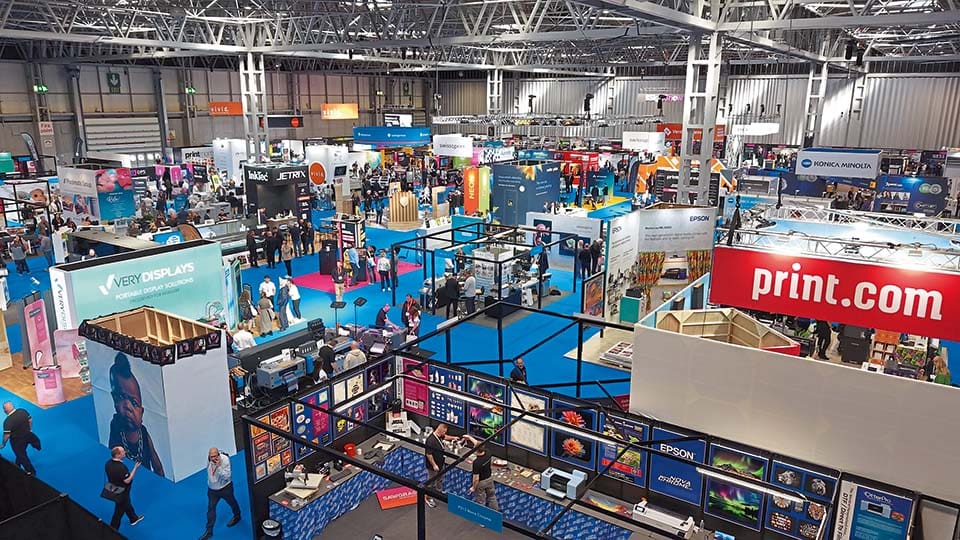
With The Print Show upon us once again, anticipation has been building for the UK’s leading industry event. From product launches and live demos to expert advice and networking opportunities, here’s what to expect at the NEC this September
Ahead of its appearance at The Print Show 2026, Print Monthly takes a look at the history and current objectives of hardware and software provider, HP, in order to explore how the company sees its role in the print and signage industries, and how it can help its customers improve their businesses
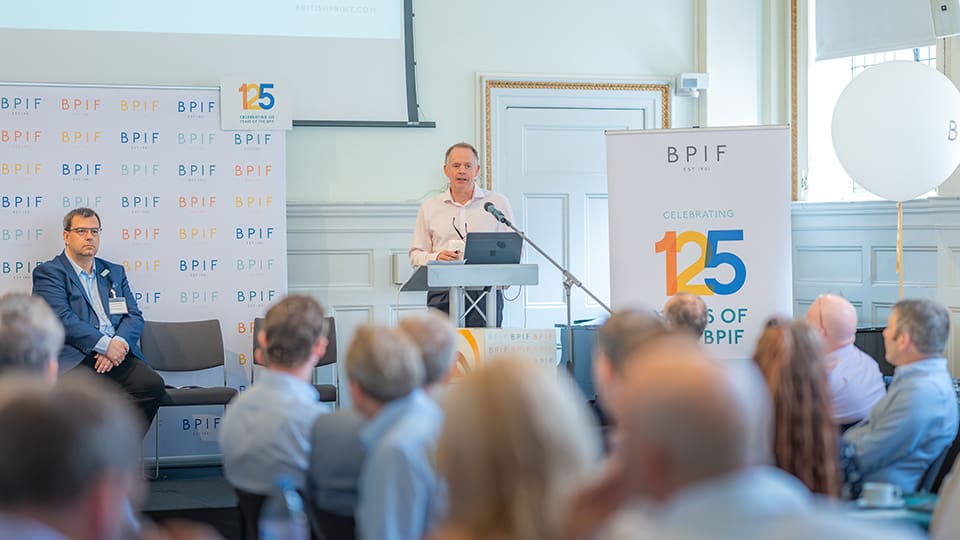
The London event acted as a chance for members to network, learn, and celebrate the federation’s history, and the achievements of individuals in the industry
(this was inserted into the PHP of a code block)
Watch our latest video of the week
Print Monthly gives you the latest video coverage of companies, people, and events from within the print industry.