Establishing strategic partnerships with trusted suppliers is becoming a central way to access new capabilities without taking on all the cost and risk alone. Print Monthly takes a closer look at the value of these relationships
Rob Fletcher
July 29, 2026
In the modern print industry, success increasingly depends on more than the equipment on your shop floor. As businesses face mounting pressure to improve efficiency, diversify their offering, and respond to changing customer demands, many are looking beyond their own four walls for support.
Securing and maintaining partnerships with suppliers, technology providers, consultants, and even fellow print companies can help print service providers (PSPs) grow. What is more, the nature of these relationships has also evolved from a largely transactional arrangement, to being built around shared expertise, ongoing support, and collaborative problem-solving.
Here, Print Monthly explores how PSPs are forming stronger partnerships across the supply chain, what they look for in a successful collaboration, and how working closely with trusted partners can help drive growth, improve resilience, and create long-term value.
Knowledge, Insights, and Support
Soyang Europe offers solutions across both materials and, through its Soyang Hardware arm, machinery. Oliver Mashiter, sales director at Soyang Europe, agrees that the customer relationship has changed from transactional to a more strategic partnership, with PSPs now looking for a collaboration that will improve productivity, profitability, and competitiveness, rather than simply processing orders.
“Rising operational pressures, tighter margins, and faster turnaround expectations mean customers now expect suppliers to act more like consultants than simple vendors, offering industry knowledge, product insights, and technical support to their clients,” Mashiter says.
“Customers are also looking for suppliers to understand the production environments from start to finish. They are looking for partners that can make recommendations on end-to-end workflows or integration into existing workflows, rather than recommending products in isolation.”
As to the areas PSPs can work with supplier partners on, Mashiter highlights several, stand-out challenges. First, he says that a partnership can help a PSP expand application diversity across various markets, allowing them to diversify profitability, and move beyond traditional print markets and sectors into new, profitable areas.
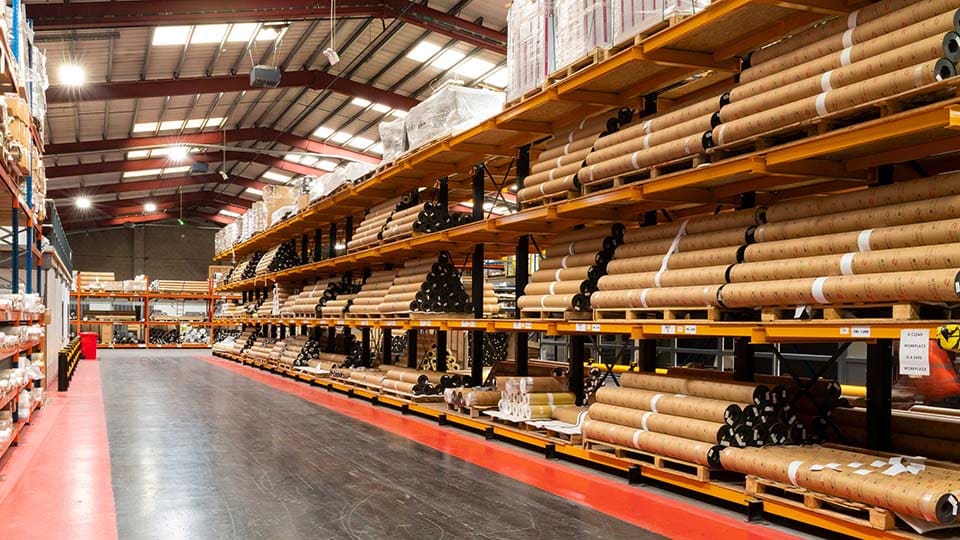
Soyang Europe supplies a range of printable wide-format and superwide-format media and surface coverings
He also noted an increased demand and expectation for integrated solutions, setting out how print businesses no longer just want a printer, material, or piece of finishing equipment; but confidence that the entire workflow works together seamlessly with the minimum learning curve and production downtime.
Looking ahead, Mashiter says there are plenty of opportunities for collaboration between printers and suppliers, with knowledge and education sharing one such focus area.
“As we all know, there is a growing knowledge and skills gap in print,” he says, continuing: “Growing the skills and knowledge of new workers, either on machine usage or materials knowledge, is crucial.
“If customers are tendering for contracts, speaking to suppliers about upcoming tenders as well as the materials requirements, helps makes sure that the required products are in stock when they need them. Along with asking which materials are best suited to the job, it’s important for printers to have a good understanding of the latest offerings from their supplier, as there might be a new material being released that suits the application better.
“Trust, consistency, and a shared interest can help long-term success goals and partnerships.”
Customers Expect Trusted Partnerships
Elsewhere, William Smith Group 1832 offers a wide range of materials as part of its role as an industry supplier. However, marketing manager Kyle Giles says the company offers much more than this, with customer service “at the heart” of everything the supplier does.
“Customers expect trusted partnerships, expert guidance, reliability, and ongoing support, rather than purely transactional relationships,” Giles explains, adding: “This customer-first approach extends not only to our clients, but also to our people.
“We were recently recognised as a Sunday Times Best Place to Work, which further demonstrates our commitment to creating a positive culture for both staff and customers alike. We believe that investing in people ultimately results in better service, stronger relationships, and greater long-term value for our customers.”
Giles continues: “By sharing our knowledge, expertise, and industry insight, we can work collaboratively with customers to help support their growth and success. Understanding their business challenges, goals, and day-to-day pressures allows us to add real value beyond simply supplying products.”
William Smith says customer service is “at the heart” of everything it does
Giles also says that one of the biggest challenges facing modern print businesses is keeping up with the technical evolution of products and materials entering the market. He explains the industry is constantly evolving, with new technologies, films, and materials being introduced at a rapid pace, and that many of these products have highly technical characteristics that need to be fully understood to ensure they are selected correctly and applied properly for each individual project.
As a supplier, Giles says it is important that William Smith Group 1832 provides not only the products, but also the expertise and education that supports these solutions. On this, he draws attention to the company’s Training Academy, which offers customers the opportunity to attend specialist courses tailored to their needs. These include areas such as architectural films, vehicle wrapping, and paint protection film (PPF), helping customers build confidence, improve skills, and stay ahead in a competitive market.
“I believe material development and training represent some of the greatest opportunities for collaboration across the industry,” Giles says, continuing: “By listening closely to the businesses and installers using products day in and day out, suppliers and manufacturers can continue to develop materials that are not only higher performing, but also more efficient and environmentally responsible.
“Training will also continue to play a major role in the future of the industry, especially as products and technologies evolve – ensuring customers have access to the right knowledge and practical skills. Collaboration between suppliers, manufacturers, and print businesses will help drive higher standards, improved application techniques, and greater confidence across the sector.”
Giles also references a “growing opportunity” for collaboration around sustainability and wider business support. He says customers increasingly want guidance on making more sustainable choices, improving efficiencies, and adapting to changing market demands.
“Suppliers that can provide education, innovation, and ongoing support alongside their products will continue to play an important role in helping print businesses grow and evolve,” he says.
Support Sustainability Goals
Away from materials and hardware, PSPs should also consider ancillary services and the role these have in supporting their business. J&G Environmental is a waste management services specialist that works with print companies across the UK.
“Much like a customer purchasing furniture for their new home, or a family looking to book a dream holiday, patrons seek out companies they can trust,” says John Haines, general manager at J&G Environmental, adding: “It is no different for B2B customers in the print industry looking for a supplier.
“This means that there are now expectations for a partnership that continues far beyond the point of purchase. Whether that is ongoing support and troubleshooting should an issue arise, or training to ensure they get the most out of the product or service they are buying.”
Much like a customer purchasing furniture for their new home, or a family looking to book a dream holiday, patrons seek out companies they can trust
With J&G Environmental, and through its JAG Print Products arm, it offers a complete and circular solution that can support companies with consumables as well as their recycling requirements.
“For example, once finished with inks, coatings, or printing blankets from JAG Print Products, J&G Environmental will handle the collection and responsible disposal or recycling of these products,” Haines explains, continuing: “This helps to streamline a partner’s operations and reduce costs while supporting them with their sustainability goals.”
So, how does J&G Environmental standout and become the ‘supplier of choice’ within its sector? Haines says what separates a strong long-term supplier partnership from a purely transactional relationship is its own commitment to sustainability and sustaining the planet for future generations, alongside providing a quality service.
“J&G keeps up to date with all accreditations, certifications, and licences, meeting the highest standards of environmental quality and safety,” Haines says, adding: “J&G has both waste carrier and waste management certification from the Environment Agency, and is a member of the IPIA and BPIF.
J&G Environmental specialises in waste management services in the print industry
“Maintaining a long-term relationship also requires investment on the supplier’s behalf, to make sure it can continue offering leading services for clients. For example, J&G has previously invested millions of pounds in new ways to recycle print waste such as purpose-built materials reclamation plant, machinery, and more.”
As for future planning and responding to changing demands, Haines says J&G is looking to introduce more recycling routes for the types of waste this produces. He adds that the company can also offer training and support on segregation and storage of waste on site.
“Providing a trustworthy and reliable service is a win-win for both the company and supplier – the print business knows it is in capable hands, and the supplier has secured a long-term partnership,” Haines adds.
Strong partnerships are becoming increasingly important in the modern industry. While suppliers were once viewed primarily as vendors, many are now playing a much broader role, offering expertise, training, technical support, and guidance on everything from diversification to sustainability.
As market pressures continue to grow, print businesses are looking for trusted partners that can help them work more efficiently, identify new opportunities, and stay ahead of industry change. In turn, suppliers are investing more time and resources into supporting customers beyond the point of sale.
Whether the focus is on new materials, equipment, training or environmental initiatives, collaboration can deliver clear benefits for both sides. The businesses that build strong, long-term relationships with trusted partners are likely to be better positioned to adapt, grow, and succeed in an increasingly competitive marketplace.
From advances in print quality and productivity to increasing demand for automation and sustainable solutions, the wide-format market continues to evolve. Rob Fletcher looks at the latest trends, challenges, and developments in this sector
Speaking to a range of print and signage professionals, we discover how a sustainable business model can drive growth, outlining actionable strategies to cut overhead costs, improve eco-efficiency, and boost your bottom line
As finishing continues to become a great way to add extra elements to your print and wow customers, we take a look at some of the creasers, folders, and collators on the market, and ask experts their advice on finding the right solutions
(this was inserted into the PHP of a code block)
Watch our latest video of the week
Print Monthly gives you the latest video coverage of companies, people, and events from within the print industry.