Fresh Perspectives: Automation Isn’t Just for “The Big Boys”
As the print industry continues to change, with automation and AI dominating a lot of conversations, Neil Wallis of Inkwell Printing talks about making automation work for small to medium sized businesses, while still keeping a human touch
Guest Writer
July 16, 2025
Inkwell Printing is a second-generation print company near Peterborough that I own with my wife, Becky. We took it over from her parents when they were ready to wind down.
I didn’t come from a print background: quite the opposite, actually. I was in software design. I didn’t even know paper came in different weights. But Becky’s parents plus all of the staff here were incredibly supportive, and we had a long overlap with them. Becky’s dad, Inky, was unbelievably patient – I asked so many questions and he probably had to work out a few things he’d done instinctively for years, just to explain them to me.
The early years were a steep learning curve. I sold everything too cheap. We were busy, but there was less money. I got dragged into what many people called “the leaflet war” which was essentially a race to the bottom – chasing volume, discounting hard, and convincing myself it was just how the industry worked. We hired sales reps at one point, but that made me complacent. I’d handed over the problem and told myself it was someone else’s job to fix.
It’s only really since mid-last year that I’ve started trying to shift the trajectory properly. Alongside rebuilding our website to marry the offline print experience with the ease of online ordering, I focused myself building a sales funnel that attracts the right kind of customers – not just any customer – and ones that can scale. We’re still hands-on, and I’m still pulled into production more than I’d like, but I’m much clearer now on the kind of business we’re trying to build.
Print has certainly changed, some of the bigger work has gone, and there’s always a gloomy paper rep or print owner ready to tell you it’s all downhill from here. But I’ve always had something to prove. That’s what drives me. I want to build something solid. Something that actually works. Something we can be proud of.
I’ve always had something to prove. That’s what drives me. I want to build something solid. Something that actually works. Something we can be proud of
Like many others, we’ve watched the big players race ahead with automation, and for a long time, we thought it wasn’t for us – either too complex or too expensive. But as we began exploring the options, we realised there’s a version of automation that fits our business. And that’s what this article is about: finding the right fit for your company and not trying to replicate what works for a business 100 times your size.
There’s a big push for automation in every industry right now. You don’t have to look far to find someone talking about ChatGPT or Elon Musk’s robots threatening to take over every job in existence. In the print world, automation often feels like something reserved for “the big guys.” It’s easy to assume automation is out of reach, too costly, too complex, or simply not worth the effort.
Wallis has emphasised the importance of the human element when producing printed materials
We’ve been receiving Print Monthly for years, but I never felt we had much to say that would be of interest to other printers. Now, as we step into automation ourselves, I think this is something worth sharing. It’s become a bit of an obsession (my wife would probably prefer I spent more time watching “Sort Your Life Out” than banging on about workflows).
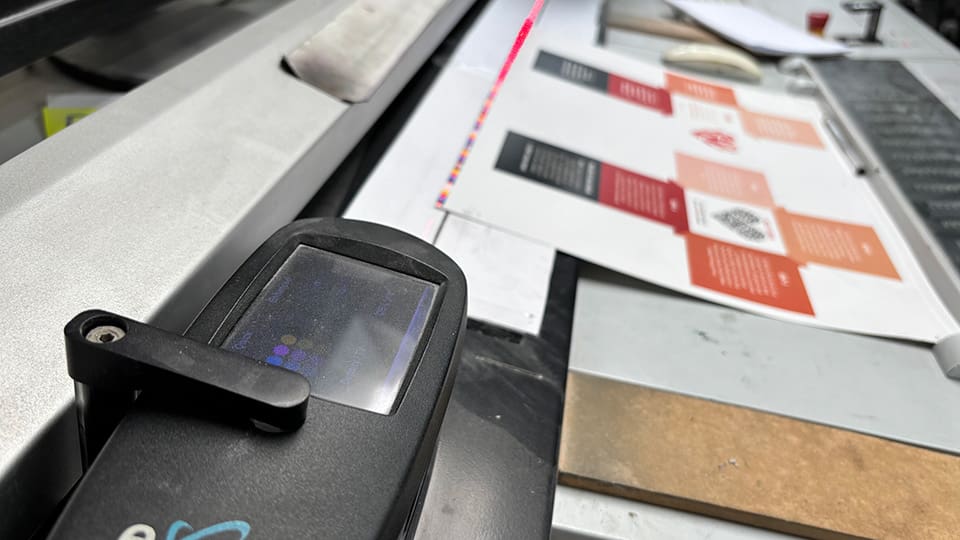
We’re currently automating our prepress, parts of our finishing processes, and everything up to the point where a job hits the press. The goal is to eliminate the need for skilled studio time on around 70% of files. This means quicker turnarounds, fewer touchpoints, and fewer chances for errors.
Creating instant repeatable tasks not only relieves some of the burden but also removes an element of human error. If there’s a problem with the automation then we only have to fix it once, not add it to a list and try to remember the extra steps.
Our biggest challenge isn’t just automation, it’s balance. We want to be more efficient without losing the thing that sets us apart: our human touch. That’s what keeps us different from the giant, faceless print factories (no offence). It’s literally the value we are adding.
The Barriers to Automation
Two big hurdles held me back from automating sooner: mindset and money.
Most automation tools seemed to demand massive investment, not just financially but in time and (ongoing) expertise. If you’ve got the cash and a developer on staff, you can build a dream system that runs itself. But for most smaller printers, that’s not realistic. We didn’t have the budget or internal resources, so I wrote off the idea completely. That was a mistake.
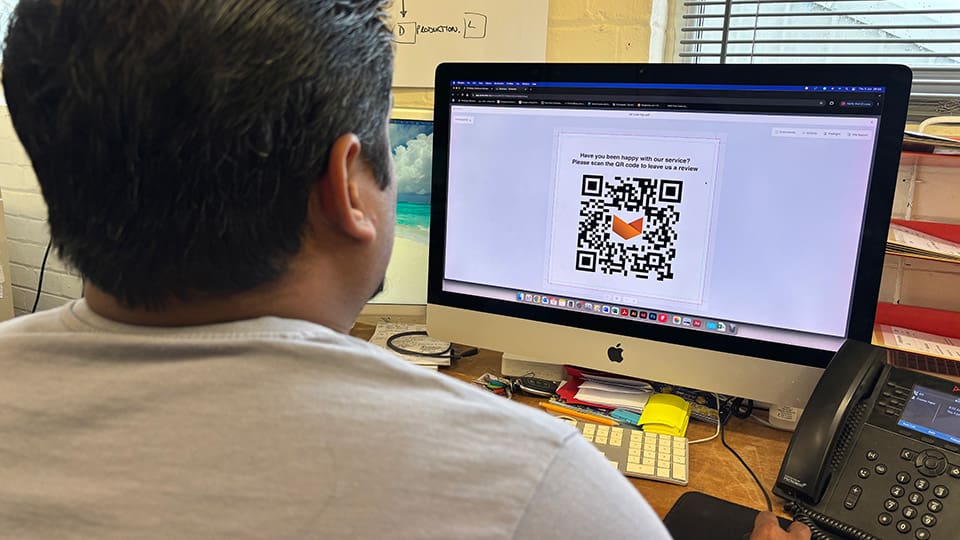
Inkwell Printing has implemented automation to several parts of its process in order to streamline and improve print jobs
What changed was realising we didn’t need a custom-built machine, we could start small. Off-the-shelf products, tweaked for our needs, did the job. We’ve always worked closely with independent or family-run businesses, and we’ve taken that same approach with our software suppliers – partnering with people who are willing to adapt and improve with us. My background in software has helped bridge the gap between developer and printer, which has made this transition much smoother.
The Unexpected Benefits
Even though our setup isn’t fully live yet (and honestly, when is software ever done?), we’re already seeing the upsides.
Just mapping out our customer journey and internal workflow on paper has brought clarity. You start spotting bottlenecks and wasted steps. The software simply turbocharges that clarity.
Once we’re fully integrated, we expect to reduce manual prepress tasks by 70%, letting our team focus on things that genuinely need a human touch, like building relationships or solving design challenges.
Where Automation Fails
Our clients don’t want a transactional experience. They want to know someone is paying attention. They’ll chat to us about football, politics, or how they can’t stand the latest budget speech. That human connection matters.
We’ve built in human checkpoints for every file, no matter how perfect it looks, it's reviewed before print. Software doesn’t catch a missing date on a wedding invite. It doesn’t question a weird fold line. But we do, and that’s the difference.
Learning the Hard Way
At first, we got it wrong. Some clients assumed we’d stopped caring because the emails looked too generic. One literally said: “If a human had looked at this, they’d have caught it.” That was our cue to be clearer: automation helps us care more, not less. It gives us time back to focus on people, not paperwork.
How It Helps Us Compete
We’re not trying to be Amazon. Big companies already run at a speed and scale we can’t match. Automation won’t change that.
But for us, it’s helped manage the load. We’ve held off on hiring, and instead, made better use of the great people we already have. That’s the beauty of small-scale automation – it’s not about replacing your team, it’s about supporting them.
Automation is Not:
Out of reach.
A massive, all-or-nothing transformation.
Too many printers over-engineer their systems, trying to build the perfect machine. But that’s a rabbit hole. My advice? Start small. Book demos. Talk to printers who’ve done it.
There are tools out there for us smaller guys. They work. You just have to be willing to learn – and to let go of the idea of perfection.
The Future of Automation (For Us)
Everyone wants to automate everything these days. But we’re not building that kind of business. For us, automation is about time, allowing us more of it for the parts of the job that actually matter. It’s not about replacing people; it’s about making our jobs better, because let’s be honest – an algorithm doesn’t care about a print job, but we do.
In this Fresh Perspective, we hear from Joe Moon, marketing and social media executive at CFH Docmail, about his introduction to the print industry and his perception when entering it
After winning the Young Leader Award at last year’s IPIA Recognising Excellence awards, Rebekah Hughes from Latcham gives her thoughts on opportunities available in print, and how to approach the print versus digital marketing argument
For this edition of Fresh Perspectives, we hear from someone on the other side of the pond – Carly O’Neill, communications coordinator at PRINTING United Alliance, who speaks about her experience in the print industry, following a successful PRINTING United Expo in 2025
(this was inserted into the PHP of a code block)
Watch our latest video of the week
Print Monthly gives you the latest video coverage of companies, people, and events from within the print industry.