New magazine launched for UK’s grassroots music scene
Drowned in Sound has launched SHOWNOTES, a new print title supported by Music Venue Trust which is dedicated to celebrating live music in the UK



We give an overview of some of the key focuses for the UK print world in 2025, including changes to laws, major acquisitions, and new joint ventures

2025 was another big year of acquisitions, investments, new ventures, and changes to laws and regulations for the print and packaging industries.
In this round-up, we give an overview of some of the biggest focuses in the industry and the most popular articles here on Print Monthly.
First phased in during 2024 and brought into full effect across the UK in January 2025, the new Extended Producer Responsibility (EPR) laws hold businesses accountable for the full lifecycle of the packaging materials they use. Any business that uses, generates, or imports packaging materials is now required to cover the costs of sorting and recycling the packaging waste.
The UK government’s Department for Environment, Food, and Rural Affairs (Defra) also published a Recyclability Assessment Methodology (RAM), enabling large packaging producers to assess the recyclability of their packaging and produce a red/amber/green output, designed to inform them of the fees associated with their packaging waste.
According to Defra, the RAM “has been developed in close collaboration with stakeholders from across the value chain and reflects the recyclability of packaging materials in the UK today”.
The new EPR laws became a hot-button topic amongst packaging producers, with it being a key focus of the Packaging Innovations & Empack 2025 exhibition in February.
Defra used the trade show, which was hosted by Easyfairs UK at the NEC, Birmingham, as the platform for the public launch of its new initiative, PackUK, which was designed to help the UK packaging sector with the implementation of the EPR laws.
The public launch of PackUK at Packaging Innovations included two key panel sessions, addressing the strategic and practical dimensions of EPR implementation. Both panel sessions were very well attended, with all seats taken and many more standing.
Original article: https://www.printmonthly.co.uk/news/major-changes-to-uk-packaging-laws/

The start of 2025 was a time of change at UK print provider, Solopress.
In January, its European subsidiary, Onlineprinters, officially announced that its UK customers would transition to Solopress, allowing for a prioritised service for UK-based customers, as well as faster delivery and dedicated UK-based customer support.
The move came after recent investments in Solopress’ production facilities which expanded capacity, allowing the business to accommodate increased volume while maintaining its service standards.
Later that same month, the original co-founder of Solopress, Greg Ralph, returned to the company as sales and customer success director, after leaving the company in 2012.
In his new role, Ralph is tasked with leading efforts to attract and retain customers and improve Solopress’ support services, as well as overseeing the company’s various sub-brands that focus on providing procurement solutions for trade partners.
Speaking of his new role at Solopress at the time of the announcement, Ralph said: "It’s fantastic to be back at Solopress, especially at such a pivotal moment in the company’s journey.
“The business has grown enormously since I was last here, and I’m excited to contribute to the next phase of its success.”
Original article: https://www.printmonthly.co.uk/news/solopress-welcomes-back-co-founder/

In June, the print world received the shock news that print press manufacturer, Landa, was filing for court protection due to a cash flow crisis.
According to a report at the time from Israeli daily newspaper, Calcalist, Landa’s total debts amounted to roughly $516m (£377m), of which unsecured creditors, including suppliers, were owed an estimated $88m (£64m).
The company cited “regional instability” including the Gaza-Israel conflict, as having caused financial difficulties, as well as a number of unspecified “commercial reasons”.
Following the news, there was a lot of speculation about who may be interested in purchasing Landa.
An initial report from Calcalist claimed that global print manufacturer, HP, was the main party interested in acquiring Landa.
However, in September it was revealed that Landa had been saved from bankruptcy after Israel’s Central District Court approved the purchase of the company by FIMI, Israel’s largest industrial body.
By October, Landa had officially announced that FIMI had taken full ownership, with a new board introduced and Richard Klapholz installed as its new active chairman. Klapholz has a long history of leading FIMI-owned companies, holding a key leadership position within the portfolio of FIMI Opportunity Funds.
Original article: https://www.printmonthly.co.uk/news/industry/landa-files-for-court-protection-due-to-cash-flow-crisis/

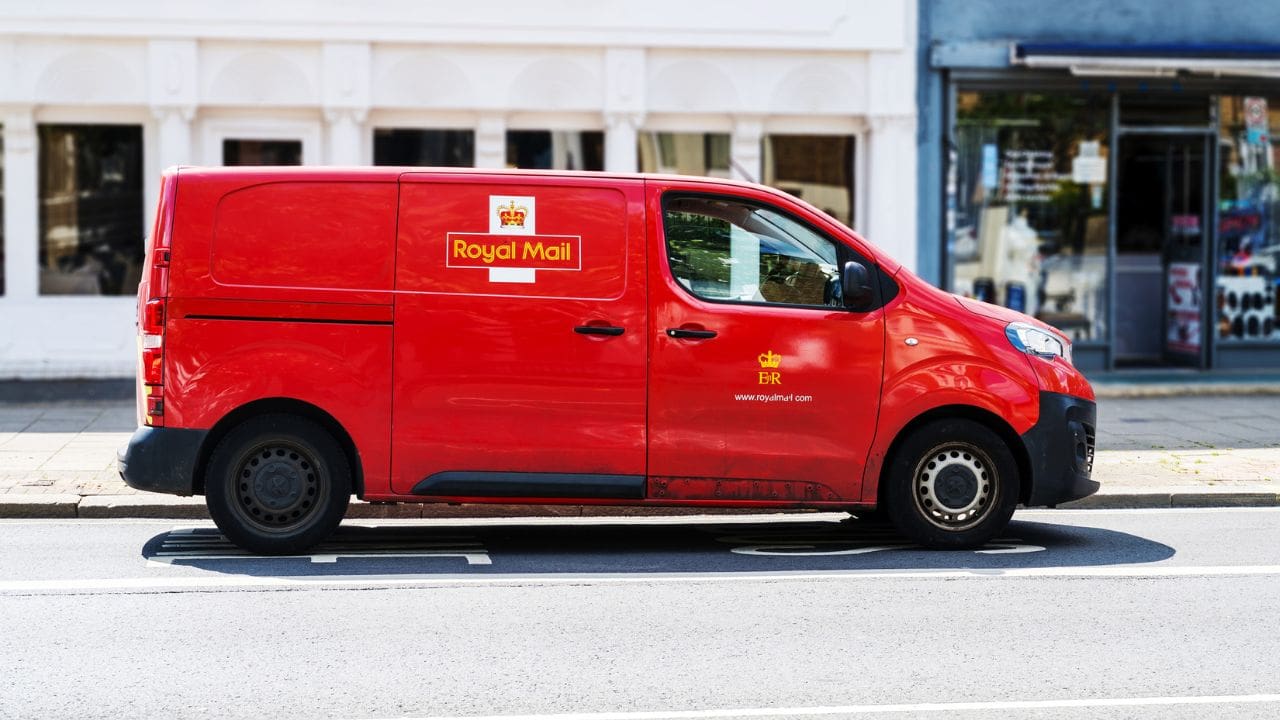
In February 2025, the UK regulator for the communications services, Ofcom, released a consultation of Royal Mail’s Universal Service Obligation (USO), in response to declining letter volumes and rising costs.
The consultation document reiterated a range of proposed reforms first mentioned in 2024, which included only delivering non-first class letters every other weekday and keeping its six-day-a-week service for only first-class letters.
Ofcom encouraged those interested to review the consultation details and submit a response by the April 10th deadline.
By July, Ofcom had confirmed its decision to support major changes to the USO in the UK, with the changes coming into legal effect from July 28th.
However, by November, Royal Mail had announced that, while a pilot scheme for the new rules had been launched across a selection of delivery offices, the changes would not be implemented nationwide until early 2026.
Despite this setback, Royal Mail announced a return to profit for 2025, the first time it has done so since it was taken over by Czech billionaire, Daniel Kretinsky.
Original article: https://www.printmonthly.co.uk/news/industry/major-reforms-of-royal-mail-proposed/
UK print specialist, Bluetree Group, announced a number of kit investments in 2025, which were undertaken to maximise the company’s output.
In September, it became the first company in the UK to install the new IGS Cobalt SP800 single-pass printer.
The press, provided by Monmouthshire print press supplier, International Graphic Supplies (IGS), was purchased by Bluetree to expand its production capabilities for the packaging and point-of-sale (POS) markets.
The new machine was demonstrated by IGS later that month at The Print Show, where the company also officially launched its new variable data software.
In October, Bluetree also purchased a RENZ Inline 500 Classic punching and binding machine predominantly for outputting personalised products such as photobooks, calendars, and wire-bound books. The machine is now reportedly producing around 35,000 calendars a week at Bluetree’s Rotheram-based facility.
RENZ was itself the subject of headlines in July, as it was purchased by Plockmatic Group after it was forced into insolvency in 2024.
With Plockmatic Group´s resources, RENZ is now able to continue its long-term partnerships with customers and suppliers as well as aim to regain a foothold in markets including the UK.
Original article: https://www.printmonthly.co.uk/news/business/bluetree-group-continues-kit-investment-with-renz-purchase/

Big news kept coming all the way into December, with paper and material specialists, UPM-Kymmene and Sappi, announcing that they had signed a non-binding letter of intent to create a new Joint Venture, in response to structural changes in the European graphic paper industry.
UPM and Sappi say that the new graphic paper venture will operate as an independent company, which would be managed internally with resources and decisions agreed within shareholders boundaries.
The news comes after a series of consolidations by both companies in the months preceding the announcement.
In June, UPM announced that its speciality papers division will invest over €10m (£8.4m) in the modernisation of its Tervasaari mill in Valkeakoski, Finland.
By contrast, In July UPM first announced plans to permanently end paper production in its Kaukas mill, with the stated aim of shifting its coated mechanical paper production in Finland to the UPM Rauma mill.

By October, UPM had formally announced the permanent end of paper production in the Kaukus mill, affecting 220 jobs and reducing mechanical paper production capacity by 300,000 tonnes annually.
The company also announced plans to discontinue its label materials production in Nancy, France, in September.
Sappi made some similar consolidations in 2025, announcing in August that it was considering shutting down a paper machine at its Kirkniemi mill in Finland, reducing its annual capacity of coated magazine paper by 175,000 tonnes.
By October, this shutdown had been confirmed, leading to the loss of 93 jobs.
These changes followed consultation processes from both companies aiming to improve profitability and cost competitiveness.
Sappi and UPM’s new Joint Venture has been adopted in order to “rationalise” supply in what UPM calls an industry “burdened by declining demand”, structural overcapacity, and high energy costs.
Original article: https://www.printmonthly.co.uk/news/business/upm-and-sappi-to-join-forces/