Food wholesaler boosts output with IGS Cobalt SP800 printer
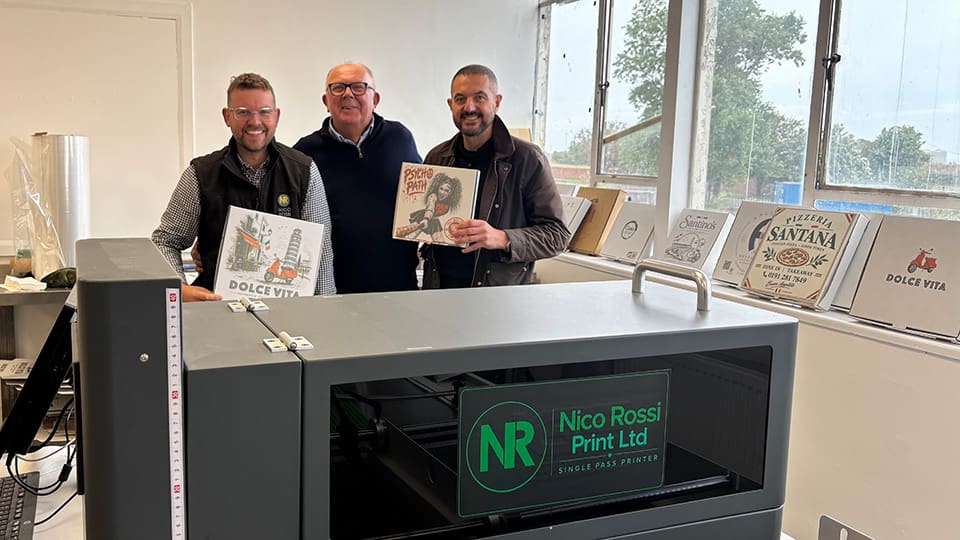
British food wholesaler, Nico Rossi, has purchased and installed an IGS Cobalt SP800 single pass printer at its headquarters in order to expand its in-house and short-run print output


Antalis recently announced the winners of a student design competition, in collaboration with Norwich University of the Arts

Paper and packaging company, Antalis, has announced the winners of a student design competition which it ran in collaboration with Norwich University of the Arts.
Antalis partnered with Brief Cases for the Smart Luxury Packaging competition, which is in its fourth consecutive year. The competition aims to raise students’ awareness of printed packaging and its applications. Brief Cases operates as a mediator between academia and businesses, running a series of competitions to encourage student participation and engagement.
The competition forms part of the university’s BA (Hons) Graphic Design course, aiming to put the students’ skills to the test with a packaging-focused brief. This year, the students were tasked with creating luxury packaging for the fragrance sector using materials from Antalis’ paper and paperboard ranges.
The brief required students to explore how to make the designs eye-catching, reflect luxury in packaging design, and communicate a message of sustainability through the packaging concept. The three projects that best met the brief were awarded gold, silver and bronze from the submissions received.
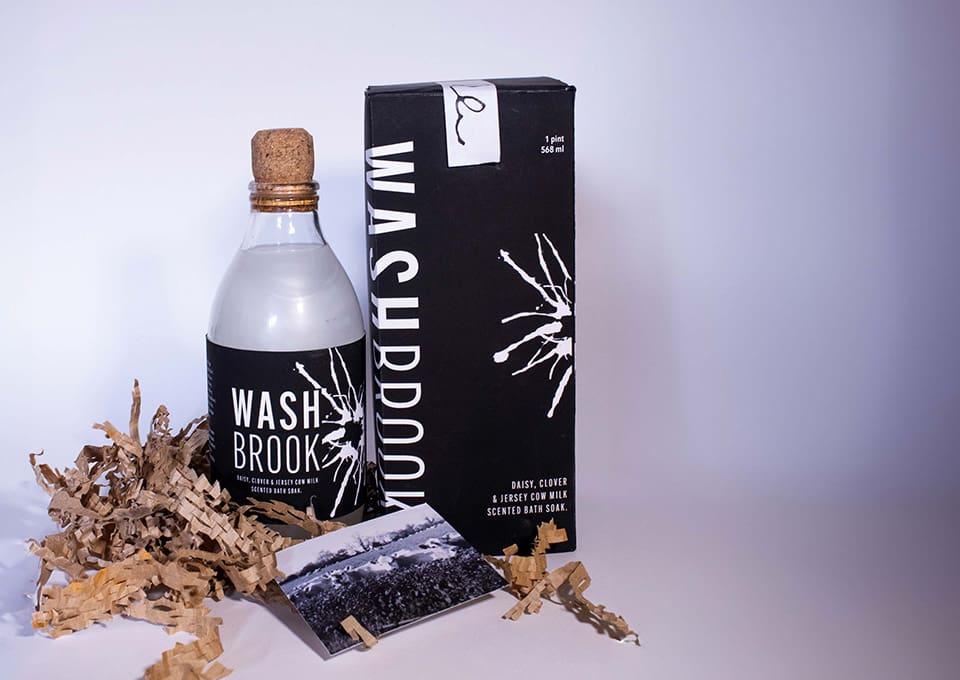
The competition was won by student Erin Lemon. The design, titled ‘Wash Brook’ was inspired by her great grandfather, who was the head herdsman of the largest milking Jersey cow herd in the British Isles.
The packaging concept of ‘Wash Brook’ is for a scented bath soak containing daisy, clover, and Jersey cow’s milk. It is presented in a traditional glass milk bottle with a cork stopper and printed label.
A postcard insert features a black and white photograph of Jersey cows on one side and a note handwritten by Erin’s grandmother on the other.
Speaking of her experience working on the competition, Lemon comments: “The project has provided insight into working with a client and suiting its specific requirements. Antalis’ support and informative review of my designs pushed the outcome further, introducing me to a plethora of paper substrates.
“My knowledge of material integrity, production methods, and environmental impact has developed greatly.”
The competition is one of several outreach programmes for students, designed to bring awareness of the printing, packaging, and signage industries.
Students from two Cambridgeshire secondary schools were recently invited to attend workshops, confidence-building sessions, and career talks at branding and signage company Moss in St Neots.
Lee Garnett, continuous improvement manager at Moss, explains: "The enthusiasm from the students was evident from the start. It was fantastic to see them fully engaged in the creative process, and leaving with the confidence to ask questions and know their way around our production hub.”
Another industry collaboration to involve young people in print saw an eight-week LUSH internship given as first prize to students at Arts University Bournemouth (AUB).
The collaboration, which took place earlier this year, was a partnership between cosmetics retailer LUSH, Dayfold Printing Services, and Foilco, along with paper specialist G.F Smith.
First year students on AUB’s BA (Hons) Graphic Design course were tasked with selecting one of five wellbeing-themed briefs and subsequently producing “aesthetically beautiful”, creatively printed and packaged wellbeing kits which used LUSH cosmetics.
Graphic design lecturer at AUB, Marten Sims, spoke about the competition at this year’s Print Show, alongside representatives of Lush, Dayfold, and Foilco. Two of the competition winners, students Lauren Gardner and Anabelle Turner, also spoke at the seminar, which was hosted at The Print Show’s Knowledge Zone.
In an interview with Print Monthly, Sims commented: “One of our major goals was to showcase how good print can be very early on, just to knock our students off that digital train. If you can give them another experience really early, they don’t settle into this feeling of only being into digital.
“We really think it worked, a lot of them totally got on board with print and we’re seeing a lot more of that interest in our students now. A lot more of them are looking more broadly at the kind of work that they could go into.”