Inkjet: An Ever-Expanding Market of Speed, Quality, and Connectivity
In this feature, Jonathan Pert explores some of the latest developments in inkjet printers from a range of manufacturers and sectors, demonstrating the variety of solutions currently available in the current print market
Jonathan Pert
May 9, 2025
In 2025, inkjet printing continues to evolve at a rapid pace, with innovations in speed, quality, and cost-effectiveness. The choice of possible solutions has never been larger, which means that selecting the right inkjet printing system can be a complex decision for print service providers (PSPs).
Whether you’re looking to optimise operations, improve output quality, or expand your capabilities, understanding the inkjet options at your disposal is key to making an informed investment in 2025. In this article, we explore some of the latest developments in inkjet printing from a range of manufacturers, highlighting the technologies that are shaping the future of the market and discussing what PSPs should look out for when investing in inkjet technology.
Modern Solutions
For Tim Carter, commercial print director at Ricoh UK Graphic Communications, the evolution of inkjet solutions in recent years has been rapid, with a large number of suppliers investing heavily in the inkjet sector.
“This drive is fuelled by shorter lengths of print jobs and a need for greater efficiencies and flexibility,” Carter says. “All of this is of course linked to the costs of running an inkjet system, which historically struggled to compete with offset printing. However, this is no longer the case.”
Carter posits that modern inkjet technology offers viable and advantageous solutions, though any investment decision should be carefully evaluated on a case-by-case basis. Choosing the right solution depends on a range of specific factors including applications, volumes, and quality requirements. “There is no one-size-fits-all solution,” Carter stresses, adding: “Which is why gaining a thorough understanding of the benefits and limitations of all available technologies is essential. Only with this knowledge can businesses make well-informed, strategic decisions.”
Carter highlights the precision of inkjet as one of its distinct advantages, enabling accurate on-demand production exactly when and where required. “This flexibility not only reduces waste, but also adds value by allowing for personalisation through versioning or variable data printing,” adds Carter. “Inkjet also supports B2B and B2C models where fast turnaround times are increasingly critical.”
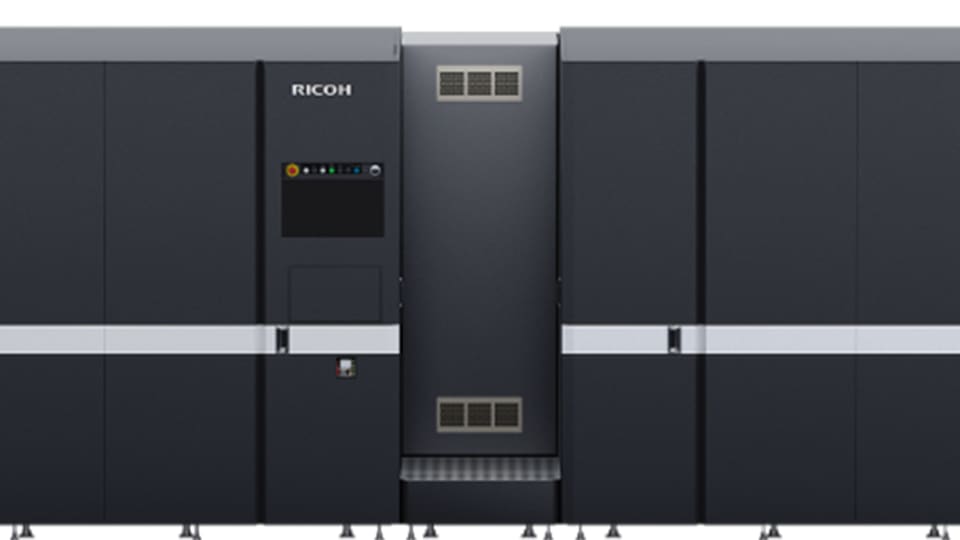
Ricoh has continued to invest heavily in the development of its inkjet solutions, with the recent release of the RICOH Pro Z75 and VC80000 being a testament to this.
Ricoh represented the Pro VC80000 and Pro VC40000 at the recent Hunkeler Innovationdays 2025 exhibition
Upon release, the Pro Z75 was the world’s first B2 perfecting (auto duplexing) sheetfed aqueous-based inkjet press, offering print speeds of up to 4,500sph in straight printing or 2,250sph in duplex or perfecting printing. The VC80000 continuous high-speed printer, one of the solutions demonstrated by Ricoh at the recent Hunkeler Innovationdays exhibition in Switzerland, features liquid-cooled printheads delivering 1200dpi output, supported by an arsenal of artificial intelligence (AI) and machine learning capabilities to increase automation and output.
In his explanation of the advantages of inkjet in comparison to other methods, Carter stresses the relative ease of use and automation capabilities as being a distinct advantage. “Inkjet solutions offer streamlined operations,” he says, adding: “With enhanced automation and AI integration, they require less manual intervention, making them easier to manage and reducing the need for highly specialised skills.
“This presents an opportunity for operators and staff to engage with the evolving technology, becoming part of their business’ innovation journey and the broader industry’s transformation.”
Carter insists that automation will continue to be a focus moving forward, with more improvements expected in the future. He reveals: “Our focus will be underpinned by further development in workflow, MIS, and automation using the latest AI capabilities.
“The greatest opportunities lie in print organisations’ ability to embrace digital alternatives while positioning print as a vital part of the communication mix. This harmonious approach will underscore print media's distinct value – its tactile quality, permanence, and lasting impact – ensuring it continues to play a powerful and complementary role alongside digital channels.”
Choosing a manufacturer with strong pre-sales support is key as this can help ensure the transition is as seamless as possible
While digital inkjet solutions can empower PSPs to be more agile, enabling them to handle shorter runs on demand with faster turnaround times, it is important to thoroughly analyse current production volumes and workflows to identify which jobs can be effectively shifted to a digital platform.
“Inkjet unlocks new business opportunities and applications, particularly through personalisation and versioning,” Carter explains. “However, production scheduling can be more complex, as PSPs typically manage a larger volume of smaller, more frequent jobs. To address this, seamless integration with digital workflow solutions is essential.
“When investing in inkjet, companies should assess the solution's flexibility and compatibility with their existing supply chain when it comes to media handling and finishing processes. A robust digital solution should integrate smoothly with current pre-press and finishing systems. Choosing a manufacturer with strong pre-sales support is key as this can help ensure the transition is as seamless as possible.”
Combined Technologies
Digital inkjet production presses have become an increasingly integral part of the industry as the technology develops, with the range of digital presses available on the market more varied than ever. For PSPs wanting to jump on the digital inkjet train, Kodak introduced another option aside from installing a stand-alone digital press – the integration of digital imprinting systems onto conventional equipment.
Kodak’s PROSPER Plus and PROSPER S-Series Imprinting Systems add digital capabilities to existing printing or finishing equipment, with the aim of helping printers take advantage of new business opportunities and streamline processes. Companies therefore have the possibility of increasing the profit potential of their production facilities without the expected financial investment of a full switch to digital.
Randy Vandagriff, senior vice president of Digital Print at Kodak, comments: “PROSPER Imprinting Systems offer versatile, highly efficient solutions that establish digital printing capabilities in various applications and market segments without compromising the productivity of the equipment on which they are installed.”
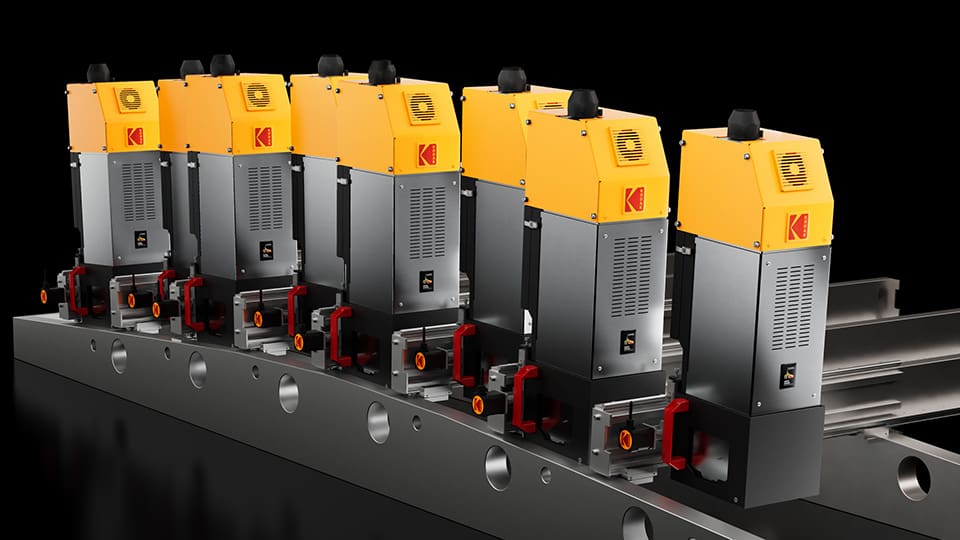
The KODAK PROSPER S-Series Imprinting Systems add digitally-powered inkjet printing to existing analogue workflows
According to Vandagriff, its PROSPER printheads “deliver the high speeds and print quality necessary for integration with sheetfed and webfed offset, flexo, and gravure presses, as well as post-press and packaging converting machines.” The aim of these continuous inkjet imprinting solutions is to offer printers an easy transition to inkjet technology and, as Vandegriff puts it: “The ability to capitalise on opportunities in variable print through a hybrid approach”.
As with Carter, Vandagriff stresses the importance of smart integration and automation, highlighting Kodak’s new PROPER Print Bar technology. “The new KODAK PROSPER Print Bar takes seamless print output and automatic colour-to-colour registration accuracy in hybrid colour printing to a new level,” he asserts.
Launched by Kodak at drupa 2024, the PROSPER Print Bar offers enhanced automatic colour-to-colour registration capabilities, with the aim of cutting down on waste and reprints. The solution also includes a new ‘Smart Stitch’ functionality helping to ensure consistently high print quality with seamless wide-format output. The technology is available in pre-configured monochrome and CMYK options as well as custom configurations to accommodate a variety of applications.
Vandagriff also echoes Carter’s emphasis on choosing an inkjet manufacturer with strong pre-sales support. Speaking of Kodak’s credentials in that area, he comments: “As we are the single-source supplier of the total solution, including printheads, controllers, inks, primers and integration solutions, customers can be sure we can support them quickly and reliably when they are faced with new market challenges.”
Kodak presented other PROSPER solutions at Hunkeler Innovationdays 2025, running live demonstrations of its PROSPER 7000 Turbo, which it has dubbed the world's fastest web-fed full-colour inkjet press. The PROSPER 7000 boasts a top speed of 410 metres per minute (mpm) running a wide range of substrates from 42 to 270gsm.
Speaking to Print Monthly at the event, Josh Howard, senior director of Inkjet Research and Development at Kodak, said: “We took our existing press, the PROSPER 6000, which was already the fastest press of its kind, and made it even faster by enhancing our writing system technology to go 35% faster. It is now truly the fastest press in the entire world.
“Driving our PROSPER 7000 is a world class digital front-end with the ability to create individual pages on a line-by-line basis at a compression rate not seen anywhere else in the world. This allows us to do a truly variable print at full engine speed of 410mpm.”
Factoid:RISO, a manufacturer of inkjet solutions, has recently celebrated 20 years of developing solutions for inkjet printing. The company was originally founded in Japan in 1946 by 22-year-old Noboru Hayama
Among the features of the PROSPER 7000 press that Howard highlighted was its EKTACOLOR inks and printheads, which are used across the PROSPER range. Howard said: “We continue to use our nano-particulate pigment-based inks, allowing us to run lower humectants which gives us brighter colours at a lower cost and requiring less drying than our competitors.”
Humectants are substances such as glycerine which are added to inks to prevent moisture loss, ensure ink flow, and prevent nozzle clogging. According to Kodak, the reduction in humectants enables faster drying times and improved print quality.
PROSPER printheads can be configured up to 12 across, creating a customised solution to fit the needs of a variety of applications. Depending on the configuration, systems can include up to 12 print stations and 24 printheads, which can be integrated into existing equipment using Kodak or third-party mounting solutions. Printers can start with monochrome printing and later add spot and process colours as their business requirements change.
Wider Perspectives
Inkjet solutions have developed in practically all sectors of print, including in the wide-format and dye-sublimation markets.
Mimaki offer a range of solutions in the wide-format inkjet space, with a raft of new releases in recent years. The new Mimaki TS330-3200DS was added to its offerings in 2024, first demonstrated to the UK market at The Print Show. The 3.2m-wide hybrid printer is capable of both direct-to-textile and sublimation transfer paper printing, allowing users to select the most suitable printing method based on the fabric and application.
A chosen partner of Hybrid Services, the exclusive Mimaki distributor in the UK and Ireland, Soyang Hardware is able to distribute a range of Mimaki solutions.
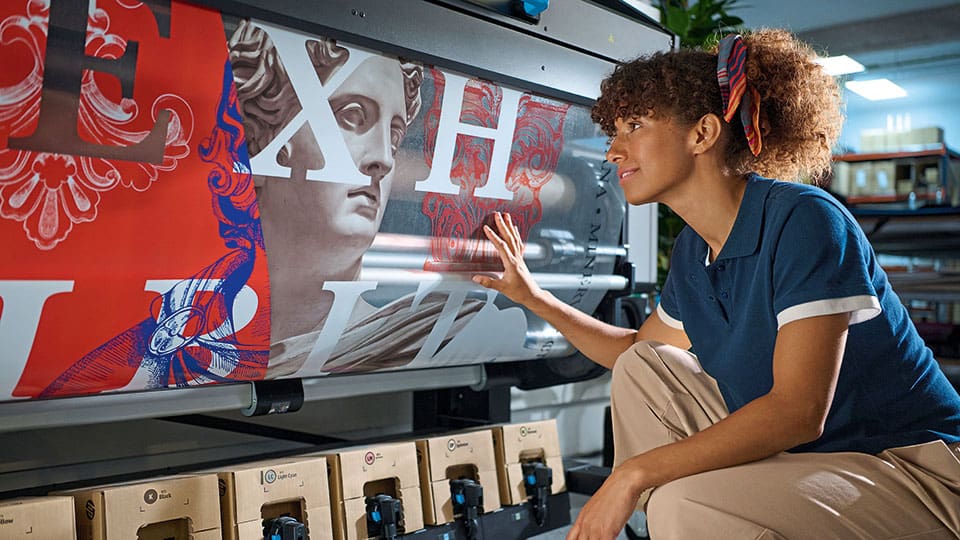
Speaking of what to look out for when choosing an inkjet press, Sarah Fenna, sales director at Soyang Hardware, says: “Inkjet printers should be versatile and deliver high-quality output time and time again. The latest and most reliable inkjet machines on the market will be able to produce vibrant colours, sharp details, and durable prints across a wide range of applications such as fashion and sportswear, home interiors, and soft signage.
Soyang recently added the Mimaki TS330-3200DS to its portfolio of offerings. Speaking of the machine’s ability to print direct-to-textile and sublimation, Fenna comments: “This high level of flexibility, coupled with exceptional productivity and stunning image quality, opens up its use to producing applications such as soft signage and home textiles.”
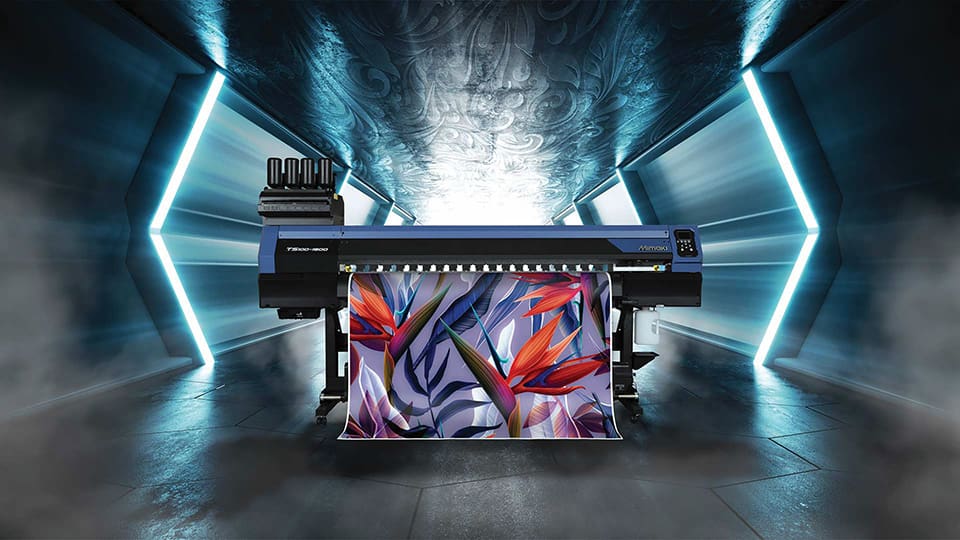
Among the other Mimaki products offered by Soyang is the TS100-1600, designed for businesses entering the dye sublimation market for the first time. Fenna details its core selling points, saying: “Stand-out features include the ability to produce print at a resolution of up to 900dpi and a top print speed of 70sqm/hr, with the machine ideal for creating applications such as soft signage, fashion, and promotional items.”
The TS100-1600 features new ‘weaving drop’ technology designed to minimise misalignments
The TS100-1600 also features new ‘weaving drop’ technology designed to minimise the impact on printing caused by the individual difference of the head and the potential for misalignment. The technology optimises the firing order of the heads, with the aim of creating more accurate ink landing. Another Mimaki offering that Soyang supplies is the TS330-1600, which has been engineered with a focus on productivity and image quality. It can achieve a maximum print speed of 135sqm/hr in draft mode on materials as wide as 1,610mm.
Mimaki has reportedly chosen inkjet as a go-to printing method not simply because of its digital integration capabilities, but also for what it describes as its “eco-friendly print-on-demand strategies.” As the company says on its website: “Inkjet printing eliminates the need for printing plates and the associated chemistry, water, and energy consumption required for conventional printing processes. In addition, since ink is applied only to image areas, inkjet printing uses less ink than conventional printing processes and does not require cleaning of ink wells and associated disposal of ink waste.
Mimaki is proud tohave led the way in making UV inkjet printing more environmentally sustainable
“Mimaki is proud to have led the way in making UV inkjet printing more environmentally sustainable.” Asked to provide general advice to those adopting inkjet, Fenna stresses: “It is important to work with manufacturers and suppliers that are not only known for their quality of equipment but also support across the entire investment process, including after the installation has been completed.”
This mirrors statements from both Carter and Vandergriff, stressing the importance of this factor. In the case of Soyang Hardware, this support consists of a team of experts offering personalised advice, in-house sampling, and testing with the aim of ensuring seamless integration of machinery into various operations.
As the insight from these manufacturers shows, it is clear that the right inkjet technology has the ability to boost output, personalisation, and growth. By keeping informed on the latest innovations and understanding the specific demands of your business, you can make confident investment decisions that will benefit your operations well into the future. The landscape of inkjet printing in 2025 offers exciting possibilities, making it all about selecting the right solution to stay ahead.
From advances in print quality and productivity to increasing demand for automation and sustainable solutions, the wide-format market continues to evolve. Rob Fletcher looks at the latest trends, challenges, and developments in this sector
Speaking to a range of print and signage professionals, we discover how a sustainable business model can drive growth, outlining actionable strategies to cut overhead costs, improve eco-efficiency, and boost your bottom line
As finishing continues to become a great way to add extra elements to your print and wow customers, we take a look at some of the creasers, folders, and collators on the market, and ask experts their advice on finding the right solutions
(this was inserted into the PHP of a code block)
Watch our latest video of the week
Print Monthly gives you the latest video coverage of companies, people, and events from within the print industry.