Creating a Circular Economy Through Recycling Schemes
As demand for more sustainable print continue to rise, Print Monthly looks at how taking advantage of recycling schemes offered by manufacturers and suppliers can help your business be more environmentally friendly
Rob Fletcher
May 9, 2025
To put it simply, sustainability should now be regarded as a crucial part of print companies’ strategies. Get this wrong and you risk not only losing environmentally minded clients to competitors but also falling foul of changing rules and regulations as they are rolled out by the government.
The good news for print service providers (PSPs) is that you do not have to break the bank to become more sustainable. While finances have previously halted some PSPs from making progress with sustainability, there are now many affordable and even free routes to go down to become more environmentally friendly.
Recycling is one of the easiest options to consider when it comes to sustainability. Here, we speak with several manufacturers and suppliers to find out more about the recycling options they offer to PSPs and how integrating with these schemes can support everyone in the long run.
Added-Value Service
Beginning with specialist provider of recycling and waste management, J&G Environmental offers a range of services to the industry. The company says recycling offers an effective route to sustainability for print businesses, and no matter how large or small your operation may be, taking steps to improve such processes can have a significant impact.
“Enhancing your environmental credentials will make you a more attractive prospect to customers who believe in print production and delivery in a planet-friendly manner,” J&G says, adding: “Furthermore, you can safeguard against possible regulatory challenges at a time when political discussions about sustainability have become more heated than ever.
“At J&G Environmental, our waste management services offer expert collection, treatment, disposal and recycling services to our customers across the printing industry and related sectors.”
J&G Environmental provides specialist recycling services to print companies around the UK
J&G handles a number of waste streams from print including adhesives, blades, films, non-hazardous and flammable inks, ink tins, plastic packaging, solvents, UV wash, and UV wash ink. All of this can be collected by its drivers and delivered back to a specialist facility in Dorset for recycling.
However, J&G’s services not only cover more traditional print waste, but also other materials that can be tricky to recycle. From cardboard and metals to plastics, chemicals, and hazardous waste, J&G can help recycle or process non-print waste responsibly.
Skimping on the subject or not paying enough attention to the sustainable qualities of your company places you at risk of losing work
“From a regulatory perspective, the Waste Electrical and Electronic Equipment (WEEE) directive means all producers of such materials in the UK must meet specific targets on collection, recycling, and recovery,” the company says.
“We can also collect and recycle fluorescent tubes, gas discharge, and end-of-life lamps containing mercury, which are classified as hazardous waste. If you think that there is enough mercury in one single fluorescent tube to contaminate up to 30,000 litres of drinking water, consider how much damage they could cause to the environment when disposed of incorrectly.”
Protect the Planet
Some manufacturers also offer their own recycling schemes to support customers. One such brand is HP, which runs the HP Partners Programme, a consumer repurpose and recycling initiative for HP end-of-life equipment and printing supplies.
“Through this initiative, commercial customers can responsibly dispose of and repurpose end-of-use hardware or extend the life of their existing devices through secure services and solutions offered within ‘Renew Solutions’,” explains Olivia Kelleher, WW sustainability lead at HP “By repurposing materials and securely and responsibly recycling waste, print companies are helping reduce the environmental impact of electronic waste and greenhouse gas emissions, and supporting a more circular economy – helping to improve their own environmental credentials in the process.”
Kelleher goes on to say that HP has long been an advocate for sustainable production. This, she continues, can be seen not only in the printing machinery it develops, but also the wider services that it offer to its customers both in the UK and overseas.
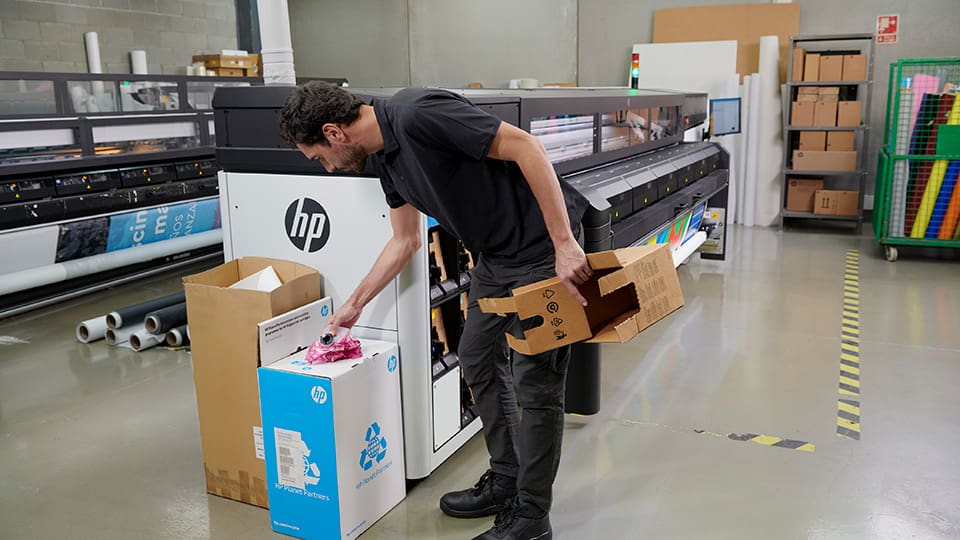
HP Latex ink is supplied in cardboard packs that can be recycled once they are empty
In terms of equipment, the HP Latex range features many large-format machines that all use HP Latex ink. The inks are UL ECOLOGO certified and HP’s services are verified for reduced environmental and health impact. Graphics printed using Latex technology can also be fully recycled when reaching their end of use if combined with sustainable media.
HP Latex inks do not contain any Hazardous Air Pollutants (HAPs), while they are also non-flammable and non-combustible. In addition, HP Latex ink is supplied in cardboard packs that can be recycled once they are empty, which offers a simple yet effective route to more sustainable operating practices.
“No matter which way you look at it, sustainability is an absolute must for print businesses,” Kelleher says, adding: “From smaller print shops on the high street to large scale print houses producing runs in the hundreds of thousands, it is imperative you are able to deliver an environmentally friendly service to help satisfy demand from your customers.”
Signature of Approval
While running successful recycling schemes is one matter, getting them approved is a whole other consideration. FESPA UK has introduced its ‘Total Waste Management’ solution, which offers businesses a comprehensive, streamlined approach to waste treatment, partnering with industry experts and leveraging innovative strategies to optimise waste systems.
“Our structured framework provides a thorough evaluation of waste generation, delivering valuable insights and personalised recommendations for improvement,” FESPA UK explains, continuing: “We believe in brand inclusivity; our accreditation covers all brands, ensuring businesses can dispose of a wide range of materials without the need for time-consuming ‘supplier specific’ segregation before collection.
FESPA UK’s accreditation covers working solutions for materials common in the printing process
“By collaborating with other industry leaders, we maximise disposal efficiency, saving your business time, and resources. With 100% accountability, we provide regular evidence of where your waste is disposed of, ensuring transparency every step of the way. On request, we also offer detailed sustainability reports for specific projects, giving you the information you need to make informed decisions.”
The accreditation covers working solutions for materials common on the printing process such as polyester fabrics, label waste, PVC banners, rigid PVC such as foamboard, rigid polypropylenes, acrylic, PET G, aluminium composite material, polycarbonate, siliconised papers, and self-adhesive PVC. “FESPA UK delivers impartial, honest advice and a responsible waste disposal scheme, offering clear guidance and education to help businesses manage their waste in the most sustainable way,” FESPA UK adds.
Circular Economy
In addition to recycling schemes, PSPs can benefit from switching up the type of materials they work with. Printing on certain media or working some ink types means a piece of print cannot be recycled after it has served its purpose, meaning it could end up in landfill. Opting for recyclable materials and consumables will avoid this route.
Soyang Europe has been dedicated to producing environmentally friendly products for some time, providing both PVC-free media and solutions made from recycled materials. Oliver Mashiter, director of sales (Media) at Soyang Europe, says: "Given the rising demand for more sustainably produced print, being able to respond and offer an environmentally friendly service is something all PSPs need to be focusing on.
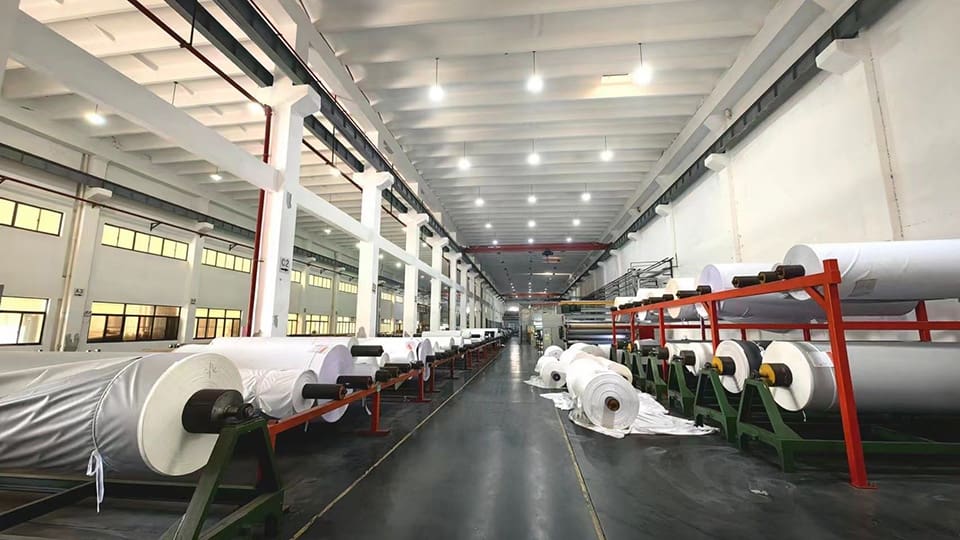
Soyang Europe offers both PVC-free media and solutions made from recycled materials
“To put it simply, skimping on the subject or not paying enough attention to the sustainable qualities of your company places you at risk of losing work,” he says, adding: “Customers that emphasise the environment when placing orders will almost certainly go looking elsewhere if you are not able to provide print that matches their own environmental goals.
“One of the most effective ways of delivering this to your clients is to take a step back and look at the types of material you are working with. Are there any areas in which you can switch to a different media that helps shine a more sustainable light not only on your own business but also that of your customer?” Looking first at PVC-free options, these include various wide-format print solutions. One example is Solar Frontlit Banner, suited to applications such as retail and exhibition graphics, as well as both indoor and outdoor banners, along with frontlit displays.
We can’t rely on recycling alone to meet the demand for paper and cardboard as doing so only shifts the burden to future generations
Also in the PVC-free collection is Premium Greyback Frontlit Banner, which can be used for frontlit displays, along with portable displays, exhibition work, and outdoor and indoor banners. It is also compatible with solvent, eco-solvent, UV, and latex machines.
As for Soayng’s recycled range, this includes the SoTex range of printable textiles for direct dye sublimation and dye sublimation transfer printing, as well as coated textiles for solvent, eco-solvent, UV, and latex printers.
In addition to all this, Soyang works with Reconomy and FESPA UK to support customers in their recycling efforts. Reconomy provides customers with a baler to prepare textile waste. Soyang then collects the bales when delivering new products to customers, with the waste taken to its facility in Lancashire ready for bulk collection and transportation to a recycling facility for processing.
“The process promotes a circular economy within the printing industry,” Mashiter says.
Reduce and Reuse
Offering a different point of view is Reuseabox, a company that is on a mission to prove that cardboard is not single use. Marketing manager, Rachael Hunt, says while recycling is a crucial part of printing operations, it should not be the first step in creating a sustainable business or future.
“While recycling helps us process waste materials as well as reduce our dependence on new resources, it’s also a very carbon-intensive process,” Hunt says, adding: “Simply put, we can’t rely on recycling alone to meet the demand for paper and cardboard as doing so only shifts the burden to future generations. Instead, print businesses must focus on reducing material use – putting the shift on quality, not quantity – and adopting reusable or alternative materials like bamboo or even paper made from elephant dung.
“Ignoring reduction and reuse in the print sector could have serious consequences. Recycling requires significant energy, water, and carbon, making it an expensive and resource-heavy solution. While necessary, it’s not the only solution. If we continue to print and produce without minimising waste or exploring greener materials, we risk depleting the very resources we rely on.”
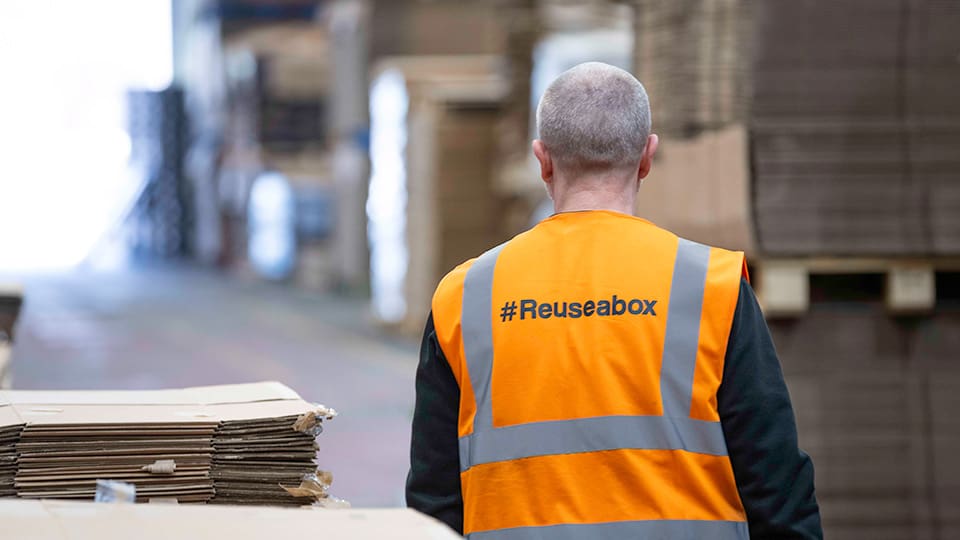
Reuseabox advocates for reducing material use and adopting reusable or alternative materials
Hunt also picks up on the issue of greenwashing, saying some businesses will promote their recycling efforts as a sustainability badge while overlooking the bigger problem in society. She says without real change and thinking beyond our lifetimes, the industry risks falling behind, failing to innovate, and adapting to a world that is starting to put sustainability first.
As for the role Reuseabox is playing, the company rescues cardboard boxes destined for the waste stream and put them back into the supply chain for a second use. Following circular economy principles, the company helps others reduce waste, keep cardboard in use for longer and regenerate the natural environment.
Factoid:According to the UK government, recycling accounted for 8.2 million tonnes of the 12.7 million tonnes of packaging waste arisings in 2023
“The problem is that many boxes are discarded after just one use, yet they can be reused four to six times,” Hunt says, adding: “On top of that, why are we wasting energy and resources recycling a box into the exact same box? By extending packaging life, we reduce demand for new boxes to be produced and cut down on unnecessary waste. Our goal is to shift businesses away from a ‘recycle everything’ mindset and towards a more sustainable approach that prioritises reduction, reuse, and smarter material choices.
“We understand that recycling will always have a role to play, but we cannot continue using disposable materials indefinitely and expect recycling to solve everything. If we truly focus on reduction, reuse, and designing with alternative materials in the packaging and print industry, we can help ensure that our businesses can operate as part of a genuine circular system.”
Sustainability is certainly a challenge, not only for print companies, but businesses across all industries. Recycling offers a simple yet impactful, and often cost effective, way of boosting your environmental credentials. To really be serious about your business operations, researching effective recycling schemes and reuse schemes can be the best way for you to be efficient and successful.
From advances in print quality and productivity to increasing demand for automation and sustainable solutions, the wide-format market continues to evolve. Rob Fletcher looks at the latest trends, challenges, and developments in this sector
Speaking to a range of print and signage professionals, we discover how a sustainable business model can drive growth, outlining actionable strategies to cut overhead costs, improve eco-efficiency, and boost your bottom line
As finishing continues to become a great way to add extra elements to your print and wow customers, we take a look at some of the creasers, folders, and collators on the market, and ask experts their advice on finding the right solutions
(this was inserted into the PHP of a code block)
Watch our latest video of the week
Print Monthly gives you the latest video coverage of companies, people, and events from within the print industry.