In this feature, Jonathan Pert gathers insights from across the textile printing market, offering advice on hardware, materials, and finishing options for businesses which are looking to integrate textile print into their existing operations
Jonathan Pert
May 9, 2025
As the textile printing industry continues to evolve, print service providers (PSPs) are increasingly looking for new opportunities to diversify and expand their service offerings. Adding textile printing capabilities can open doors to a wide range of lucrative markets from fashion and home décor to promotional products and beyond.
In this feature, we’ve gathered expert insights from across the market, offering advice for businesses looking to integrate textile print options to their existing operations. Whether you're considering hardware, materials, or finishing, we will navigate some essential tips for success in this rapidly growing sector.
Sustainable Solutions
For Phil McMullin, head of sales for Commercial and Industrial Printing at Epson UK, it is important to consider more than just the base cost of a textile printer.
McMullin stresses: “It is very important to consider a textile printer’s total cost of ownership (TCO) before determining which textile printer to buy.” McMullin also outlines choice of ink, maintenance, labour required, energy consumption, software updates, and potential repairs over the printer's lifespan as all being important to consider. “All these factors” he says, “can significantly impact the overall cost of an operation and its carbon footprint.”
Striking a balance between environmental responsibility and economic viability is a challenge now faced by organisations globally, whatever their size and industry
But McMullin also highlights the importance of weighing up these cost factors with the environmental credentials of the machine. As he puts it: “Striking a balance between environmental responsibility and economic viability is a challenge now faced by organisations globally, whatever their size and industry.” For those companies wishing to meet modern environmental credentials, it is important to choose a manufacturer that focuses on technological advancements that can increase efficiency and reduce your carbon footprint.
Epson’s Monna Lisa direct-to-fabric press range is engineered to work with a wide variety of substrates including silk, jacquard fabrics, and denim. The solutions utilise Epson’s own advanced PrecisionCore printhead technology, developed to provide high accuracy and speed.
Epson’s recent launch of the Monna Lisa ML-16000JQ enables DTF double-sided printing on jacquard fabrics. The solution aims to meet the needs of fashion designers looking to enhance their creativity by integrating print designs with intricate woven patterns.
Epson announced a new direct-to-fabric digital textile printer designed for jacquard fabrics – the Monna Lisa ML-16000JQ
Jacquard fabric features woven designs rather than a printed or embroidered pattern. The new Monna Lisa can automatically recognise fabric designs and produce DTF prints on them – aiming to circumvent the laborious elements of traditional jacquard production.
According to McMullin, Epson's design philosophy is centred on creating machines that can “adapt to varied production environments while maintaining their performance levels”. The Monna Lisa 13000 and 32000 JQ have been developed with user-friendly interfaces and scalable production capabilities, aiming to ensure the integration process is smooth and future-proof, regardless of the company's size.
The 16000JQ also stands out with its new double-sided printing feature. As McMullin explains: “This allows it to automatically recognise pre-printed fabrics and produce prints on both sides with differing colours. This unique capability enhances customisation, engendering greater creative freedom for designers and allowing for new possibilities in textile design.
”Epson has responded to the desires of the textile and fashion market, which is increasingly putting sustainability at the top of its priority list. Consumers and producers alike are looking for an increase in sustainable fabrics, energy efficient print solutions, less waste in production, and fewer harmful chemicals in inks and dyes.
Digital solutions like the ML-16000JQ allow for on-demand printing, which means that fabrics can be produced as needed rather than in large batches, thereby reducing energy consumption and waste. It uses less electricity and water compared to traditional printing methods. The machine also uses advanced ink formulations, such as Epson's GENESTA inks, which are designed to meet stringent environmental standards. All these elements have been specifically developed to provide a more environmentally conscious solution to market.
Explaining the company’s strategy, McMullin concludes: “Our growth strategy is to support the shift of the market from analogue to digital textile printing to help reshape and contribute to a better, more sustainable textile industry.
“Our wider portfolio allows us to address the varying demands of the wider market and make a greater contribution to minimising the environmental impacts incurred."
Finishing Fruitfully
For Rafa Menéndez, head of sales and marketing at PLASTGrommet, the shift towards sustainable practices within textiles is clear to see. As with McMullin, Menéndez has seen what he describes as “a growing demand” from customers for sustainable solutions.
“FESPA’s 2023 Print Census showed 72% of print buyers are requesting environmentally friendly products and practices,” he says. “The use of water-based inks, textile signage’s recyclability and reusability, and the fact that textile products are lightweight and so reduce the carbon footprint involved in transportation, all make textiles a great solution for eco-conscious print buyers, and this is no doubt driving growth.”
PLASTGrommet manufacture a range of finishing solutions for the textile signage market including eyelet, welding, and slitting machines. The company’s research and development is fuelled by, as Menéndez puts it, “our dedication to solving customer challenges in innovative ways”. The company will launch four new solutions to the market at this year’s FESPA Global Print Expo. Among these products will be the new All in One EDGE banner finishing machine. The solution includes the same integrated welding, eyeleting, and cutting capabilities as PLASTGrommet’s All in One, but aimed at medium-sized companies at a lower cost.
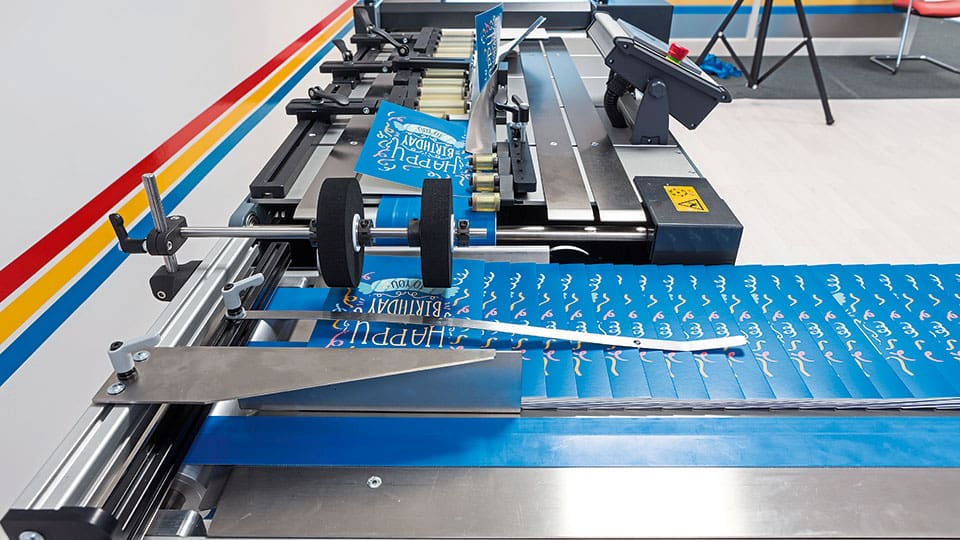
PLASTGrommet manufacture a wide range of finishing machines for the textile signage market. Image: Probo
The company’s new TexWiz solution will also be shown for the first time at FESPA Global Print Expo, utilising the company’s All in One platform. TexWiz aims to demonstrate new sewing automation capabilities for textile finishing by adding a sewing module to the All in One.
Menéndez stresses that when adding textile to your print offerings, you should not underestimate the importance of investing in finishing capabilities along with your printing, to avoid the risk of downtime and bottlenecks. “There is no ‘one size fits all’ solution when it comes to textile finishing,” he insists, adding: “Printers should look for a solution that is flexible and adaptable depending on the specific needs of each job.”
Menéndez also highlights that when adding textile printing to your portfolio, it is important for printers to really understand the different properties that any new material has. He comments: “If you are a printer that has traditionally produced vinyl banner products for example, then producing a mesh banner product will require different printing techniques, and of course different finishing. Unless you’re using a coated textile material that is suitable for being welded, textile products will require sewing, and the type of sewing you need will differ depending on the product you are producing.”
With the advances in print machines, finishing equipment, and textiles, the market looks set to continue to go from strength to strength
Menéndez is very positive about the future growth of the textile printing market. “We are seeing huge growth in this area, especially with large-format print customers adding more textile products to their portfolios all the time,” he asserts. “Everywhere you look, the use of textile is growing.”
In analysis of the textile market by Ink World Magazine, the publication asserted that “the global textile market is, in a word, enormous”, valuing it at $1.837trn (£1.44trn) in 2023 and projected to grow at a CAGR of 7.4% to 2030. According to analysis from Towards Packaging, the textile printing market is due to see even larger relative growth, increasing at a CAGR of 12.75% from 2024 to 2034.
Making the Most of Materials
Soyang Europe is a manufacturer and distributor of digitally printable wide-format and superwide-format media and surface coverings for multiple industries including signage and display, design, marketing, construction, and décor.
For Shane Furness, procurement director at Soyang Europe, choosing the right material supplier is a vital step to producing the kind of textile prints that will bring customers back again and again. “With the ever-increasing costs within the industry,” Furness says, adding: “It is important to choose a supplier who understands the textile printing market.
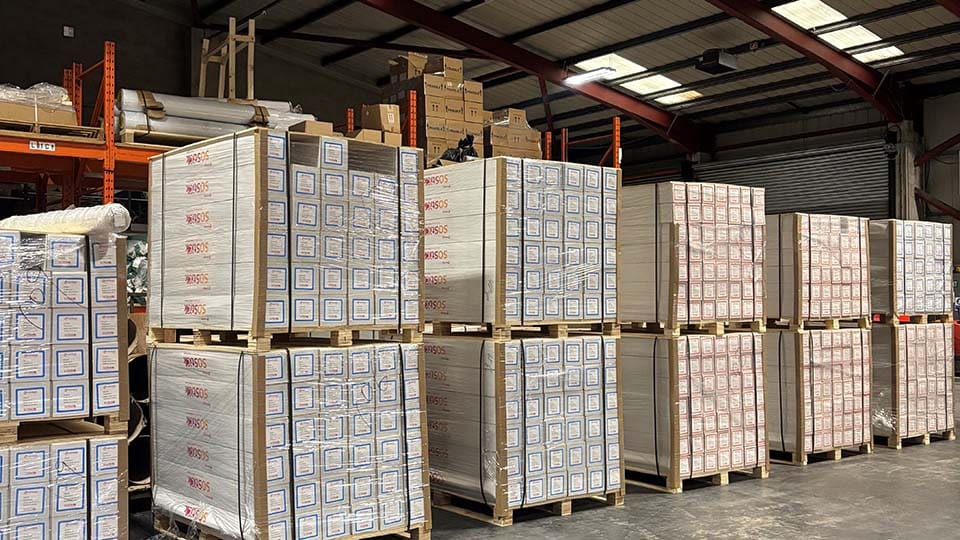
“As a distributor in this sector for nearly 20 years, we at Soyang Europe understand the difficulties that print companies face, and we look to support them with the latest advancements in textiles. We have a large stock holding of product and a direct link to our factory. All this helps to keep costs as low as possible while retaining the advantages of consistency of supply and product quality.”
Soyang Europe announced the launch of SoStick in January, a new range of self-adhesive vinyls
Continuing on the theme brought up by both McMullin and Menéndez, Furness also sees the biggest advancement in recent years being the increase in sustainable textiles. “The options are vast and the increase in availability of textiles produced with recycled content at a competitive price point means that these products are now a genuine option for both the printer and their end customer,” he explains.
Soyang Europe, headquartered in Altham, Lancashire, offers seven different PVC-free banner material solutions and seven further textile products made from recycled PET yarns. These ranges cover a wide selection of material uses including backlit fabrics and black back banner material. On its website, Soyang stresses that “PVC-free is no longer the niche choice. Nor is it the case that choosing the more eco-friendly option means settling for lesser durability or print quality."
In his description of Soyang’s material range, Furness hints at further solutions to be released in the future: “We are constantly working with our factory to introduce more and more lines that offer innovative solutions for our customers and their end users”.
With the advances in print machines, finishing equipment, and textiles, the market looks set to continue to go from strength to strength
Along with its partner factory, Soyang Technologies, the company is striving to consistently improve the quality and the number of products available to the end users. As Furness puts it: “The main factory in China is continually investing in new machines and people to ensure we stay at the forefront of the industry.”
When asked about the strength of the textile market, he insists that the market continues to grow here in the UK as well as the rest of the world. “With the advances in print machines, finishing equipment, and textiles, the market looks set to continue to go from strength to strength.
“The market for textiles is quite mature, and the new innovations are going to be variations of current items already out in the market. A huge amount of time and effort is being diverted into the creation of more environmentally sustainable products; this cannot be seen as anything other than a great thing for the digital print market.”
Very Valuable Vision
We have so far spoken to hardware, finishing, and materials specialists within the growing textile market, gathering insights on what to consider when choosing your kit and media options, but what is the perspective of a company on the ground, producing bespoke textile prints to order?
Along with its extensive range of trade-only display solutions, Very Displays has expanded its capacity to offer wide-format trade printing and finishing in-house, particularly textile options such as banners and flags. Its current arsenal of textile printing solutions includes an Agfa Avinci CX3200 direct dye-sublimation printer, a Teleios Dgen Grande H12 with a halogen-based drying system, and a Canon Colorado M3 UVGel press.
For Kirsty Corcoran, marketing manager at Very Displays, there are a range of factors to consider as a textile PSP. “The complexity of finishing is a key factor,” she points out. “Textile finishing can be more complex than other substrates due to the precision required for cutting and sewing to shape, as well as hemming, which can result in the need for additional machinery and labour to finish to a high standard.” Alongside its printing solutions, Very has refined its finishing options to cover every eventuality. Finishing machines at its disposal include a Titanium digital cutter from International Graphic Supplies (IGS), which includes laser-guided cutting technology designed for increased accuracy, as well as automated material handling capabilities.
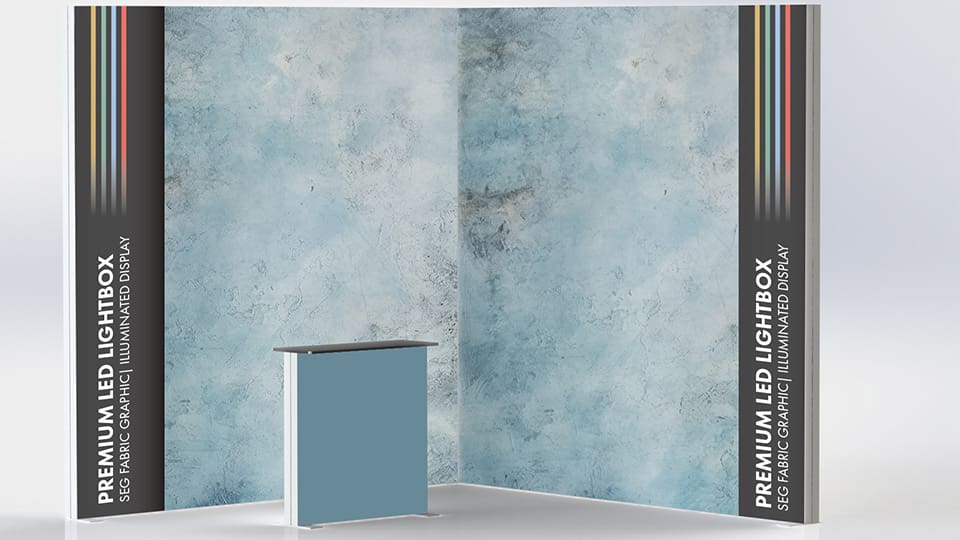
Very Display’s LED lightboxes are available in sizes from A4 to 2.5 m high, and for both single or double-sided applications
Corcoran also highlights colour profiling as being a key area to focus on. “It can be a fine art to establish precise colour profiling to ensure colour accuracy across different materials,” she says. “It can require investment in RIP software and calibration tools to ensure colour consistency.”
It should go without saying that achieving the vivid and accurate colours your customers expect is of high importance. Most major manufacturers will offer proprietary RIP software designed to work alongside its solutions, but it may still be worth shopping around. For example, with the previously mentioned Monna Lisa range from Epson, the range is supported by a large array of textile RIP software, giving you the freedom to find the most appropriate tech and colour profile for you.
Building out your solutions to maximise growth potential is no easy feat, especially when first entering the market. For Corcoran, it is important to spend time analysing your options. “It’s about evaluating the overall investment in new equipment, materials, and training, to meet the specific range you intend to supply. This will guide the features and equipment required.”
Factoid: The first common method of textile printing originated in China, with examples of woodblock printing discovered as early as 220 AD
Corcoran adds: “At Very Displays, we use a number of materials, printers, and cutters that suit our range. For example, we use a lightweight material for outdoor flags and stretch polyesters for indoor fabric tube displays, all of which have been vigorously tested for suitability.”
Corcoran, as with our other experts, is very positive about the outlook of the market and the potential for further growth. “The range of textiles and supply chain has expanded”, she points out, “with a wider variety now available for different printing methods.” Corcoran says: “Media has become more versatile, offering options that are easier to print on and better suited for various applications.
“There is also much more knowledge available for working with textiles, which has made it easier to overcome common challenges. All of this makes it easier to work with textiles and be able to offer a higher quality of finished product for our trade customers.”
So, in the opinion of Corcoran, the future of textile printing is very bright.
Concluding Contemplations
Successfully incorporating textile printing into your service offerings requires a holistic approach that goes beyond just acquiring new equipment. It’s crucial to evaluate all the key elements including materials, printers, and finishing equipment, to ensure you're providing high-quality, sustainable, and cost-effective solutions.
Understanding the unique characteristics of different fabrics, selecting the right printing technology, and choosing compatible inks are all critical to delivering superior results. By taking the time to assess these factors and invest in the right tools, PSPs can position themselves in the best place to facilitate future success.
From advances in print quality and productivity to increasing demand for automation and sustainable solutions, the wide-format market continues to evolve. Rob Fletcher looks at the latest trends, challenges, and developments in this sector
Speaking to a range of print and signage professionals, we discover how a sustainable business model can drive growth, outlining actionable strategies to cut overhead costs, improve eco-efficiency, and boost your bottom line
As finishing continues to become a great way to add extra elements to your print and wow customers, we take a look at some of the creasers, folders, and collators on the market, and ask experts their advice on finding the right solutions
(this was inserted into the PHP of a code block)
Watch our latest video of the week
Print Monthly gives you the latest video coverage of companies, people, and events from within the print industry.