An increasingly popular form of finishing in the printing industry, we take a closer look at die-cutting, speaking with suppliers and manufacturers about the core benefits this technology offers to print companies
Rob Fletcher
May 9, 2025
Cutting is part and parcel with many print applications; be it cutting thousands of business cards for a customer or cutting packaging into shape ready to be placed on a supermarket shelf, it is a critical part of production for almost all print service providers (PSPs).
The latter of these two examples is part of the reason for significant growth within one area of cutting in particular: die-cutting. Beyond creating custom shapes, slits, and perforations, die-cutting delivers precision and consistency that can help to enhance brand identity and consumer engagement.
With this in mind, Print Monthly sat down with several manufacturers and suppliers in this segment to gain further insight into die-cutting and learn more about the latest solutions and technologies available to the wider market.
Added-Value Service
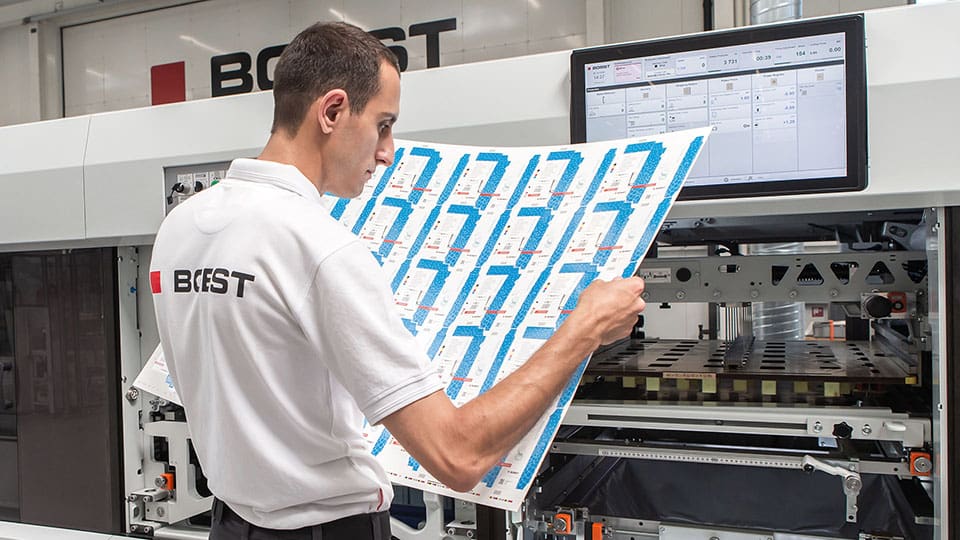
Up first is BOBST, a specialist in packaging and labelling production. Bodo Junge, product marketing director at BOBST, says die-cutting represents an important added-value service for printers and converters, offering significant competitive advantages in the modern packaging market.
“Today’s die-cutting technology accommodates exceptional flexibility in substrate type and thickness,” Junge comments, adding: “This allows converters to process everything from lightweight paper to heavy cartonboard and corrugated materials, all while maintaining consistent quality across production runs. “Offering this in-house is a major competitive edge when weighted against printers that need to outsource this process and lose a great amount of control and flexibility.”
So, where should PSPs and similar companies be looking when it comes to die-cutting? Junge says printers should evaluate both machine capabilities and supplier partnership qualities. He recommends seeking out end-to-end solutions that integrate seamlessly with existing workflows while offering future-proofing features.
BOBST launched Accuplaten at drupa 2024 as a first-to-market innovation that minimises cutting plate deformation and reduces patching time by up to 80%
“Die-cutting equipment should feature digitalisation and connectivity capabilities, like BOBST Connect, TooLink digital ID technology, and Job and Recipe Management, which will enhance operational efficiency and workflow transparency,” he says.
Junge goes on to say critical machine specifications include register precision, production speed, versatility in handling different substrates, and waste reduction capabilities. He also picks up on the importance of the supplier relationship, saying PSPs look for partners that offer comprehensive support, and additionally highlights how energy use should be a factor in the decision-making process.
“Prioritise energy efficiency and waste reduction features that support sustainability goals while reducing operating costs,” he says, continuing: “Modern die-cutters with optimised drive systems, efficient vacuum capabilities, and precise register control minimise material waste and energy consumption, delivering both ecological and economic benefits.”
Digital die-cutting enhances operational efficiency, improves product quality, and supports business growth by providing reliable, precise, and easy-to-use cutting solutions
Junge says BOBST’s latest die-cutting innovations cover all these areas. Beginning with its Accuplaten technology, which launched at drupa 2024, Junge says it represents a first-to-market innovation that minimises cutting plate deformation and reduces patching time by up to 80%.
For existing kit, he says BOBST’s Zero Patching plate has similar benefits, compensating for platen distortion and cutting patching time by 50% to 80%. This technology, he adds, can be combined with the Speed Change package, which already reduces setup time by up to 15 minutes per job change.
In addition, the Expertcut 106 PER is now capable of 9,500 sheets per hour thanks to new carbon fiber gripper bars. Combined with BOBST’s Energy Efficiency Pack, which can save up to one MWh per million sheets, Junge says these advancements ensure customers maintain “exemplary” die-cutting productivity while delivering high quality and minimal waste.
Enhancing Efficiency
Elsewhere, Richard Marlow, sales director at Vivid Laminating Technologies, is also a strong advocate of die-cutting, saying it offers several key benefits to printers, enhancing efficiency, and opens users to new markets.
“Vivid’s digital die-cutting systems are designed with user-friendly interfaces, making them easy to operate with minimal training. This allows operators to set up and complete cutting tasks quickly, thus reducing the learning curve and increasing productivity. Digital die-cutting enhances operational efficiency, improves product quality, and supports business growth by providing reliable, precise, and easy-to-use cutting solutions.”
When it comes to selecting the right digital die-cutter, Marlow says this involves several important considerations. First and foremost, he says a good supplier should be innovative and forward-thinking, as well as committed to continuous improvement and introducing new technologies that can enhance your capabilities and keep you competitive in the market.
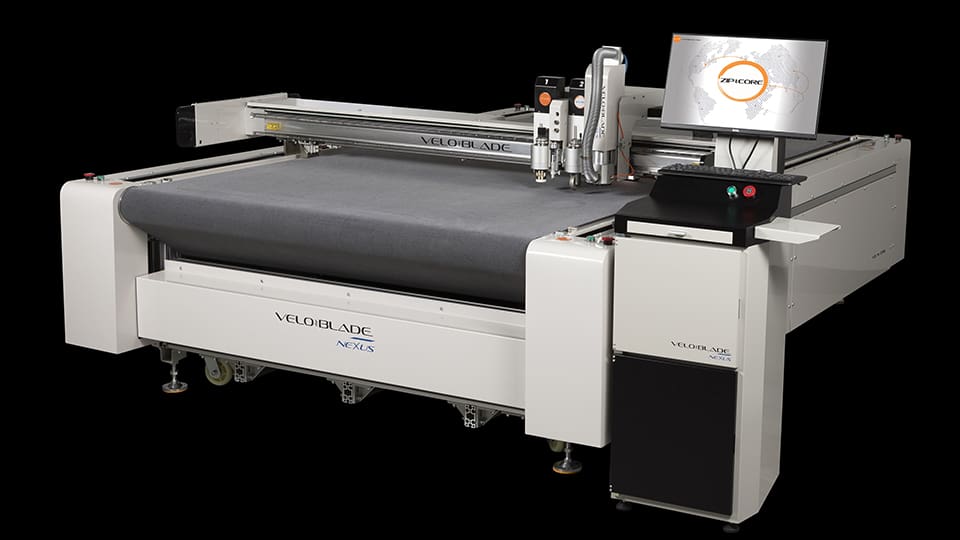
The Veloton interchangeable system is compatible with both the Veloblade Volta and Nexus
In addition to support, Marlow says quality of the finished product is a significant factor. He explains: “The cutting system should deliver precise, high-quality results consistently. This quality directly impacts the final appearance of your signs and graphics, affecting both durability and visual appeal. Therefore, it’s important to choose systems that meet high standards of performance and reliability.”
Finally, he notes how support and aftercare from the supplier is crucial. He explains how a reliable supplier should offer comprehensive support, including installation, training, and ongoing maintenance, adding this support ensures a system operates at peak performance and any issues are promptly addressed, minimising downtime and disruptions to business.
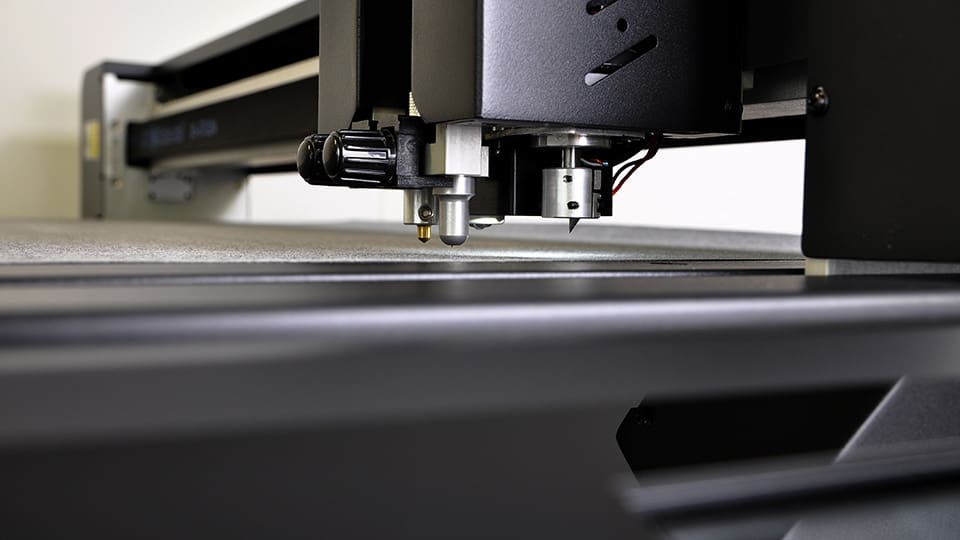
Looking to Vivid’s solutions, the manufacturer has launched Veloton, which is compatible with its VeloBlade range of digital flatbed cutters. Veloton is a patented interchangeable system that allows users to increase their cutting speed with multiple aligned cutting heads, available in a variety of sizes to suit your needs.
Controlled Production
Elsewhere, Craig Harry, head of sales at Duplo UK, agrees that die-cutting is a time-tested technology that has evolved dramatically to meet modern production demands.
“In today’s market, high-quality die-cutting is all about consistent precision and efficiency,” Harry says, continuing: “For many printers, investing in a quality die-cutting machine means having the capability to deliver premium, intricately shaped products in-house.
“This eliminates the need to outsource, which not only reduces turnaround times but also protects revenue margins. In-house die-cutting ensures that production remains controlled, costs are kept in check, and quality isn’t compromised, even when executing more complex designs.”
Advising on new investment, Harry says one of the most important bits of criteria is the machine’s ability to deliver consistent, high-quality cuts. He explains that underinvesting in this technology can lead to machines that fail to adjust for digital printing defects critical for ensuring that the print aligns perfectly with the cut.
For many printers, investing in a quality die-cutting machine means having the capability to deliver premium, intricately shaped products in-house
“In today’s premium print environment, such imperfections are immediately noticeable and can damage a printer’s reputation,” Harry warns.
With this, Harry draws attention to some of the solutions available from Duplo, including its latest innovation, the Duplo DSM-1000 B2 die cutter. One of its standout features is the DSM-P Separator Unit, which, equipped with seven independently operating modules, strips waste from even the most intricate blanks. This innovation, Harry says, eliminates the need for costly, additional separator modules that other systems require, especially when it comes to removing inner waste such as the small holes found in gift tags.
Harry also flags the automation integrated into the DSM-1000, which he says transforms what has traditionally been a labour-intensive and sometimes dangerous task – changing dies.
Die-cutting is also versatile and compatible with a wide range of materials, opening the door for personalisation and customisation of a broad range of products
“With the DSM-1000, die changeovers are completed in mere minutes rather than the hours required by older and competing models, dramatically improving both safety and productivity,” he says, adding: “The DSM-1000 features a design whereby the operator can push back the separator unit to provide immediate, unhindered access to the die board. This means that loading the board becomes extremely fast and straightforward, cutting down on changeover time and ensuring that production runs are smooth and efficient.”
Additional features include a multi cut function and a four-quadrant pressure adjustment system, allowing customers to design their dies with high accuracy. The machine also makes use of another new solution in Duplo UI, which is built on the same graphical interface as Duplo’s other systems, meaning customers who already understand the ecosystem can start working with the DSM-1000 immediately.
Take the Wheel
Also in this market is the Plockmatic Group, which counts both Intec and Morgana among its brands. Ray Hillhouse, vice president of sales and marketing for its offline business unit, says handling die-cutting requirements in-house means that the printer regains control of the job and its deadlines. Of equal importance for many is that the printer keeps control of the job costs, placing die-cutting tasks with an external supplier takes margin out of the job, as well as adding cost and time to the production of the work.
“With the advance of digital print, speed gifted to the printer by the print process can evaporate with any external service involvement,” he says, continuing: “In-house die-cutting also eliminates ‘van time’, where the job is ferried to and from the supplier. With digital die-cutting, as is the case with several products available via our Intec brand, the need for externally produced cutting-dies is also eliminated – an important consideration when selecting the type of die-cutting product.”
Going into detail on some of the group’s solutions, Hillhouse first picks out the new Intec ColorCut SC7000. Billed as an “on demand” digital sheet cutter with no dies or setup costs, this is the latest variant of the popular ColorCut family of automated sheet cutters. This is available in addition to the SC6500 and SC7000 ProT, while a B2+ version of the SC7000 is also an option.
Plockmatic Group counts Intec and Morgana among its die-cutting brands
Also within the Intec family is the FB9500 digital die-cutting and creasing solution, as well as sister model the FB9500 PRO. One additional feature of the FB9500 is its patented Rear Mark Scanning System, which optimises creasing quality for certain jobs by producing creases from the back of the sheet.
Turning to Morgana, the AeroDieCut uses regular cutting and creasing forms, combined with a patented system of moving press rollers that provide the pressure necessary to cut through and score the substrate, all housed in a compact unit.
Finally, for longer runs, Morgana offers the Rotary Die Cutter, which features a cutting system composed of an upper magnetic cylinder, holding the cutting matrix in place, and a lower counter cylinder. A pin register system on the magnetic cylinder helps the operator to install the cutting matrix accurately. Side-alignment of sheets is managed by adjustable straps allowing the machine to maintain accurate sheet position. An adjustable waste management system separates and diverts waste material whilst giving a consistent supply of the finished pieces to a conveyor delivery.
Addressing Demand
Alongside hardware, PSPs should also be looking at the type of software they are using when die-cutting. Bobby Grauf, head of business development EMEA at Antigro Designer, which specialises in such solutions, says die-cutting can help PSPs address calls for some of the most in-demand applications.
“With demand for customised and personalised printed products continuing to grow at a significant pace, the benefit of die-cutting is that it makes the production of complex, custom shapes, that are typically more challenging to produce through traditional digital cutting methods, more possible,” Grauf says.
“Die-cutting is also versatile and compatible with a wide range of materials, opening the door for personalisation and customisation of a broad range of products. When it comes to custom stickers and other personalised products, die-cutting ensures that less material is wasted around the custom shape, bringing added sustainability benefits too.”
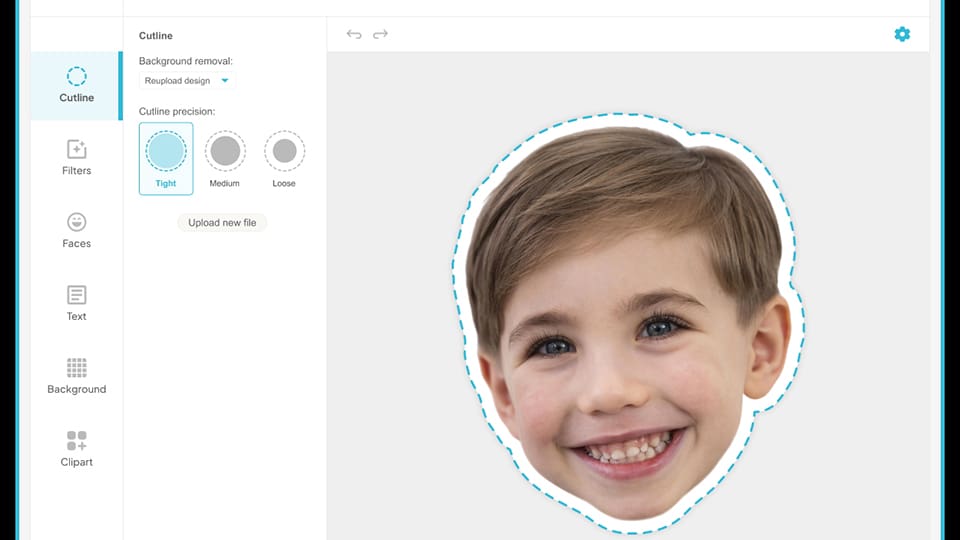
Sticker Builder from Antigro gets files ready for print in PDF with cutlines or transparent PNG formats, ensuring compatibility various printers and cutters
In terms of which software to select, Grauf advises using solutions which streamline production, boost quality, and enhance profitability. Essential features, he continues, include designing options for creating outlines, adjusting thickness, advanced background removal on the end-customer side, and fully automated print-ready file preparation with cutlines in a Spot Color cut line. This is all in addition to preprint automation features like barcode integration, custom file naming, and automatic placement into hot folders after the order is paid.
“Versatile software capable of handling labels, stickers, and beyond, such as magnets and life-size cardboard cutouts, enables businesses to expand their unique offerings and attract niche markets,” he adds.
Factoid:Die-cutting was first used for cutting leather within the shoe industry in the mid-19th century
With this, Grauf highlights Antigro Designer’s Sticker Builder tool, which supports any file that requires a cut line layer. He explains that the combination of cutting-edge artificial intelligence with intuitive design tools enables users to design custom-shaped products by automatically generating the outline and cut lines in print-ready files.
“Sticker Builder enables PSPs to get files ready for print in PDF with cutlines or transparent PNG formats, ensuring compatibility with various printing machines and cutters,” Grauf says, adding: “Print-ready files can be generated in seven seconds, and proofs are automatically generated for quick approval, speeding up the process.”
With so many hardware and software options to consider, one can be forgiven for feeling a little overwhelmed when it comes to die-cutting. However, following the advice of those featured here can certainly help you find the most effective solutions for your business.
From advances in print quality and productivity to increasing demand for automation and sustainable solutions, the wide-format market continues to evolve. Rob Fletcher looks at the latest trends, challenges, and developments in this sector
Speaking to a range of print and signage professionals, we discover how a sustainable business model can drive growth, outlining actionable strategies to cut overhead costs, improve eco-efficiency, and boost your bottom line
As finishing continues to become a great way to add extra elements to your print and wow customers, we take a look at some of the creasers, folders, and collators on the market, and ask experts their advice on finding the right solutions
(this was inserted into the PHP of a code block)
Watch our latest video of the week
Print Monthly gives you the latest video coverage of companies, people, and events from within the print industry.