Packaging Solutions: How to Perfect Your Packaging
As more brands turn to paper-based packaging to reduce their environmental impact, this is creating more work for printing companies. Here, Print Monthly picks out some of the latest solutions for those in this busy sector
Rob Fletcher
January 15, 2025
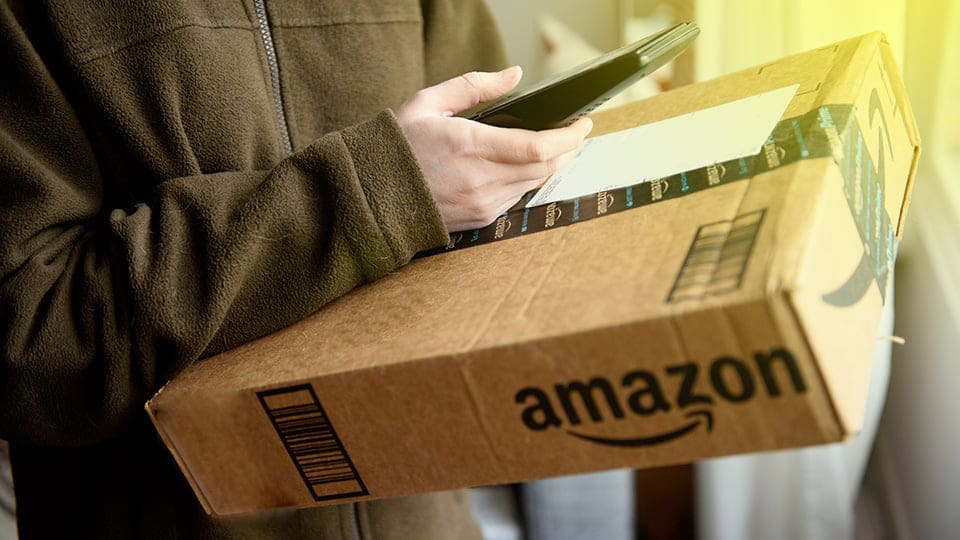
Quite aptly, we are putting pen to paper – or fingers to keyboard, at one of the busiest times of the year for packaging. The festive season sees millions of parcels being sent around the world, with many of these now being paper-based due to brands seeking to reduce their carbon footprint.
Print plays a key role in this type of packaging, allowing brands to be more creative in what they do to help draw the attention of customers. As a result, print companies are working with customers to push the boundaries of packaging and introduce all manner of effects to packaged items.
In this article, we speak with manufacturers and suppliers about their latest solutions to find out how these technologies allow users to create eye-catching printed packaging, while we also catch up with those on the front line in this market to learn more about key trends and developments.
New Options
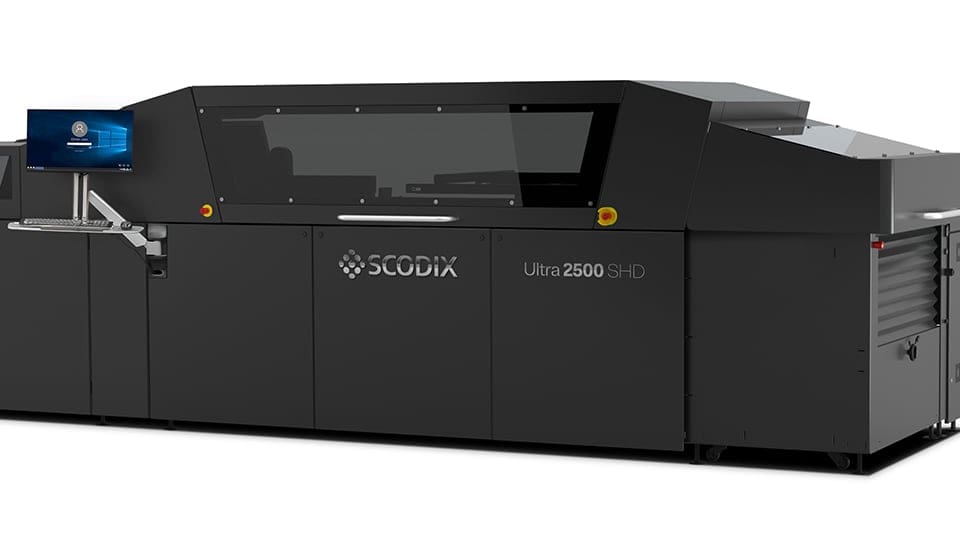
One manufacturer active in this sector is Scodix, which used drupa 2024 to roll out two new presses to extend its already extensive range of digital embellishment solutions – the Scodix Ultra 2500 SHD and the Scodix Ultra 6500 SHD. The two machines feature Scodix Smart High Definition (SHD) technology, as well as the new Scodix Multi-layer Enhancement (MLE) and Scodix AI, an automated embellishment creator tool.
Focusing first on Scodix MLE, the manufacturer says this opens a “whole new dimension” for embellishments on uncoated paper, which in turn allows greater creativity in packaging work.
With the flexibility to add layering, braille, and crystal, effects become more economical
“For uncoated paper, the first layer acts as a selective micro coating primer before Scodix Foil or Scodix Sense,” the company says, adding: “With the flexibility to add layering, braille, and crystal, effects become more economical.”
With Scodix MLE, the manufacturer added six new applications to the current ten, which it says makes Scodix the only solution with 16 embellishment options available. These include: Scodix Uncoated, Scodix Sculpture, Scodix Matte, Scodix Security, Scodix Reflective, and by incorporating Scodix Art, embellishing on transparent media with Scodix Transparent is now available on the Scodix Ultra 2500 SHD and the Scodix Ultra 6500 SHD presses.
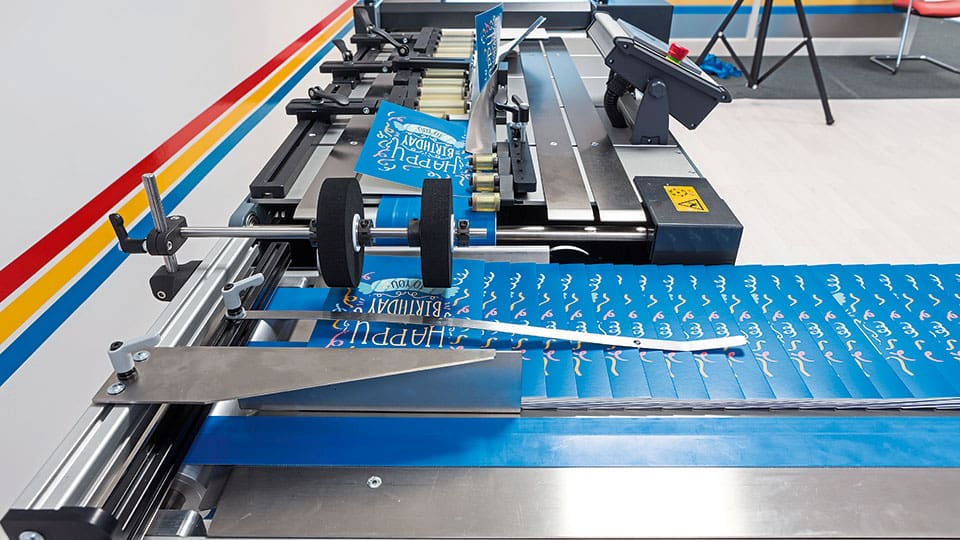
The Scodix Ultra 2500 SHD (pictured) and Scodix Ultra 6500 SHD launched at drupa 2024
The main difference between the new presses is within their formats. First, the Scodix Ultra 2500, Powered by SHD, is available in a B2 size while the Ultra 6000 is in a B1. Both presses can be managed by a single operator, which Scodix says eases the use for print providers.
Speaking about the presses, Eli Grinberg, chief executive and co-founder of Scodix, comments: “With over 400 successful installs across the globe, we stand as the most proven enhancement technology in the market. However, we refuse to settle in that position, we are committed to elevating digital enhancement and driving the success of our customers even further.
Factoid: Scodix has more than 400 successful installs of its embellishment technology around the world
“With these new products and technologies, we’re not just leading the pack – we're setting the pace for the future of embellishment.”
Make an Impact
Away from hardware, Arden Software recently introduced a specialist design tool within its Impact CAD software for those working in the packaging segment. The all-new ‘Impact Dynamic Constraints Edition’ is billed as an industry-first, with Arden saying it is the first-ever packaging design CAD software that offers geometric constraint tools, which captures the designer’s intent as they draw, and also enables quick and easy resizing.
This feature was initially introduced to certain Arden customers last year to great success, with users praising its ability to enhance design flexibility, speed up workflow, and elevate creative possibilities. As such, Arden has now rolled it out to the wider market, opening up new possibilities for packaging designers and die-makers.
Stand-out capabilities include next-generation parametric design, ensuring design intent is preserved even during edits and resizing, as well as what Arden describes as “effortless” resizing and adaptation, and comprehensive constraint types. Impact Dynamic Constraints Edition also offers automatic constraint creation with updated draw and edit tools, on top of customisable standards for users and a dynamic constraints toolbox that provides real-time feedback on model status, available constraints, and errors to ensure design integrity.
Arden Software has introduced a specialist design tool within its Impact CAD software for those in packaging
“The introduction of geometric constraint tools within Impact has been a game changer for the packaging design industry,” Arden business development director Matt Hewitt explains, adding: “Our early adopters have already seen remarkable improvements in their design efficiency and creativity, as they’re empowered to work with unprecedented flexibility, precision, and speed.
“Impact Dynamic Constraints has been embraced by design professionals, reshaping how packaging is created and setting a new standard for the future of the industry. Constraint-based design is more commonly used within CAD software in other industries, such as architectural or Mechanical CAD, but it has never been seen before in packaging design software, so we’re incredibly proud to be leading this innovation at Arden and redefining what’s possible in packaging design.”
Switching to Cardboard
Material choice can also play a major part in the final packaging product. With brands and retailers under increasing pressure to switch to paper-based and more environmentally friendly materials, the onus is now on printers to deliver this in line with demand.
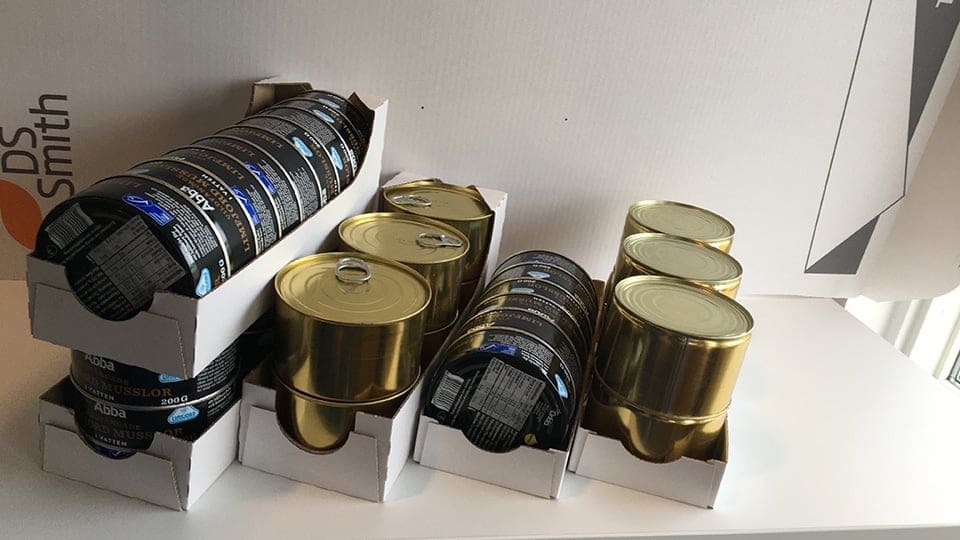
Recently, DS Smith, a specialist in sustainable and fibre-based packaging solutions, moved to replace plastic pallets for canned products with corrugated cardboard for Vilsund Blue, the largest industrial producer of shellfish and seafood in Denmark.
DS Smith used its Circular Design Metrics (CDM) tool to rate and compare the circularity of new packaging designs across eight different indicators such as carbon footprint, design for reuse, supply chain optimisation, and material utilisation. This presented both DS Smith and Vilsund Blue with the potential for a new approach to how products are packed.
DS Smith worked with Denmark’s Vilsund Blue to introduce corrugated cardboard trays for its tinned goods
Taking a closer look at the new material, the fibre-based packaging solution has not only helped to improve Vilsund Blue’s overall environmental impact, but also increased its capacity. Now, Vilsund Blue can install 2,700 cans per pallet for the transportation and freight of products, up from the original 1,800 using the plastic packs. In addition, products can now be stacked and stored more efficiently and are made compact for retail shelves.
“DS Smith came up with some fantastic solutions to help to make our packaging more sustainable and circular,” comments Bent Svenningsen, production manager, Vilsund Blue, adding: “We wanted to replace the plastic in our pallets and DS Smith have helped us to develop a pure corrugated cardboard alternative.”
DS Smith came up with some fantastic solutions to help to make our packaging more sustainable and circular
Martin Nielsen, technical support manager at DS Smith, also talks up the importance of switching to more planet friendly packaging in the long run. He explains that by making simple changes like this, it could have a significant impact for both the retailer and the product supplier.
“Vilsund Blue set us a challenge to eliminate plastic materials from their pallets and to protect the products and assure and optimise a sustainability performance throughout the supply chain,” Nielsen says, continuing: “They produce mussels at scale, and we collaborated with Vilsund Blue’s machine suppliers to ensure that the packaging was fully aligned with their production processes. We have also significantly reduced carbon dioxide emissions and the product looks great on the shelf.”
Create Memorable Experiences
As to the viewpoint of companies operating in this sector, James Palfrey-Smith, commercial manager at ASC Cartons, which has been creating boxes for more than 40 years, believes the packaging sector continues to present substantial opportunities for growth, especially with the evolving needs of e-commerce businesses.
“As these brands strive for distinct and memorable customer experiences, there is a rising demand for custom packaging that reinforces brand identity,” Palfrey-Smith says, adding: “Printers can tap into this by offering solutions that support high-quality, visually engaging, and eco-friendly packaging.
James Palfrey-Smith, commercial manager at ASC Cartons, says packaging still presents substantial opportunities for growth
“Digital printing and flexible packaging solutions enable personalisation, shorter production runs, and rapid turnaround times – key attributes that e-commerce brands seek to differentiate themselves in a competitive market. Well-crafted packaging is more than a container; it is a powerful branding tool that strengthens a business’s image and encourages customer retention.”
In terms of trends, Palfrey-Smith says the demand for sustainable and custom packaging solutions continues to grow, with planet friendly materials leading the way. He explains that recyclable, biodegradable, and compostable options align with consumer expectations and regulatory trends aimed at reducing environmental impact.
More brands are turning to paper-based packaging such as cardboard
For e-commerce businesses, Palfrey-Smith continues, these sustainable packaging solutions are particularly attractive as they reinforce brand values while meeting customer preferences for environmentally conscious products. Additionally, custom and short-run packaging facilitated by digital printing has proven profitable, enabling brands to create tailored and unique designs.
“Eye-catching packaging serves as an extension of the brand and becomes an asset in creating shareable moments, such as unboxing experiences shared on social media, which drive organic marketing and brand visibility,” he adds.
As for ASC, Palfrey-Smith says its latest and most popular packaging solution is the ‘Box Builder’ tool, which enables customers to design bespoke cardboard boxes tailored to their specific requirements. The platform allows for precise customisation of box dimensions, styles, materials, and printing options, ensuring the packaging aligns with the product and brand identity.
“The demand for this solution primarily comes from e-commerce businesses, retailers, and manufacturers seeking packaging that enhances their brand presence and provides optimal protection during transit,” Palfrey-Smith says, continuing: “By offering flexibility in design and order quantities, the Box Builder caters to both small enterprises and large corporations aiming to create a memorable unboxing experience for their customers.
“Businesses that invest in quality, custom packaging can transform this touchpoint into a memorable brand encounter that reinforces customer perception and promotes social sharing.”
Businesses that invest in quality, custom packaging can transform this touchpoint into a memorable brand encounter that reinforces customer perception and promotes social sharing
Palfrey-Smith’s comments offer an apt conclusion to this feature, packaging is simply so much more than making products look good on a shelf. It offers brands, marketeers, and retailers the opportunity to create a more memorable buying and user-friendly experience for the consumer.
Of course, print has a hugely important role to play in this. Brightly coloured products will be sure to catch the eye but by adding special effects such as embellishment will create an even bigger impact to those browsing and handling the packaged products. Add in environmental considerations and how goods are packed, and this can also impact buyer behaviour.
To put it simply, the world of packaging is very much your (and your customers’) oyster. In order to draw the attention of consumers, new technologies and techniques are essential to stand out from the crowd.
From advances in print quality and productivity to increasing demand for automation and sustainable solutions, the wide-format market continues to evolve. Rob Fletcher looks at the latest trends, challenges, and developments in this sector
Speaking to a range of print and signage professionals, we discover how a sustainable business model can drive growth, outlining actionable strategies to cut overhead costs, improve eco-efficiency, and boost your bottom line
As finishing continues to become a great way to add extra elements to your print and wow customers, we take a look at some of the creasers, folders, and collators on the market, and ask experts their advice on finding the right solutions
(this was inserted into the PHP of a code block)
Watch our latest video of the week
Print Monthly gives you the latest video coverage of companies, people, and events from within the print industry.