Speciality Papers: Special By Name, Special By Nature
In this feature, Jonathan Pert explores the premium substrates that PSPs are utilising, talking to paper manufacturers about the latest offerings and innovations in the space
Jonathan Pert
September 15, 2025
The rise of speciality papers goes hand in hand with an increasing market desire for high-end print applications, personalisation, and bespoke ‘prints-of-one’. Luxury packaging, premium publishing, and high-end marketing materials have all seen a rise in demand in recent years, and the diversity of speciality papers has grown to accommodate this increased desire – blending craftsmanship, innovation, and sustainability to meet the evolving demands of clients.
From textured finishes and custom coatings to eco-conscious fibres and advanced print compatibility, speciality papers are part of the industry’s aim to redefine the value of the printed page. In this feature, we explore how UK manufacturers are embracing these premium substrates as the future of the industry. As consumer expectations shift and environmental scrutiny intensifies, speciality paper is proving to be a key differentiator in a highly competitive market.
Cream of the Crop
James Cropper has produced special papers since at least 1856, when it was the first company in the world to produce coloured paper using synthetic dyes.
The paper manufacturer recently announced that it will bring its range of coloured paper shades under a single brand. The new colour portfolio, which will be designed, formulated, and crafted entirely in the UK at the company’s Lake District mill, will be available directly from James Cropper as well as from selected merchant partners.
In his announcement about the new portfolio, Paul Barber, managing director of Paper and Packaging at James Cropper, stresses that: “This is not a refresh – this is a declaration.
“We were the first to produce coloured paper, and we’re proud of that legacy, but we’re not here to look backwards – we’re here to own the future of colour in paper. What we’re planning has been refined over 50 years of proprietary fibre and colour formulations. This is the latest step on our industry-defining journey.”
James Cropper offers a wide range of paper materials for print and packaging applications, including bespoke materials made from specific fibre blends designed to meet unique colour or functional requirements. Innovations from the company include Rydal Apparel, a premium paper made from upcycled denim fibres.
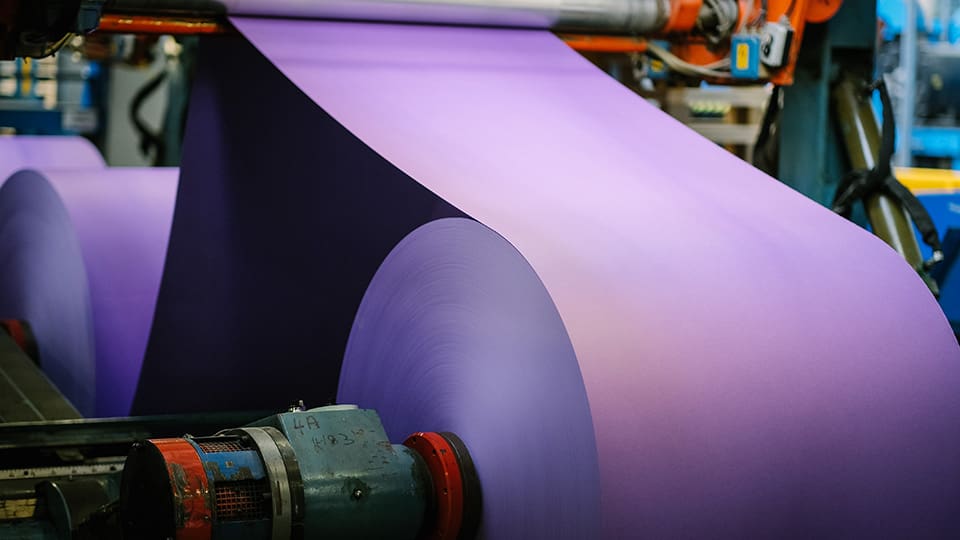
James Cropper offers a range of fibre blends for unique functional requirements
Speaking about Rydal Apparel, Barber says: “Recycled materials have advanced to the point where they are viable for a much wider range of applications. A few years ago, it was unthinkable that a sheet of uncoated paper made with recycled fibres could perform like a coated material. Today, innovations like Rydal Eco have made that a reality.”
The company’s mix of sources, which are dubbed FibreBlend, includes fibres from recycled clothing, office waste, and used coffee cups, alongside virgin fibres, waste from its mill, and off-cuts from industry partners.
Speaking about James Cropper’s approach to paper production, Barber says: “We use six sources of fibre in varying combinations, each one imbuing paper with subtly different qualities that make it suitable for different applications – office waste, for example, tends to contain brightening agents that mean it creates brilliant white paper for use in printing and stationery applications.
“These materials can be used in a variety of applications ranging from packaging cartons to art, publishing, stationery, corrugate, retail bags, and more. Looking more broadly, James Cropper materials are used in industries as diverse as healthcare, aerospace, and electronics. We often say you’re never more than six feet away from a James Cropper product, because we make a material difference to so many industries.”
Barber stresses that its customers are looking for sustainable, British-made products to reduce the environmental impact of their supply chains. “We are the UK’s only remaining manufacturer of speciality-coloured papers,” he comments, “so in that sense our entire portfolio of coloured material, and the services offered by our colour lab, deliver on this demand perfectly.”
Factoid: The first working continuous paper making machine, the Fourdrinier machine, was installed in 1803
The company offers over 2,000 individual colour shades on-site, including 184 blacks and 62 whites. James Cropper’s unique ‘dyed-in-the-fibre’ process is used to penetrate paper fibres with the aim of producing exceptional depth, vibrancy, and accuracy to each sheet of coloured material.
Barber asserts that: “This variety gives us nearly unlimited options for creating materials with different textures, thicknesses, colours, and finishes.”
He adds: “Previously, end markets for recycled materials were much more limited, but today they include luxury packaging, publishing, stationery, and many other high-end applications. As a result, this has supported businesses in minimising their environmental footprints by aligning with the circular economy.”
James Cropper encourages its customers to visit its Lake District mill, to see how the dyes and pigments interact with different fibre materials for themselves. This enables the company to agree on a colour shade with the customer that can be quickly scaled into full production.
Speciality papers are facilitators of sustainable change, and we expect to see the pace of that change continue to increase in the coming years
While Barber stresses that “we are entirely led by the needs of the customer and the application,” he underlines the importance of companies to bring about sustainable change themselves by offering new solutions to the market.
“As sustainability regulations around the world continue to tighten,” he says, “demand for functional specialty papers for a wider range of applications will only increase. This should intensify focus not just on the materials that are used, but the processes used to make those materials in an effort to minimise water and energy consumption.
“Speciality papers are facilitators of sustainable change, and we expect to see the pace of that change continue to increase in the coming years.”
The Art of Paper-Smithing
Another UK paper manufacturer with a breadth of speciality paper options is GF Smith, which has succeeded in making its Colorplan range a mainstay in the market for over 50 years.
GF Smith also has strong ties to German papermaker, Gmund, which has allowed it to further enhance its offering by stocking products including the Gmund Colors and Gmund Creative Metallix ranges, among a range of other offerings.
Speaking about the company’s speciality paper offerings, Matt Ford, paper consultant at GF Smith, stresses the importance of quality materials in adding to the eye-catching nature of printed products. Ford says: “Although the demand for volume commodity papers has steadily reduced over the years, clients are still drawn to print. Whether this be for packaging, brochures, stationery, greetings cards, or catalogues, a thoughtful approach to printed material helps you stand out.
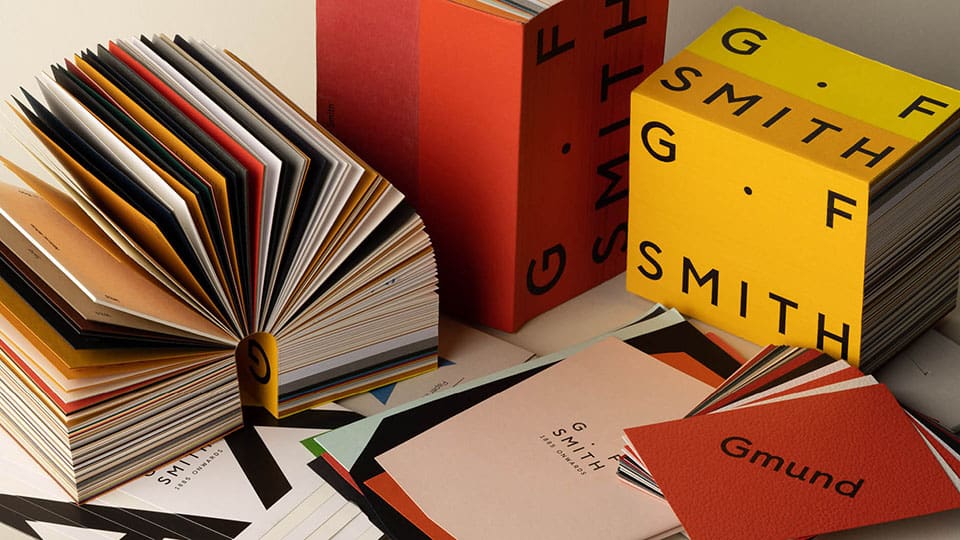
GF Smith has strong ties to German papermaker, Gmund
“The GF Smith range allows designers to specify material that will get attention, be treasured, and offer a premium look and feel that online solutions simply cannot compete with. If something is being designed to be on a screen, it doesn’t matter what it feels like. For physical objects, it’s a totally different dimension.”
As with James Cropper, GF Smith has focused on developing new products made with alternative substrates, aiming to significantly increase the variety available to customers. As Ford states: “Whether that’s using hemp, brewing waste, grass, or seaweed, for example, there have never been more options for graphic designers and printers. That’s why we at GF Smith care so much about texture and work hard to offer papers that are engaging and tactile.”
In Ford’s opinion, every design process should begin with paper choice. He stresses that paper consultants at GF Smith will always guide clients through the process of choosing a material, and love to be involved as early as possible. As he puts it: “The shade of white for the pages of a book or brochure will govern how readable the text is, or how the photographs will ‘pop’. For packaging, the paper needs to have strength, longevity, and shelf appeal – making the right paper choice can seriously boost the appeal of a product.”
If the printed material is beautifully designed and produced, it can resonate in a really powerful, long-lasting way
Ford believes that, with lives being more online now than ever, the overall volume of print we encounter will only continue to decrease. However, in his opinion this means that it will become increasingly important for prints to be specialist, bespoke, and therefore be made with high quality specialist paper, with the print process falling into a more exclusive and luxury part of the market.
“It creates an incredible opportunity for companies to stand out,” Ford posits. “If printed material is beautifully designed and produced, it can resonate in a really powerful, long-lasting way. Our screen-based lives are convenient and immediate, but we have more senses than just sight – print allows us to touch and smell an object.
“At GF Smith, we’re betting that high-quality print will remain valued and relevant, and we’ll work towards that by curating and offering a wide range of papers which delight designers and the public.”
An Extensive Range
Another seller of speciality papers, Antalis, offers what it dubs as “one of the most extensive ranges of speciality papers in the industry.” Its portfolio includes premium creative papers for luxury packaging, publishing, and corporate communications; high-performance digital papers optimised for dry toner and HP Indigo presses; and technical papers designed for security, food contact, and industrial applications.
Flagship brands include Curious Collection, Keaykolour, Olin, and Conqueror, as well as eco-conscious options such as Cyclus and Cocoon, which offer FSC certification and 100% recycled content. It also distributes synthetic solutions like Xerox Premium NeverTear, which is enhanced with antimicrobial coatings and has been calculated to inhibit the growth of bacteria by up to 99.94%.
Speaking about its latest launches, Tim Percival, category director at Antalis, says that they “respond to the market’s increasing demand for sustainable, tactile, and digitally compatible substrates.”
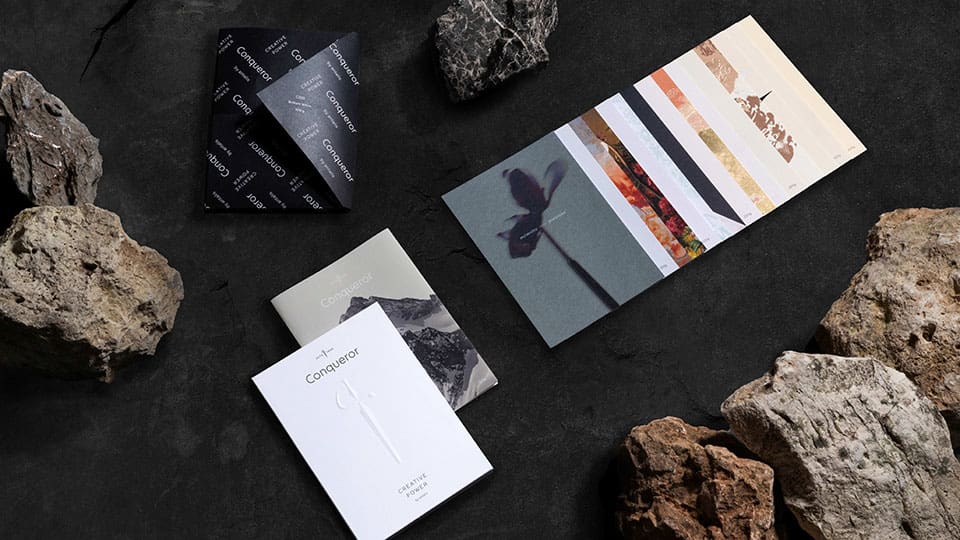
Conqueror Connoisseur 100% Cotton is produced using a unique manufacturing process, utilising a mould-cylinder paper machine
Percival states that “brands are under growing pressure to reduce their environmental footprint. We therefore expanded our offering of recycled, plastic-free, and FSC certified papers to support more responsible communication and packaging.” These papers include options like Cyclus Offset, Nautilus SuperWhite, and Image Recycled Bright White, designed for a variety of printing needs while aiming to minimise environmental impact.
In parallel, Percival highlights a resurgence of interest in print-driven brand storytelling, particularly for premium packaging and direct mail, which led Antalis to introduce its Curious Collection of papers with distinctive textures, colours, and finishes that “enhance sensory impact and emotional connection,” as he puts it.
Application determines everything – from surface finish and weight to print method and environmental credentials
“The Curious Collection is now complemented with an eco-innovative range, Curious Particles,” Percival explains. “Working along with one of the most sustainable and environmentally committed mills in Europe, the new range was developed with the aim of decreasing its environmental impact by using a mix of sugarcane and bamboo.”
In describing the full Antalis range, Percival makes clear that each application requires a bespoke solution, informed by the particular needs of the customer and the desired impact, with no ‘one size fits all’ option.
For a hand-made finish, he suggests Conqueror Connoisseur 100% Cotton, which is produced through a unique manufacturing process that uses a mould-cylinder paper machine. For luxury packaging applications, Keaykolour papers could be a strong choice, with the 45-colour range now complemented with Keaykolour Extra-Rough in black and white, adding a heavier grade with more long fibres. Food-safe or pharmaceutical packaging requires certified barrier papers, with MetsäBoard Prime FBB EB, for example, specifically designed for food and food service end-use.
Percival summarises this, saying: “Application determines everything – from surface finish and weight to print method and environmental credentials. Our consultative approach helps clients choose the right substrate to balance aesthetics, functionality, sustainability, and budget.”
Antalis sees the sector becoming increasingly circular, digitised, and experience driven. While Percival stresses that sustainability is part of the continued drive towards innovation, he also sees personalisation and digital print as key to fuelling demand for substrates that are versatile, high-performing, and compatible with short-run workflows.
Percival says: “As Europe’s leading distributor, Antalis is committed to staying at the forefront – investing in product innovation, sustainable sourcing, and the expert guidance needed to help our customers navigate this evolving landscape.”
From advances in print quality and productivity to increasing demand for automation and sustainable solutions, the wide-format market continues to evolve. Rob Fletcher looks at the latest trends, challenges, and developments in this sector
Speaking to a range of print and signage professionals, we discover how a sustainable business model can drive growth, outlining actionable strategies to cut overhead costs, improve eco-efficiency, and boost your bottom line
As finishing continues to become a great way to add extra elements to your print and wow customers, we take a look at some of the creasers, folders, and collators on the market, and ask experts their advice on finding the right solutions
(this was inserted into the PHP of a code block)
Watch our latest video of the week
Print Monthly gives you the latest video coverage of companies, people, and events from within the print industry.