Adding special effects to printed work not only makes the piece stand out but is also crucial for many end users. Print Monthly looks at some of the options available to print companies and the technology needed to make them happen
Rob Fletcher
November 8, 2024
After one of the Knowledge Zone sessions at this year’s The Print Show, the Print Monthly team struck up a conversation with a Marten Sims, senior lecturer at Arts University Bournemouth, and a speaker at the show who discussed encouraging the next generation into print. Speaking about the long-term value of print in marketing, Sims said: “The fact I’m more likely to keep hold of a takeaway menu that drops through my door than an email speaks volumes.”
If you add special effects into the mixture, the chances of consumers taking notice of and keeping print increase further. Be it foiling, embossing, metallic finishes, or even effects to support the visually impaired, there are all manner of options available to print service providers (PSPs).
In this feature, we speak with some of the manufacturers involved in printed special effects, learning more about what is possible when working with their technologies.
Improve Your Value
Coincidentally, just around the corner from the Knowledge Zone at The Print Show was Vivid Laminating Technologies, which has a selection of kit that can be used to add various special effects to printed work.
Commercial director Lewis Evans says by introducing varied and creative finishes, PSPs can target new market segments and capture the interest of diverse consumer bases.
“Expanding the range of special effects available to customers significantly enhances the perceived value of your product offerings,” says Evans.
Expanding the range of special effects available to customers significantly enhances the perceived value of your product offerings
“One of the key advantages of special effects, such as foiling, embossing, or textured laminates, is their ability to offer a sense of exclusivity and luxury. Customers are increasingly drawn to products that stand out, and special effects provide a level of customisation and refinement that makes products feel bespoke. This personalised touch often helps businesses position themselves as premium brands, giving customers a reason to choose their products over competitors who may offer more conventional or standard printing solutions.”
Vivid says introducing varied and creative finishes allows PSPs to target new markets
Evans adds: “Additionally, offering a wider range of special effects allows businesses to cater to niche markets that value high-quality, aesthetically unique products. In essence, by providing these options, you elevate your offerings, making them not only functional but also desirable from an artistic and sensory standpoint.”
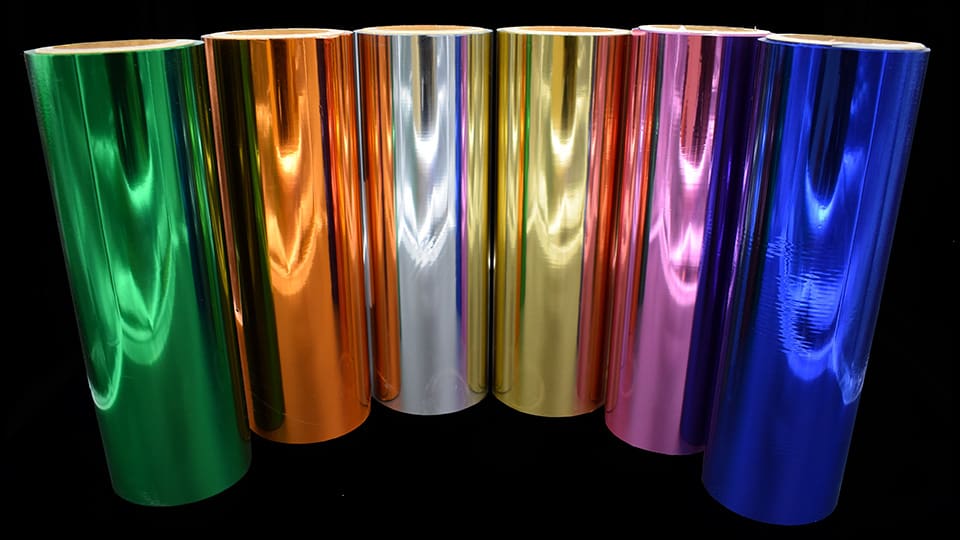
In terms of current demand, Evans says that special effects proving particularly popular at the moment are textured laminates and special effect foils, which can be applied to an array of applications, from packaging and marketing materials to business stationery and promotional products. Evans goes on to say that the use of these effects not only elevates the brands’ aesthetic but also enhances the tactile experience, creating a lasting impression on the consumer.
“For instance, adding a textured laminate to a product, combined with the sparkle of special effect foil, signals to consumers that the brand is not only about functionality but also about delivering a premium experience,” he explains, adding: “These techniques are highly effective in creating a sense of depth and dimension in print designs, often making the product appear more upscale.
“At The Print Show, textured stocks combined with foils, such as white Aqua Aura foil used with the Matrix Metallic, have been proven to grab attention. These designs stand out not just visually but also through touch, creating a more immersive experience for the consumer.”
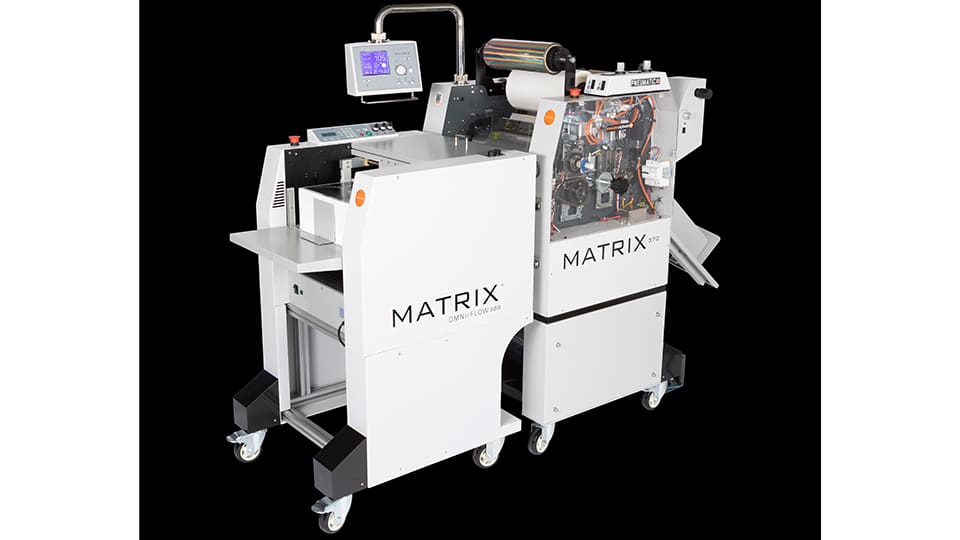
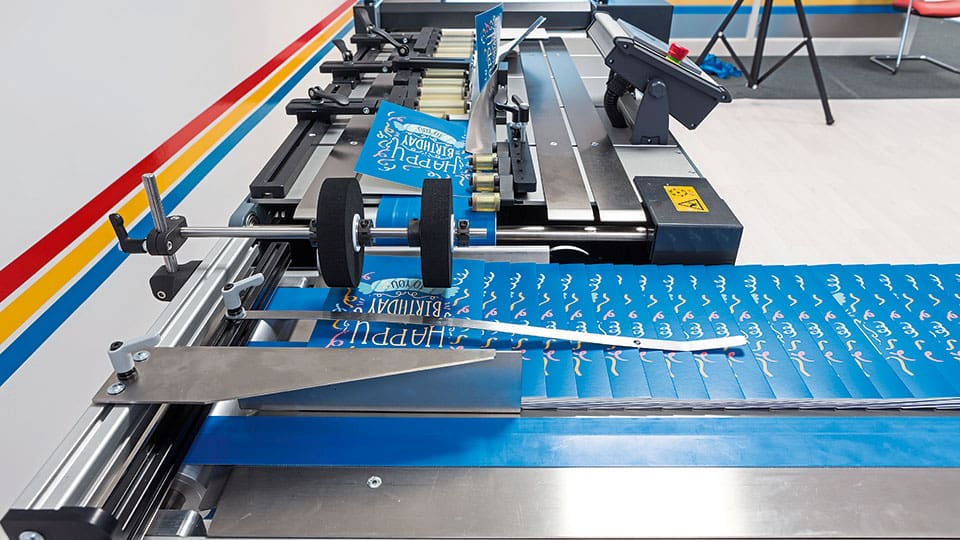
Vivid’s Matrix MX-370MP has been designed for applying digital foils and spot-UV type effects to coated and uncoated papers
As for equipment, Evans wastes no time in going into further detail on Vivid’s Matrix product line. With features that allow for digital foiling and lamination on both textured and non-textured stocks, Evans says the Matrix range enables businesses to bring high-quality print finishing in-house. In turn, this reduces the need for outsourcing and helps businesses cut down on costs and turnaround times, making their operations more efficient and agile.
Factoid: Vivid’s Matrix line of machines allow for digital foiling and lamination on textured and non-textured stocks
“Our Matrix Metallic range is specially developed for users looking to achieve consistent, high-quality digital foil finishes across different types of stocks,” he explains, adding: “This solution allows businesses to offer luxury-grade products without the need for extensive third-party services, giving them greater control over the production process.”
Retain Profit
Another specialist in this area is Duplo. Craig Harry, head of sales at Duplo UK, says there is a lot of competition in the market, not only from the printer down the road but also from abroad, making standing out from the crowd much more important.
“A surefire way of doing this is by making sure you can do something most can’t. Adding special effects to a printer’s production portfolio instantly increases their flexibility when accepting jobs. There is no need to turn away work or to have to outsource it, losing profit and control of the timetable along the way.
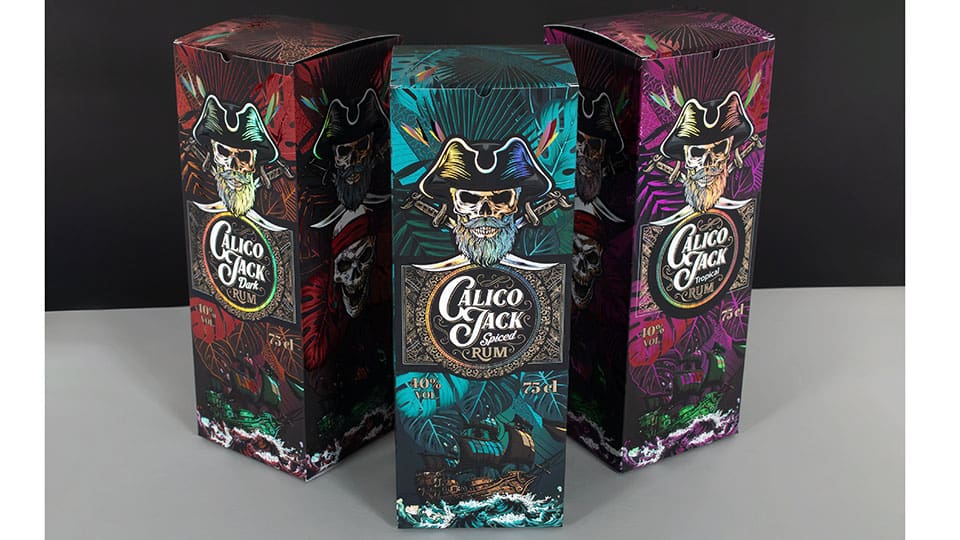
“Regardless of the product, whether greetings cards, packaging, or book covers, adding spot UV, foil, or the combination of the two instantly elevates the product. It brings the tactile sensation that only print can achieve. For those with these embellishment options, customers will return to them to see what else they can do for future projects.”
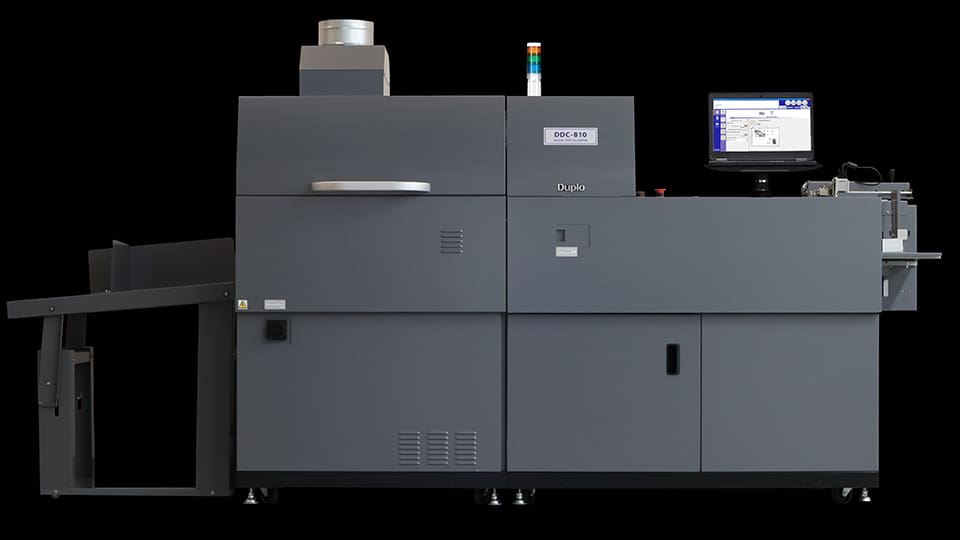
Building on this, Harry picks out spot UV business cards and greetings cards as applications that are becoming more popular among customers. He also highlights how Flexpress, the first user of Duplo’s DDC-8000 B2 DuSense, recently upgraded its B3 DuSense device and moved away from near-line foiling and can now cold foil in one pass, with its most popular products being business cards. Incidentally, Duplo recently upgraded the DDC-810 B3 DuSense to the PRO version.
According to Duplo, adding spot UV, foil, or the combination of the two instantly elevates products
Harry says the new version has more range on how much UV can be added to the sheet, is faster, and has a more robust build, while the heads can be moved closer to the sheet for more accuracy or further away to help with the curvature of the sheet.
As for other solutions from Duplo, Harry picks out the DBM-700 booklet system, which he says does not exactly embellish but gives an “amazingly clean and polished look to booklets up to 250 pages”.
Harry says: “The application isn’t new, it’s been around for ages, but every system we’ve sold in 2024 has the module. It’s become a gold standard for school exercise books and when combined with spot UV, it gives a beautifully embellished almost perfect-bound effect.”
Finally, Harry notes how Duplo distributes the Bagel Systems range of laminators and foilers, from B3 to B2 sheet sizes in the UK. The 3D Foiler was designed to be used with spot UV devices and uses a silicon heated roller, which enables the device to cope with the variable height of the varnish.
“A new feature of all the Bagel laminators and foilers is they now have a standby function that keeps the temperature regulated so it doesn’t need to be cooled down and then raised back up to the right temperature after every stop,” Harry says, adding: “This increases productivity and reduces the energy consumption significantly.”
All-White For Some
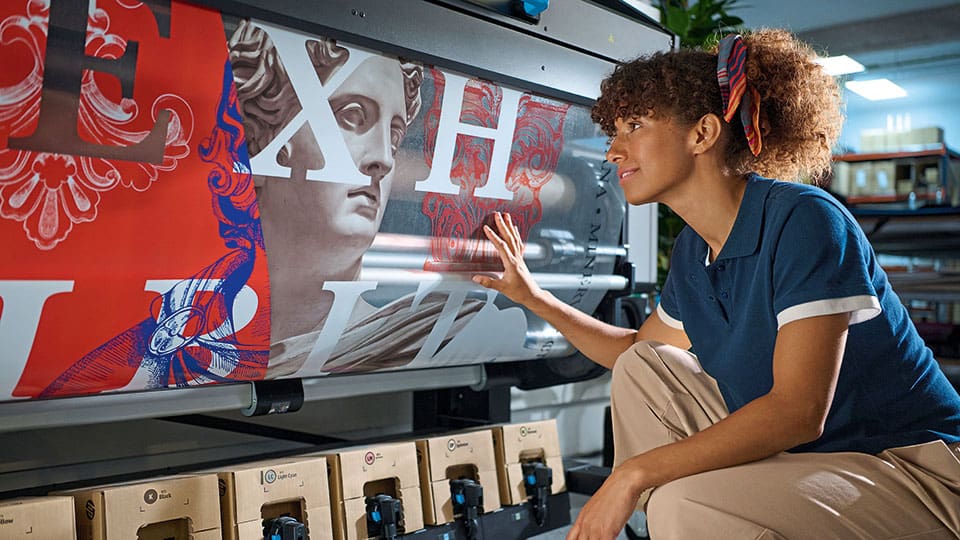
Perhaps not always thought of as a special effect, working with white ink offers PSPs a huge amount of flexibility when producing many pieces, with quality white ink allowing users to make graphics stand out. This is very much the belief of HP, which offers a white ink option across many of its Latex printers.
Stuart Thomas, business development manager for Large-Format at HP, explains that there are several methods printers can use when working with white ink. The first of these is to ‘underflood’, whereby users print a white layer underneath the image, allowing them to add brilliant white elements to transparencies and substrates that are not white. There is also the option of printing a colour first, then white, and finally the image on top.
Another method is to ‘overflood’, with printers able to print a layer of white ink over a transparent media – something that is common when producing window decals for use in various public spaces.
In addition, something perhaps more familiar to PSPs is spot mode. Here, spot colours are single colours used in the same print run as the rest of the colours and used as highlights or to create bold, single-colour areas in a design.
“In short, with the right white ink and printing technology, you can produce vivid images, without sacrificing the ability of media to catch and reflect natural light,” Thomas says.
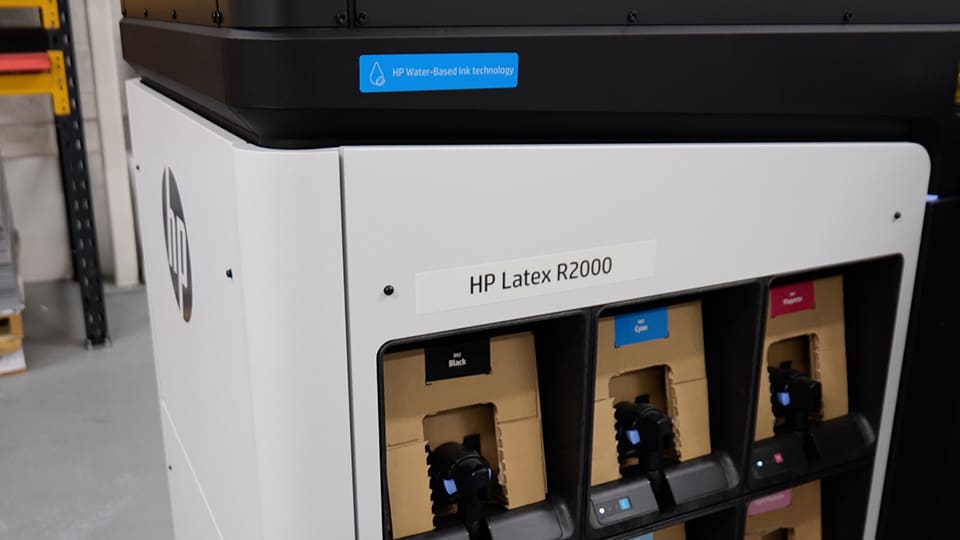
As for technology options from HP, there is certainly no shortage of white ink options when it comes to HP Latex products. The HP Latex R Series, including both the R1000 and R2000, the HP Latex 700W and HP Latex 800W, all offer users white ink, as do the HP Latex 630 and HP Latex 2700.
“Each printer comes with HP’s automatic recirculation system, which continually recirculates white ink within the ink-delivery system and the printhead,” Thomas says, adding: “This is designed to prevent clogging and maintain a ready-to-print state, allowing users to switch the machine on and begin printing straight away.”
Accessible Print
Of course, not all special effects are for pure decoration; sometimes, they are crucial to the end piece.
Earlier this year, Canon Europe linked up with the Royal National Institute of Blind People (RNIB) for a photography exhibition that invited visitors – blind, partially sighted, and sighted – to experience photography in an accessible and immersive way.
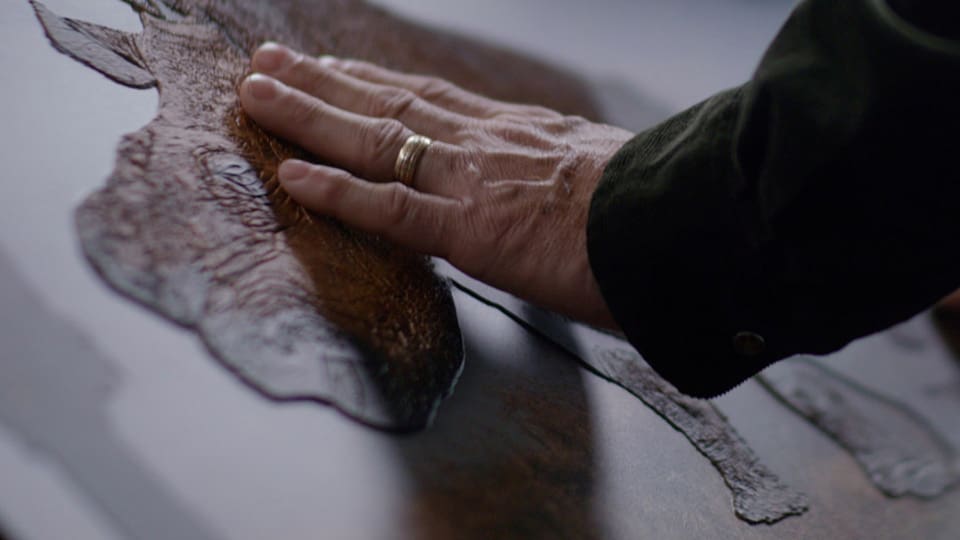
Designed with the experience of blind and partially sighted people in mind, the exhibition featured photographs by famous photographers, accompanied by elevated prints, audio descriptions, soundscapes, and braille for a tactile experience, allowing visitors to connect with each image.
Adding special effects to a printer’s production portfolio instantly increases their flexibility when accepting jobs
On top of this, each image was obscured in different ways to convey the many types of visual impairment, allowing sighted people to experience what partially sighted people experience on a daily basis.
Pete Morris, brand and sponsorship senior manager at Canon EMEA, says: “Photography is an incredibly powerful medium that can push the imagination; we wanted this experience to be accessible to everyone. This exhibition was created with blind and partially sighted people in mind to share imagery and the stories behind them in an entirely new way.”
However, this was not the first time Canon brought the arts to life through elevated print. Using its proprietary PRISMAelevate XL software and Arizona printer series, Canon has been making arts more accessible for blind and partially sighted people for many years, working with art galleries and museums around the world on tactile printing and braille signage.
So, whether you are looking to add extra sparkle to packaging or an elevated print finish to business cards, there are plenty of equipment options out there that not will not only allow you to do this, but also offer excellent ROI in the long run.
From advances in print quality and productivity to increasing demand for automation and sustainable solutions, the wide-format market continues to evolve. Rob Fletcher looks at the latest trends, challenges, and developments in this sector
Speaking to a range of print and signage professionals, we discover how a sustainable business model can drive growth, outlining actionable strategies to cut overhead costs, improve eco-efficiency, and boost your bottom line
As finishing continues to become a great way to add extra elements to your print and wow customers, we take a look at some of the creasers, folders, and collators on the market, and ask experts their advice on finding the right solutions
(this was inserted into the PHP of a code block)
Watch our latest video of the week
Print Monthly gives you the latest video coverage of companies, people, and events from within the print industry.