In this guest article, James Coldman from Think B2B looks across the entire packaging ecosystem to understand where the challenges, opportunities,
and developments lie for the sector
Guest Writer
June 15, 2026
Few industries carry as much metaphorical weight as packaging. It protects, communicates, sustains, and defines how brands are judged. As 2026 rolls on, the packaging sector finds itself in a tightening regulatory environment while, at the same time, exploring some of the most exciting technological possibilities in its history.
At Think B2B Marketing, we work with businesses across the full print and packaging supply chain, from software developers and machinery manufacturers to material specialists and event organisers. That range of perspective gives us a clear view of what's driving the market, where the real opportunities lie, and what companies need to do to stay ahead.
A Market Defined by Tension and Opportunity
The packaging market in 2026 is defined by palpable tension between constraint and creativity.
On one side we have mounting regulatory obligations, from the UK's producer Extended Producer Responsibility (pEPR) scheme and DEFRA's Simpler Recycling initiative, to the EU's Packaging and Packaging Waste Regulation (PPWR) – all influencing how companies design, source, and report on their packaging. On the other side, advances in digital printing, smart packaging, automation, and material science are opening up entirely new commercial and creative possibilities.
The UK packaging industry remains one of the most dynamic on the global stage. Despite mounting pressures, the sector continues to push material and design technology further than ever before. Where some businesses see compliance as a burden or box-ticking exercise, the most forward-thinking players are recognising it as a commercial catalyst.
The packaging industry in 2026 is one of the most commercially interesting places to be
Joanna Stephenson, our managing director here at Think B2B Marketing and a longstanding advocate for the packaging sector, captures the mood well: "The packaging industry in 2026 is one of the most commercially interesting places to be. Yes, the regulatory environment is complex, but complexity creates opportunity for those who are prepared.
“What we're seeing with our clients is that the businesses pulling ahead aren't the ones waiting for the dust to settle. They're the ones who've decided that sustainability, compliance, and innovation aren't competing – they are in fact the same priority. The global packaging industry has always been more resilient and more creative than it gets credit for. That hasn't changed – if anything, the pressure is making it sharper."
The demand driving today's packaging innovations is unmistakably clear: brands want packaging that performs. That means sustainably at speed, at scale, and with increasing personalisation. The good news is that the industry has stepped up to the plate.
Digital Printing Comes of Age
Digital printing has firmly established itself as a critical technology for packaging, particularly in enabling brands to offer premium, personalised experiences without sacrificing efficiency. Advances in inkjet and toner-based technologies have made it commercially viable to produce shorter runs at high-quality – a transformation that was already underway before Covid-19 accelerated supply chain agility requirements almost overnight.
Some of the most exciting developments combine the quality and speed of conventional printing with the flexibility and variable data capabilities of digital. The result is fully customised, premium packaging at production speeds that would have seemed implausible just a decade ago.
Digital printing's viability for packaging has reached a major tipping point
Esko, a leader in packaging prepress and workflow software, has been instrumental in connecting the dots between digital innovation and real-world production.
Jan De Roeck, director of marketing at Esko, says: "Digital printing's viability for packaging has reached a major tipping point. The quality, the speed, and the economics have all converged in a way that makes it a genuine first choice option for an expanding range of applications, not just a short-run specialist.
Jan De Roeck, director of marketing at Esko
“However, what's equally important is recognising that flexo, offset, and other conventional methods aren't going anywhere. They remain the backbone of high-volume packaging production, and rightly so. The real opportunity, and where we see the most exciting work happening, is in deploying the right technology for the right job and then using intelligent software to make the whole system perform at its best regardless of which press is running.”
Speaking about the benefits of modern integrated systems, De Roeck adds: “When your workflow, colour management, and prepress infrastructure are truly integrated, you stop thinking about digital versus conventional as a binary ‘this or that’ choice. You start thinking about output quality, consistency, and speed-to-market, and let the technology serve those goals."
Material Innovation: Fibre and Circularity
Substrate innovation continues to move at speed, particularly while circularity remains so hot on the agenda. Paper-based and fibre-based alternatives to single-use plastics have made the jump from niche to mainstream, while recyclable mono-materials and compostable packaging are now a much more common sight on store shelves. That looks set to intensify over the coming year. Conversations at events like Packaging Innovations 2026 make it clear that when materials are inherently recyclable and circular, it simplifies downstream decision-making for brands trying to reduce their environmental footprint.
James Cropper, a business renowned for its specialist paper and packaging solutions, offers an interesting perspective. Andrew Cockerill, business development manager at James Cropper, comments: "Paper-based packaging materials have come very far, very quickly. What's changed is the sophistication of what's being asked of it, as brands need paper and board solutions that can perform across the full lifecycle, not just look good on the shelf.
James Cropper has unveiled a range of new paper and packaging materials to market in recent years
“That means working much earlier in the design process, bringing material knowledge to the table before a spec is fixed, and being honest about what fibre can and can't do in any given application. The businesses we work with who are getting this right are treating material choice as a strategic decision, not a procurement one. When you do that, you often find that the more sustainable option is also the better-performing one."
EPR: Challenge, Catalyst, and Commercial Opportunity
Of all the regulatory forces reshaping packaging in 2026, Extended Producer Responsibility (EPR) generates the most heat, and perhaps the most uncertainty. The UK's producer EPR scheme, administered by PackUK, places a significant financial obligation on producers, with fees expected to generate over £1bn annually to fund local collection and recycling infrastructure. Combined with DEFRA's Simpler Recycling standardisation initiative, the UK market is now demanding a fundamental rethink of packaging design, material choice, and recyclability claims.
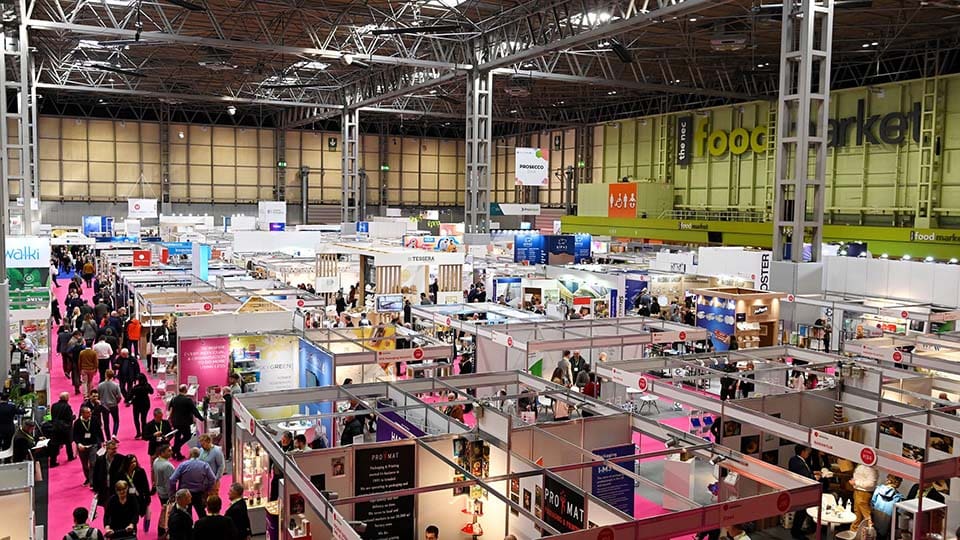
At Packaging Innovations & Empack 2026, EPR was the topic on everyone's lips. Attendees pressed PackUK for clarity on fees, reporting structures, and timelines. Businesses are hungry for guidance, transparency, and practical solutions. Yet for all the anxiety, there are real commercial opportunities embedded within the EPR framework, for those willing to see them.
Packaging Innovations attracted over 8,000 unique visitors in 2026
As EPR shifts cost and accountability onto producers, it creates strong commercial incentives to move away from hard-to-recycle materials, invest in recyclability, and differentiate through genuine sustainability performance. As Eco Flexibles, a sustainability-focused and flexible packaging specialist, puts it: "EPR and RAM have fundamentally changed the conversation we have with brand owners. The fee structure makes it very clear, very quickly, that the packaging decisions made today have a direct impact on cost tomorrow.”
Talking about industry responses to regulations like EPR, Simon Buswell, sales and marketing director at Eco Flexibles, explains: “What we're finding is that brands who come to us having already done that calculation are much further forward. They're not asking 'should we switch to recyclable formats?' They're asking 'how quickly can we get there?'
The businesses that will feel the squeeze most are those still running mixed-material structures and hoping the cost can be absorbed or passed on
“The businesses that will feel the squeeze most are those still running mixed-material structures and hoping the cost can be absorbed or passed on. In this price-sensitive market, neither of those options are as viable as they once were.”
At the European level, the PPWR sets an ambitious trajectory: reducing packaging waste by 5% by 2030, 10% by 2035, and 15% by 2040. For businesses operating across the EU or exporting into it from the UK, compliance is no longer optional. The transition period ends in August 2026, at which point PPWR applies uniformly and without discretion.
There is also a broader business case that too many companies are missing. The most resilient businesses in our space are not treating sustainability as a compliance burden – they are embedding it directly into cost reduction and efficiency strategies.
Lightweighting reduces material and freight costs, while waste reduction lowers disposal costs. Similarly, supply chain resilience work protects against disruption while meeting the data expectations flowing down from customers obligated to report on their sustainability-related impacts. These are not trade-offs or compromises – they are smarter business decisions that happen to deliver environmental benefits.
The Power of Events
We’re living in an increasingly hands-off and digital world, so in-person industry events have never been more valuable. These are spaces for strategic dialogue, sector advocacy, and collective problemsolving.
Packaging Innovations & Empack is one of the centrepieces of the UK packaging calendar for very good reason. The panels and seminars at Packaging Innovations 2026 saw industry leaders engaging with some of the sector's biggest challenges with the kind of cross-sector, multi-stakeholder dialogue that is genuinely difficult to replicate in any other format.
Easyfairs, the organiser behind Packaging Innovations & Empack, has been instrumental in creating that environment.
Casey McHugh, conference and community manager at Easyfairs, says: "What Packaging Innovations tells us every year is that this industry doesn't just want information, it wants conversation.
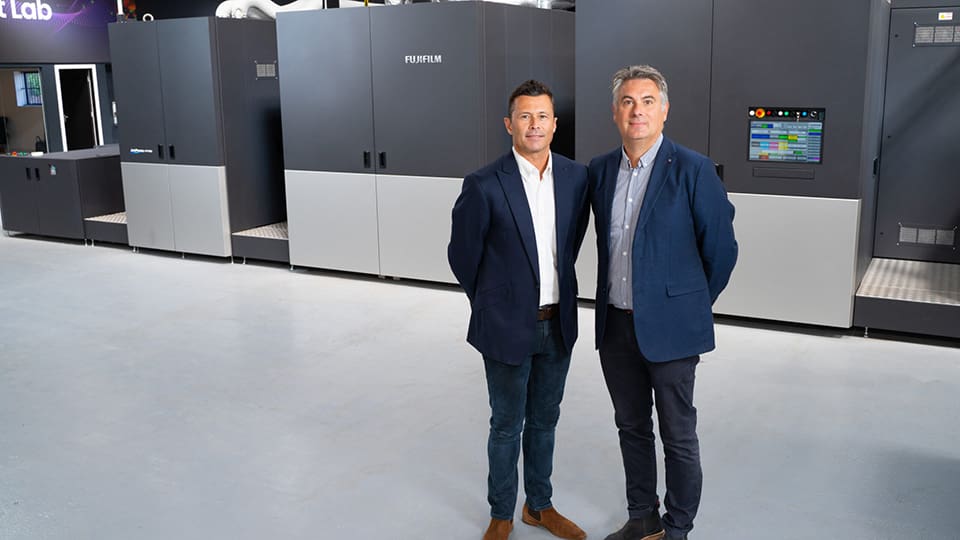
Eco Flexibles reportedly doubled its turnover since purchasing two Fujifilm FP790 digital presses
“The sessions that draw the biggest crowds are never the ones where someone stands up and presents answers. They're the ones where the room debates the questions. EPR is a perfect example. The technology is there, the regulatory intent is there, but the industry is still working through what fair, practical implementation actually looks like. That negotiation happens at events like ours in a way it simply can't happen anywhere else.”
The range of events now serving the packaging sector including Packaging Innovations & Empack, LOUPE (formerly Labelexpo), Fachpack, London Packaging Week, and the Responsible Packaging Expo reflects just how dynamic and internationally connected this industry has become. Each event brings its own lens, but together they form a rich calendar of touchpoints that companies can use not only to stay informed but to shape the conversation and build their profiles.
Where Does That Leave Us?
The packaging industry in 2026 is not short of challenges. Regulatory pressure, cost exposure, talent gaps, and the constant demand to do more with less are all very real. However, what strikes us when working across this supply chain every day is how consistently the industry meets that pressure with ingenuity, rather than retreat.
Factoid:The UK's EPR scheme is expected to generate over £1bn annually to fund local recycling infrastructure
The businesses pulling ahead all share a common thread: they're not waiting for certainty before they act. They're making bold investments in the right technologies, making smarter material choices, engaging with the regulatory agenda on their own terms, and showing up at events, in conversations, and in the market with a clear point of view. That's always been the hallmark of a strong packaging business and now in 2026, it's also the definition of a resilient one.
From advances in print quality and productivity to increasing demand for automation and sustainable solutions, the wide-format market continues to evolve. Rob Fletcher looks at the latest trends, challenges, and developments in this sector
Speaking to a range of print and signage professionals, we discover how a sustainable business model can drive growth, outlining actionable strategies to cut overhead costs, improve eco-efficiency, and boost your bottom line
As finishing continues to become a great way to add extra elements to your print and wow customers, we take a look at some of the creasers, folders, and collators on the market, and ask experts their advice on finding the right solutions
(this was inserted into the PHP of a code block)
Watch our latest video of the week
Print Monthly gives you the latest video coverage of companies, people, and events from within the print industry.