Direct to the Source With the Mimaki UJV300DTF-75 UV
UV DTF presents a new option for object decoration, making stickers that can be used on the irregular and hard-to-get-to surfaces that desktop UV and cylinder printers can’t reach. Michael Walker gets stuck in with Mimaki’s new offering in this sector
Michael Walker
June 15, 2026
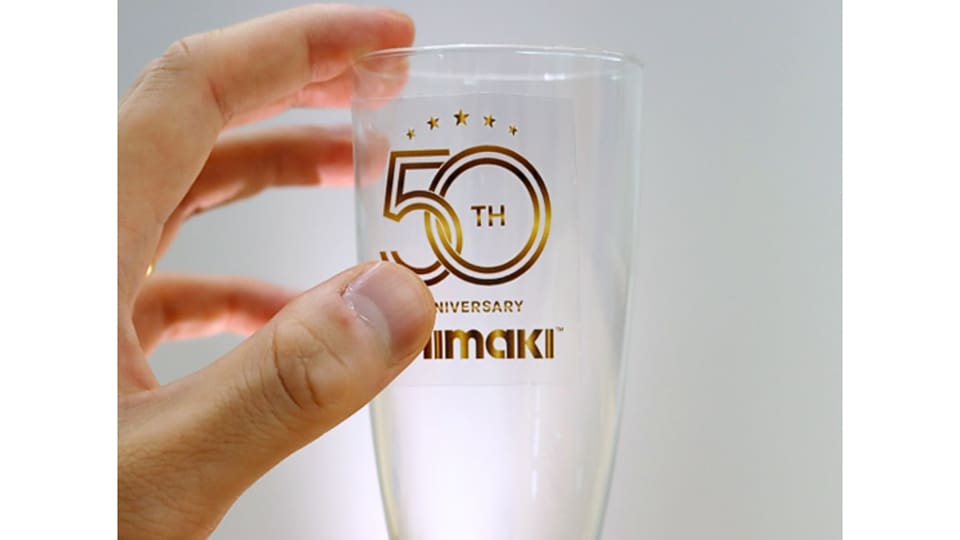
Direct-to-film (DTF) printing has been all the rage in flexible low-cost garment decoration for the last three years or more, but there’s a more recent spin-off from the technology that allows ink to be put onto hard surfaces that aren’t flat or accessible to desktop or other direct-to-object (DTO) printers. Called UV DTF, the process involves printing UV-cured transfers onto sticky film and then manually placing them on the object to be decorated.
A number of hardware vendors have launched offerings in this line, over the last couple of years but Mimaki is one of the first ‘big name’ players to pitch in, with the UJV300DTF-75, shown by UK and Ireland exclusive distributor, Hybrid Services, at Printwear & Promotion in Birmingham in February 2026.
Mimaki’s inks are Greenguard Gold-certified and comply with current REACH regulations, and so are deemed safe for toys and drinkware
Applications include things like decoration of candles and mugs, where the raised texture has a quite different feel and tactile appeal to sublimation printed products which are always smooth. Other applications are in some ways more in the label space, particularly where curved or relatively inaccessible surfaces, such as on bicycle frames, make normal application methods difficult or impossible.
One major benefit compared to conventional label or sticker solutions is that only the printed design is transferred to the final surface, without any margin or infilled spaces that have to be manually weeded. This also allows smaller and more complex details to be imaged and transferred without a visible margin or carrier, as well as preserving the original texture of the object being decorated.
The ‘kebab’ cylinder printer option allows for applications on different types of cylindrical shapes
From the Mimaki product line-up perspective, the new machine complements the company’s existing flatbed UV printers and the ‘kebab’ cylinder printer option, allowing application on irregular cylindrical shapes and materials that UV inks normally don’t stick well to, as well as on objects too large or curved for the flatbed printers.
Hybrid’s head of marketing, Duncan Jefferies, likens the current state of UV DTF to the role of UV desktop printers in around 2004, which were taken up by users from high-end screen-printing backgrounds who could see the flexibility that a ‘one-off’ printer could provide. He predicts that “the applications will explode” as market take-up accelerates.
Transfer Window
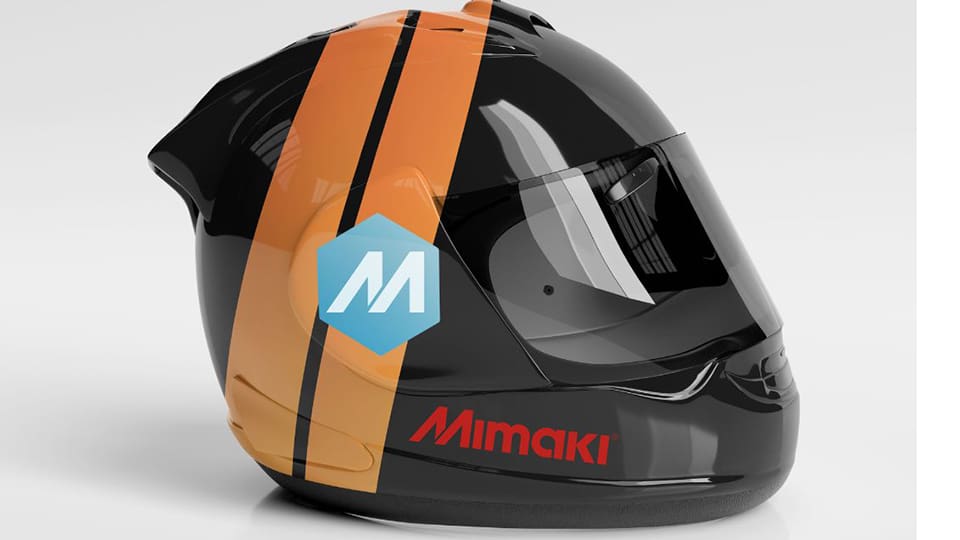
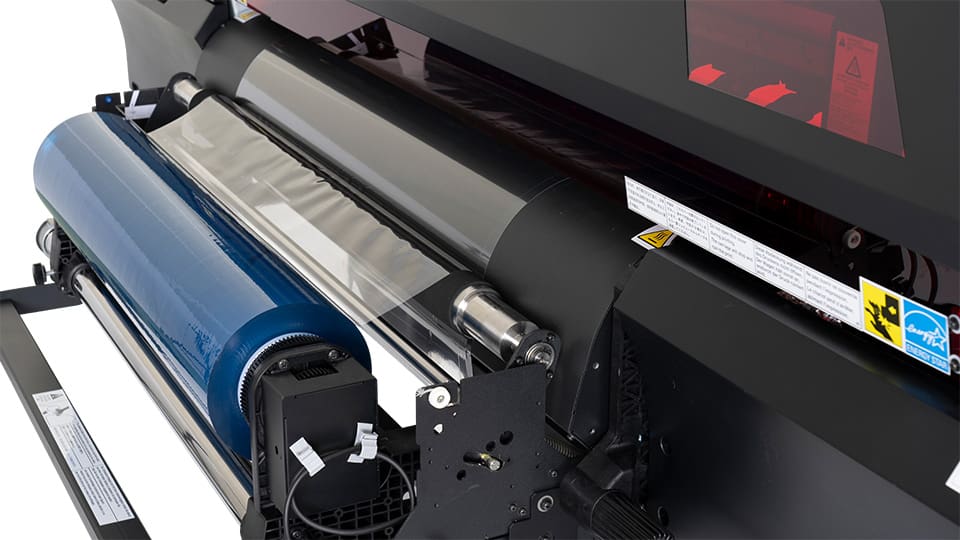
When the transfers are peeled off the film, the glue layer comes with the cured ink, providing a sticky backing to adhere to the surface. Simple finger pressure is sufficient to stick them in place, and the B film is peeled off after placing. The stickers can be fitted snugly onto irregularly curved convex or concave surfaces or around the inside of toroidal or doughnut-shaped items.
The resulting bond is strong enough to survive dishwashing on items like mugs (though Hybrid says this doesn’t necessarily apply on glass). It’s also hard to remove via abrasion or picking at the edges, though no specific claims are made for long-term durability. One suggested application is decoration/branding of beer pump clips for specific events or short-term promotions, though given the tenacity of the transfer, the entire item would have to be replaced after use.
Stickers from the press can be fitted onto irregularly curved surfaces
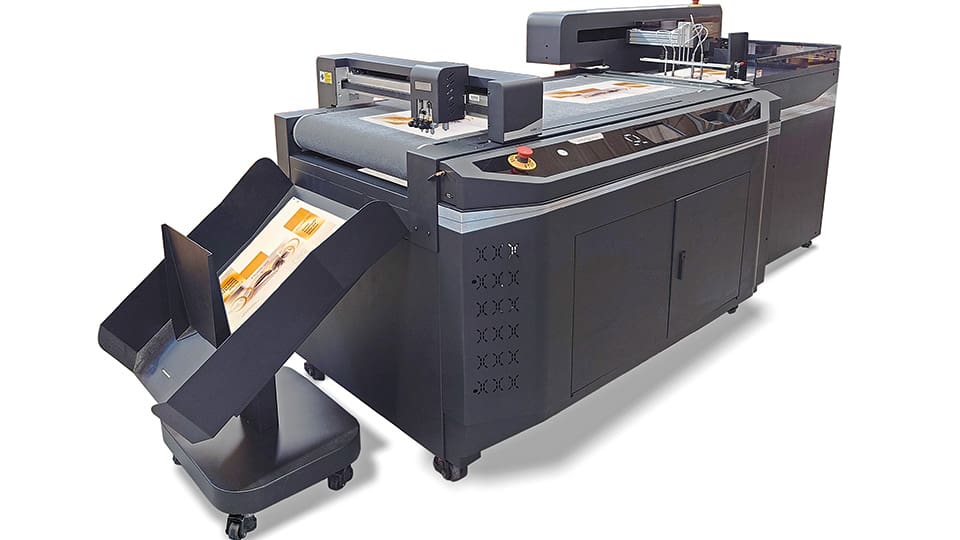
The software supplied with the printer is Mimaki’s RasterLink 7 RIP, which includes Simple Create for graphic design, and Job Creator for setting up the layers necessary for creating the white backing, and clear varnish so that artwork does not have to be specifically pre-prepared for this. Mimaki’s ID Cut software can facilitate automation of cutting out of finished products if a Mimaki cutting plotter is also available.
One major benefit compared to conventional label or sticker solutions is that only the printed design is transferred to the final surface, without any margin or infilled spaces that have to be manually weeded
Mimaki doesn’t quote productivity figures and an informal visual inspection of the printer in operation at the trade show suggested a figure in the low single digits in terms of square metres per hour. However, the products being produced are typically small and potentially offer a high margin, especially if sold in a B2C ecommerce context, where the novelty value of personalised one-off stickers should enable decent prices to be obtained.
One downside is the sustainability aspect in that neither the lining nor the A and B films are currently recyclable, though Hybrid has long offered a ink cartridge/bottle collection facility to its customers. As the products are small, total production volumes are likely to be small too, especially compared to typical wide-format products, so this is at least mitigated to some extent, and recycling routes may yet be found if enough material is generated.
Hybrid expects that there will be many more applications than those it and Mimaki have thought of. According to Jefferies: “Customers will drive it. User sites will likely be already into product decoration; this lets them offer extra capabilities or meet unserved needs of their customers.”
Statistics
Print Type: UV LED-cured direct-to-film pressure transfer Print Resolution: 300 to 1200dpi Ink Set: CMYK plus white and clear, Greenguard Gold certified Software: Mimaki Raster Link 7 and Simple Create
Cutting and creasing are key finishing operations in all kinds of print, but shorter runs mean that flexibility and automation are as important for overall throughput as raw speed. Michael Walker sizes up Plockmatic’s latest flagship model that brings it all together
Things have been a bit quiet since the late 2023 launch of Ricoh’s B2 inkjet press, but it turns out plenty has been going on behind the scenes. Michael Walker caught up with the newly trained ‘dragon’
Kodak holds the continuous feed inkjet speed prize with the PROSPER 7000 Turbo, capable of printing at up to 410m/min. Michael Walker looks at how that’s achieved and what else the press can do
(this was inserted into the PHP of a code block)
Watch our latest video of the week
Print Monthly gives you the latest video coverage of companies, people, and events from within the print industry.