HEIDELBERG finds the missing part of its jigsaw puzzle with a new addition in
the form of the Jetfire50, a B3 inkjet machine which allows the print giant to span the whole spectrum of print
Guest Writer
March 17, 2025
You know the world or print has changed when certain manufacturers make statements or show the masses a big new product. It is those seismic shifts that you look at and take for granted going forward, indicating that things are going to be different. One of these events happened at drupa 2024 when the leviathan of print, HEIDELBERG, unveiled a new addition to its lineup – the Jetfire 50, a B3 water-based inkjet printer.
For a long time, all of the main lithographic manufacturers have been looking at the trends within the market and it is as clear as night follows day that the trend is to shorter run lengths. In the early years of digital printing, all the talk was of the new presses taking the place of the traditional lithographic versions.
In fact, as time has gone on, this hasn’t really happened and they have found their own market and whilst the need for high to very high print volumes has decreased, the new digital sibling has actually grown up side by side to its older traditional family member.
Building Partnerships
When a company of the quantum of HEIDELBERG makes the decision to go digital, it would know at boardroom level the amount of investment and expertise needed to produce a home-grown product would be huge – unfeasibly huge you may say.
So, once the company had taken the decision it needed a digital platform with the famous HEIDELBERG logo on it, and looked at how deep the pockets needed to be for its own device, it was again obvious the logical step was to look for a partner.
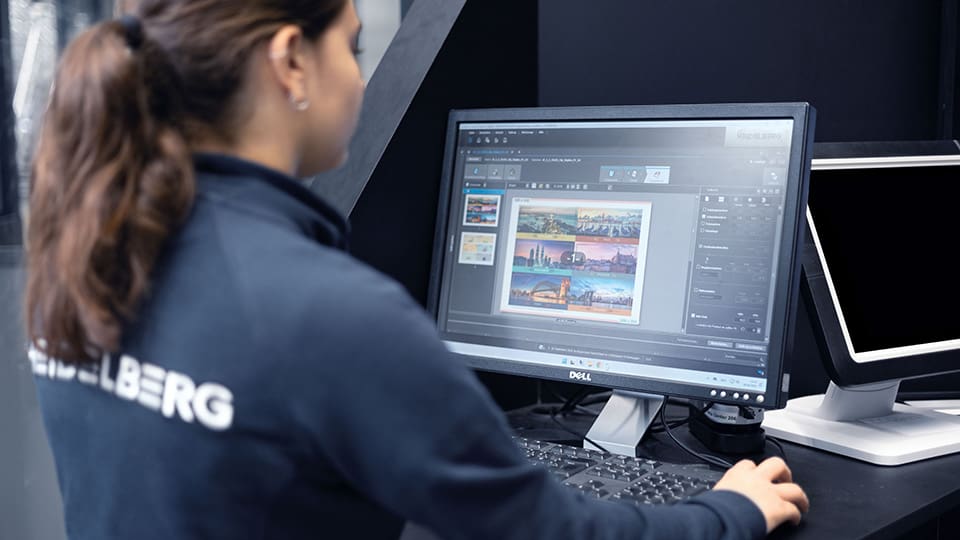
The Jetfire 50 can operate via its Prinect Touch Free Production Manager
This search could have led them two ways. Does it look for a smaller partner but one that has new and innovative printers with less market presence to present those products as its own, or does it look for a company with market presence, so that the product it chooses is readily accepted as the heritage is already known?
Well HEIDELBERG choose the second option which has multiple benefits. The company have teamed up with Canon and will now benefit from both the reputation of the Canon brand and the user can be safe in the knowledge the printer will be firing straight out of the box.
B3 Digital Colour
So, what is the Jetfire 50? Just because the gap is growing for lower run volume, four colour process work, this does not mean clients are going to expect a change in quality from the lithographic versions they have been buying. Printers need to ensure the step down into the sector is sustained with comparative quality.
The Jetfire 50 delivers this with true 1,200 x 1,200dpi resolution and with a proven water-based ink set which has deep pigmentation and robust adherence and the new printer can print on a wide range of substrates, just as the lithographic older sibling can.
The Jetfire 50 is set to fill a gap in the HEIDELBERG line up of presses to ensure short run production is no longer problematic
As for the substrate itself, there are a number of modules at the feeder end of the press that can take a variety of paper sizes up to B3. To ensure the paper is in the best condition, and as the first piece of the quality puzzle, each of these units is climate controlled which in turn conditions the paper prior to being fed into the machine.
Once on its way, the paper passes through a sheet detection system which checks for any deformation or imperfections in the paper, any that are found are automatically displaced into a container so the press itself is never likely to be damaged.
The paper continues on its way and is placed on a stainless-steel belt with small holes perforated in it though which air passes securing each sheet firmly to it. This is only one of several of the features of the Jetfire 50 which ensures a wide range of substrates can be used.
At the Business End
At the heart of the machine is the print head which has four inkjet heads for each of the four process colours and a precoating head. The technology within the heads produces a true 1,200 x 1,200dpi copy meaning quality can be taken for granted.
As you would expect with a premium product, it is stacked with print head maintenance tools which will keep the heads in optimum condition. Nozzle uniformity control scans the nozzles in each head and ensures each is at consistent output and nozzle activity control, which assesses in real time the condition of each nozzle, closing-down and reappropriating other nozzles to take their place. All these systems go to ensure each copy is has consistent high, smooth print quality.
Litho and digital print are now being used in partnership more and more
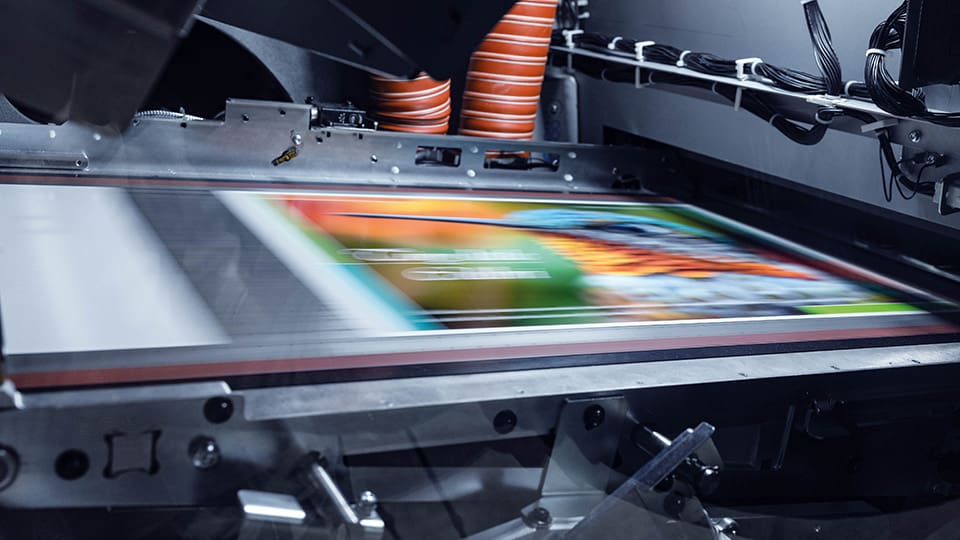
Once printed, the sheet passes through two drying sections to ensure the copy is dry and fit for purpose. Firstly, the sheet passes around a large drying drum which evaporates the water from the freshly printed copy. Next up the sheet goes through the second stage which is a post fixation unit that fully cures the colour meaning it can go straight to post production such as trimming and stitching.
Depending on how the machine is configured, in simplex or duplex, the sheet is either sent directly to the stacking unit or the process of the second side being printed is undertaken.
In the Family
It would be very easy for HEIDELBERG to have taken a machine from Canon and had it sat in the inventory as a stand-alone product. But this would have failed to do what was intended which was to seamlessly fill the gap it identified.
What they demonstrated at drupa was this new press slots perfectly into the family and is connected across the print floor via the very successful Print Prinect production manager and the Digital Print Manager.
With an inclusion of AI software, HEIDELBERG very much see the modern print shop automatically deciding what press the next job goes on but what the production manager can be assured of with the range of presses now available from HEIDELBERG, the final copy will be the same regardless of which route it took.
Statistics
Sheet size Max 356 x 508mm Min 203 x 208mm Production speed Max 4,560 duplex/9,120 simplex Colour CMYK plus precoat Substrates Uncoated/coated/matt offset papers Substrate weight 60/350gsm
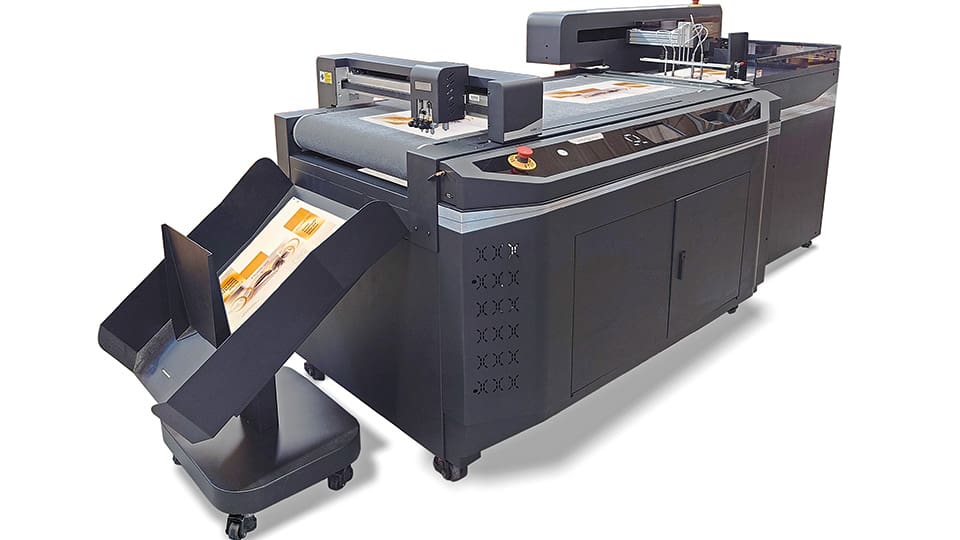
Cutting and creasing are key finishing operations in all kinds of print, but shorter runs mean that flexibility and automation are as important for overall throughput as raw speed. Michael Walker sizes up Plockmatic’s latest flagship model that brings it all together
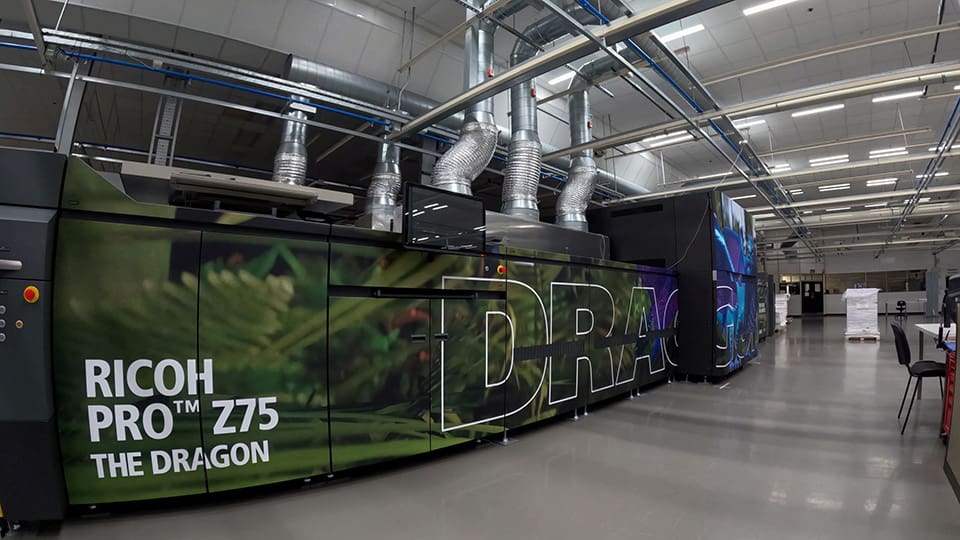
Things have been a bit quiet since the late 2023 launch of Ricoh’s B2 inkjet press, but it turns out plenty has been going on behind the scenes. Michael Walker caught up with the newly trained ‘dragon’
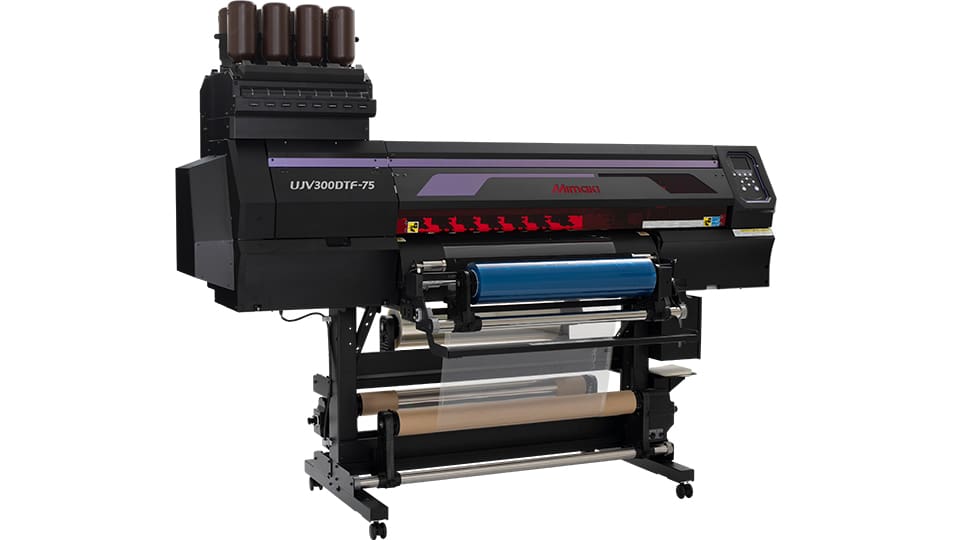
UV DTF presents a new option for object decoration, making stickers that can be used on the irregular and hard-to-get-to surfaces that desktop UV and cylinder printers can’t reach. Michael Walker gets stuck in with Mimaki’s new offering in this sector
(this was inserted into the PHP of a code block)
Watch our latest video of the week
Print Monthly gives you the latest video coverage of companies, people, and events from within the print industry.