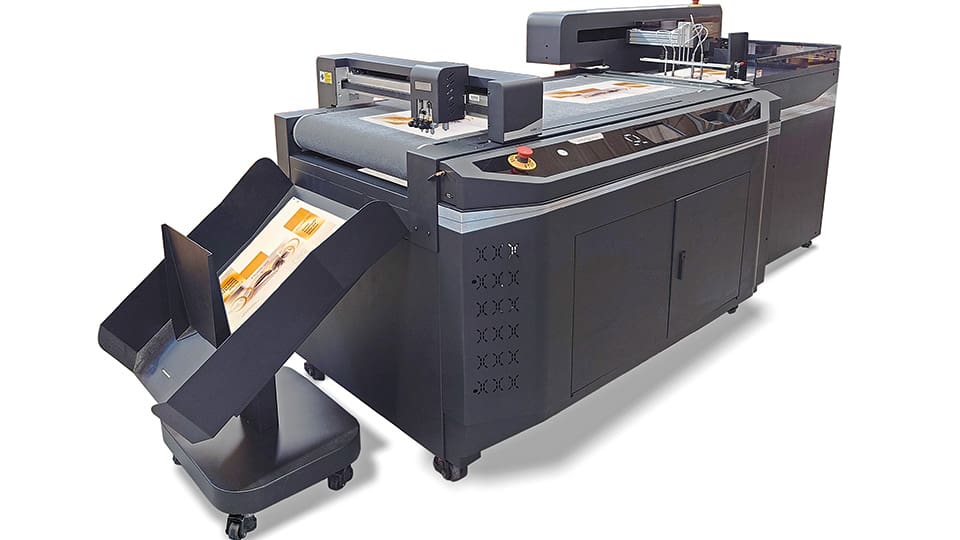
Intec has a compact and clever label printing machine that can fit into the smallest part of the studio, with the unique benefit of being able to upsize to its bigger sibling the LCF700 reel-to-reel label cutting machine
Guest Writer
November 11, 2024
There was a time when anyone in a planning office would have rolled their eyes when they picked up a job which needed to be cut and finished. This opens up all the issues of getting dies produced and tested, the issues of delayed production whilst the printed substrate sits waiting for the dies to turn up, and finally if you find the client wants a change, the whole merry go round takes another spin.
How do you overcome this? Clients want labels. This is a perfectly sensible request and one that is becoming more mainstream as boutique shops and outlets are popping up all over the high street demanding bespoke and short run label production.
Previously this would have been impossible to achieve as the costs would just have outweighed any commercial benefit of trying to produce them. But there is a machine that can change both the perception of the label product and will not take up space in the studio unless you want it to. But don't worry, all will become clear.
The LC700 can be upgraded to the hybrid machine with the use of the LF700 Frame
Intec has a new digital label cutting machine which turns label production on its head. The LC700 is a ‘on demand’ kiss cut label cutting machine which in this form is a sheet fed device, but with the clever inclusion of the LF700 Frame with which you can upgrade the machine to the LCF700 reel fed label cutting machine.
Cutting at Speed
At the heart of the concept is the fact the machine needs no dies, so all those expensive set up costs are set to one side. Added to this is a digital machine so that each label can be independently cut regardless of size and shape.
A further plus side to the LC700 is the fact it is designed to be used unattended, so once set and programmed, the machine trundles off on its own.
The fundamental reason for the unattended flexibility is the LC700 is able to pick up all the information it needs from a QR code on the sheet it is feeding into the cutting area and this data is then used to set the kiss cutting heads to produce whichever shape is needed. The QR codes and SmartMarks are generated through the ColorCut Pro software which can be integrated with whichever origination software you are using such as Adobe, Illustrator, or CorelDRAW.
Operation of the machine by the use of the QR codes means no real experience is needed by the operator. The QR codes have all the information needed and apart from setting the feeder up for the sheet size, once the start button is pressed and the sheet has the QR code read, the LC700 takes full control. The reading of the QR codes is completed by a Vision3 high resolution CCD vision system and is fully integrated into the operating system of the LC700.
There are further aspects of the LC700 which enhances the control you have over production in the form of two modes of cutting files. Direct Mode allows you to have full control over the production on the LC700 by allowing you to make any changes you need on the fly. HELD Mode is the second option which captures all of the information for the production and can then be held on any storage device which the cutter can use. The need for the main PC system is negated, making repeat work simple and easy.
The LC700 can handle sheets such as A3, A3+, SRA3, and A4 and has a maximum sheet length of 750mm. The feeder can hold up to 250 sheets depending on the grammage and uses something Intec call ‘Y’ feed path.
This system reverses the sheet in and out of the cutting station in a stable feed with 750gf of pressure applied which in turn can provide virtually faultless feeding and provide accurate label cutting. Any of the adjustments needed for the feeder system are again all controlled through the ColorCut Pro software.
The cutter moves around the sheet trimming the profile taken from the QR code at up to 1060mm/s which means the LC700 is an extremely effective digital cutting machine. The single cutter station can hold a number of different knives such as 30, 45, or 60 and has a pen needed for the auto-calibration for the device. Substrate thickness needs to be between 0.14mm and 0.35mm but the range of materials is vast.
A further enhancement on the LC700 is the better use of the substrate via the ‘Dual Grip’ feeding system. Intec claim by holding both sides of the substrate, not only does the label cutter have better and more accurate control, it also allows the cutter to get closer to the edge of the sheet minimising waste and increasing productivity.
Finally, the cut sheets are dropped into a fold away drawer meaning the LC700 can be folded up and wheeled into a storage area whilst it is offline with consummate ease.
Added Extra
Where Intec has added a new dimension to the LC700 is the use of the LF700. Intec produce a dedicated reel-to-reel digital die cutter called the LCF700, however, that may not be your initial ideal machine. If you purchase the LC700, your money has not been wasted if your customer base changes.
Intec can provide the LF700 Frame which transforms your sheet-fed machine into a hybrid system with feed reel products, therefore turning it into the LCF700.
The flexibility of the machine is nearly unlimited to the products it can produce, but also the upgrade package which can adapt to the changes in your client base makes the LC700 a very desirable addition to your production capacity.
Statistics
Max media size 300 x 750mm Min media size 150 x 190mm Media thickness 0.14 to 0.35mm Max speed 1060mm/s Cut accuracy +/-0.1mm
Brian Sims Principal Consultant, Metis Print Consultancy, www.metis-uk.eu
Cutting and creasing are key finishing operations in all kinds of print, but shorter runs mean that flexibility and automation are as important for overall throughput as raw speed. Michael Walker sizes up Plockmatic’s latest flagship model that brings it all together
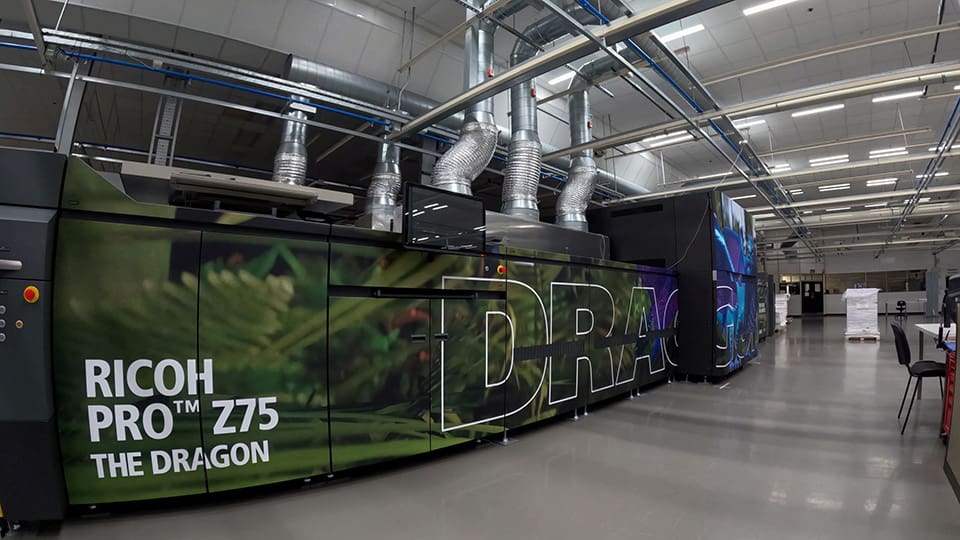
Things have been a bit quiet since the late 2023 launch of Ricoh’s B2 inkjet press, but it turns out plenty has been going on behind the scenes. Michael Walker caught up with the newly trained ‘dragon’
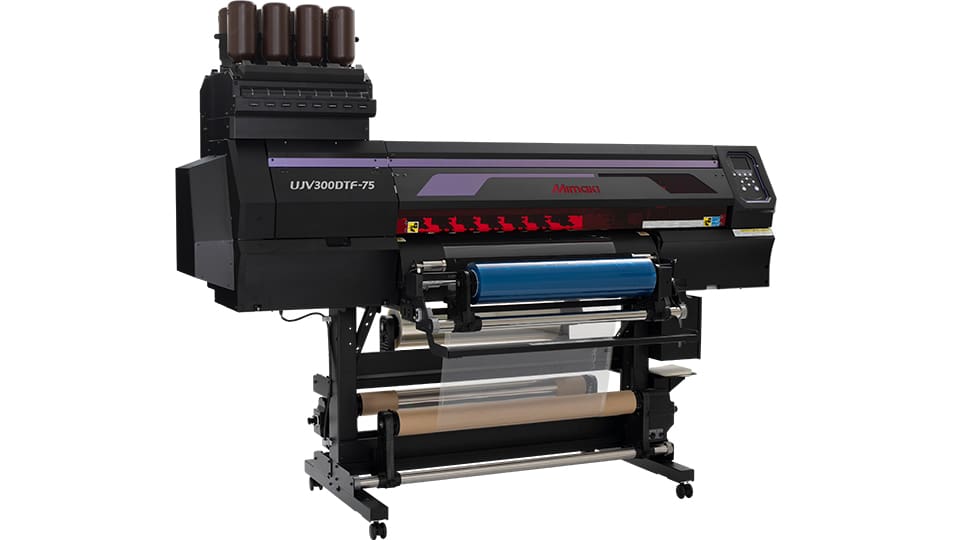
UV DTF presents a new option for object decoration, making stickers that can be used on the irregular and hard-to-get-to surfaces that desktop UV and cylinder printers can’t reach. Michael Walker gets stuck in with Mimaki’s new offering in this sector
(this was inserted into the PHP of a code block)
Watch our latest video of the week
Print Monthly gives you the latest video coverage of companies, people, and events from within the print industry.